
Bought in 2016 for 490 million won and lived there for four years as a newlywed home
Moved to her constituency to run in the general election, rented out the Seoul apartment
Government ultimately withdrew plan to cut tax deduction for non-resident single-homeowners
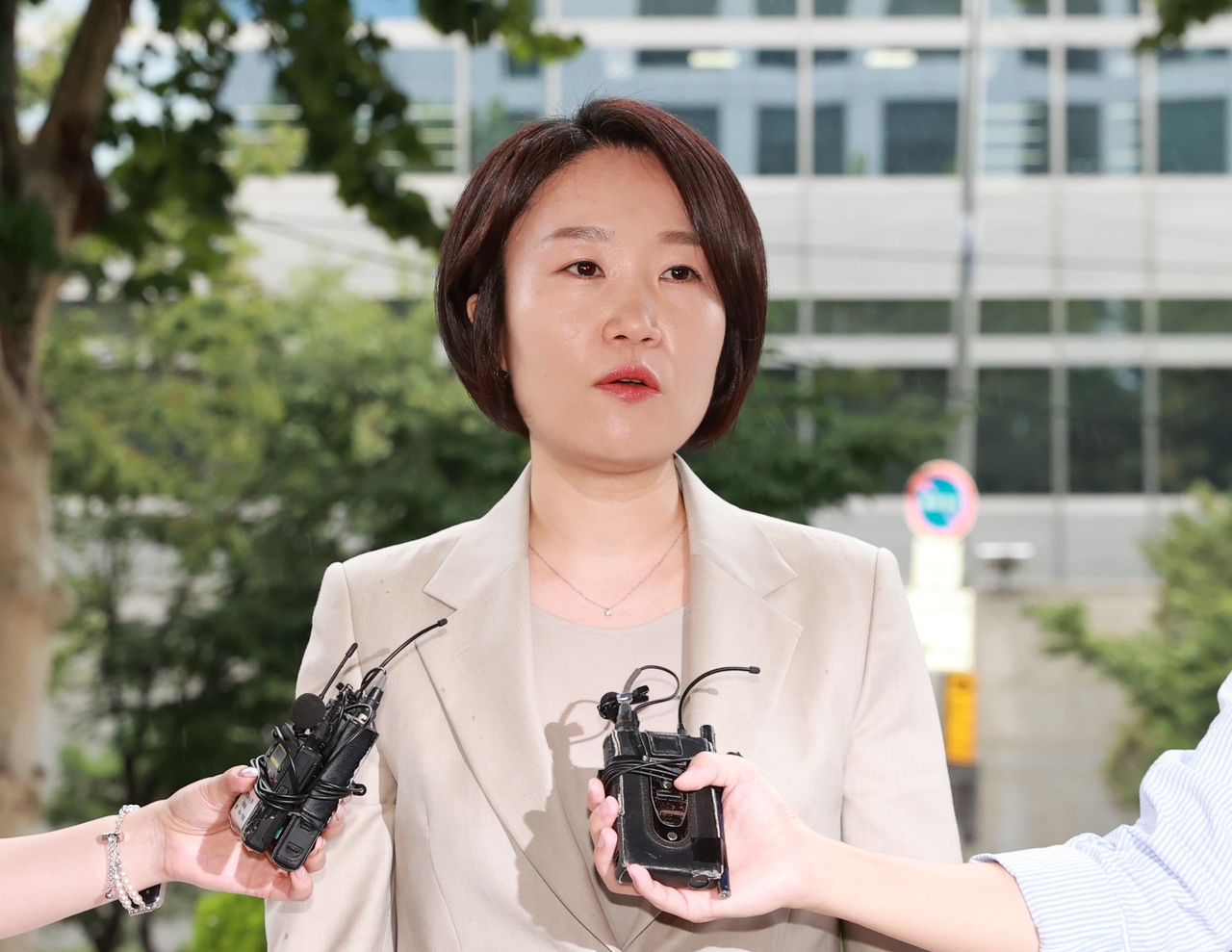
While allegations and disputes swirled around Justice Ministry minister nominee Kim Seung-won and Gender Equality and Family Ministry minister nominee Yong Hye-in, preparations for the confirmation hearing of Lee So-young, nominee to head the Ministry of SMEs and Startups, proceeded relatively quietly — until the charged term "gap investment" entered the picture.
People Power Party lawmaker Choi Su-jin said Wednesday that an apartment nominee Lee owns in Hongje-dong, Seodaemun-gu, Seoul, amounted to a "gap investment-style rental." She said an apartment of the same size in the same complex sold for 1.19 billion won in July, meaning the unit nominee Lee bought for 490 million won ($365,000) had produced a "paper profit" of about 700 million won over a decade.
Real estate is a perennial subject of scrutiny in confirmation hearings, and the stakes rise further when gap investment is alleged. With the Lee Jae Myung administration having emphasized a housing market centered on actual occupancy, allegations of gap investment against a minister nominee the government itself picked are not something to brush aside.
So this reporter examined nominee Lee's property registration record. It shows she took ownership of the apartment in February 2016, at a purchase price of 490 million won. Nominee Lee's camp said she bought the apartment as a newlywed home and actually lived there for about four years, until February 2020. She was first elected to the National Assembly from Uiwang and Gwacheon, Gyeonggi Province, in 2020, moving to her constituency, Uiwang, that March to run in the general election, and has lived there ever since.
The property register shows that when ownership was transferred, a mortgage with a maximum bond amount of 180 million won was registered against the apartment. But taking out a mortgage to buy a newlywed home is a separate question from whether it constitutes gap investment. Gap investment typically means buying a home by taking over a tenant's jeonse deposit and covering only the gap between the sale price and the deposit with one's own funds. If, as nominee Lee's camp says, she acquired the apartment as a newlywed home and actually lived there for about four years, that differs from the conventional gap-investment scheme, which relies on a jeonse deposit from the outset.
The figure of a 700 million won rise in 10 years also deserves context. Taken alone, 700 million won looks substantial. But the past decade has also been a period when Seoul apartment prices broadly surged. According to KB Real Estate, the average sale price of a Seoul apartment rose from 524.75 million won in December 2015 to 1.61 billion won last month — roughly triple. It is true that the price of nominee Lee's apartment has more than doubled since she bought it, but Seoul apartment prices overall also climbed sharply over the same period.
What is more, the process by which nominee Lee came to no longer live in her Seoul home is ironic. She did not keep the Seoul apartment while commuting to her district — rather, she left her newlywed home in Seoul and moved to her constituency, Uiwang, to run for the National Assembly. Her constituency covers Uiwang and Gwacheon in Gyeonggi Province. A politician who would have faced criticism for not living in her own constituency instead rented out her Seoul home so she could actually live there — and is now being attacked as a "non-resident single-homeowner" engaged in gap investment. The complicated reality facing non-resident single-homeowners is playing out in real time with a minister nominee tapped by the Lee Jae Myung administration.
Last month, the government unveiled a tax code overhaul that would raise the basic comprehensive real estate tax deduction for single-homeowners who actually live in their homes from the current 1.2 billion won to 1.4 billion won, while cutting the deduction for non-resident single-homeowners from 1.2 billion won to 900 million won. But after criticism mounted that the plan would impose an excessive tax burden on non-resident single-homeowners, the government decided to keep the basic deduction for non-resident single-homeowners at the current 1.2 billion won.
To be sure, a minister nominee's real estate holdings warrant thorough scrutiny. Lawmakers should examine whether the funds used to buy the property were legitimate, whether there was any improper gift-giving or tax evasion, and whether she received any special treatment in the transaction. Her past positions on public housing supply in Gwacheon, part of her constituency, can also be examined for policy consistency.
But combining three facts — that she owns one home in Seoul, that she does not currently live there, and that its price rose by 700 million won over 10 years — does not automatically amount to gap investment. The question to put to a minister nominee who owns a single home is not only whether she lives there now, but how she acquired it and whether there was anything illegal or improper along the way.
There is no shortage of questions to put to nominee Lee. Lawmakers should examine whether a two-term lawmaker has the expertise and administrative capacity to run a ministry responsible for policy on small and medium-sized enterprises and small business owners, what regulations she would actually change while positioning herself as a "minister of regulatory reform," and how well she understands the realities facing small and medium-sized enterprises and small business owners.
boo@heraldcorp.com




