
Vice president of T-Series, India's largest entertainment company
15 million of India's 1.4 billion population consume K-pop
K-pop's '360-degree artists' a huge strength
'Can't focus only on Gen Z, localization is essential'
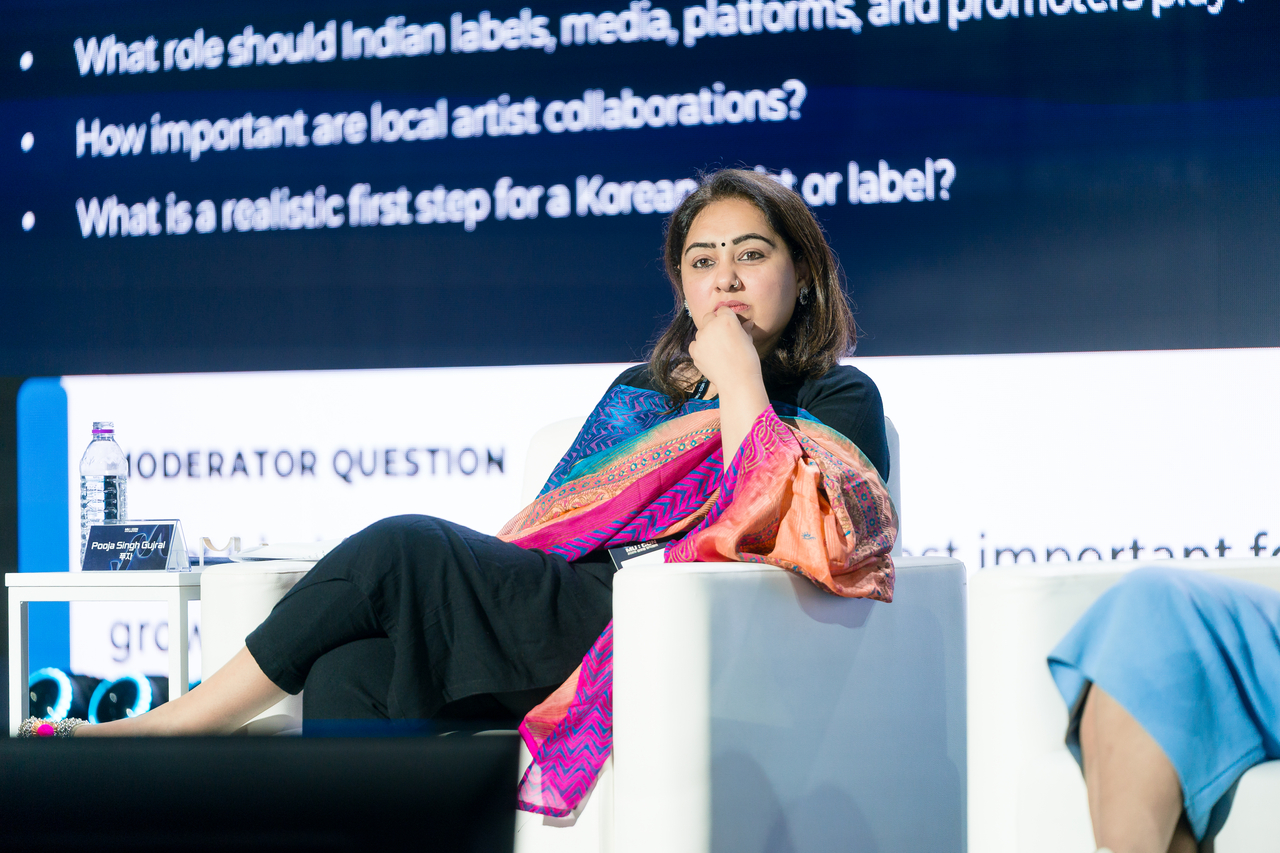
"What's the most popular overseas singer in India? BTS and BLACKPINK. But … "
It is a vast continent where, as the saying goes, every household has its own musician. Into this uncharted land, K-pop's territorial expansion is only beginning. Pooja Singh Guzral, vice president of India's largest entertainment company, T-Series, said K-pop is "doing well" but still has "a long way to go" in India.
Over the past few years, India has become new territory for the K-pop market. Indian members have joined K-pop groups — such as Sriya of Blackswan — and Hybe has begun training idols locally through Hybe India. A South Korean-American joint girl group also includes a member of Indian descent, in Katseye.
Guzral, who recently visited Korea to take part in the Korea Creative Content Agency's MU:CON event, noted that "about 15 million people in India consume K-pop and K-content, but India is a continent of 1.4 billion people." A sizable K-pop fan base exists, she said, but it remains relatively small measured against the market's overall scale — a sign that K-pop has yet to penetrate deeply into India or become widely known there.
80% listen to music an hour daily, heartbreak songs endure
India is a fast-changing market. Guzral, who has spent more than 18 years at the forefront of India's media industry overseeing creative development and content production for Bollywood films and music, said the country's music market has undergone enormous structural shifts in recent years.
Once confined to traditional channels — radio, television, Billboard charts and print media — the market has diversified rapidly in both audience size and taste as mobile infrastructure spread and digital streaming platforms took hold. Today, 96 percent of India's population uses smartphones, and 80 percent listen to music for at least an hour every day, reflecting the country's deep mobile penetration.
"Compared with 20 years ago, the reach and penetration of music have fundamentally changed," Guzral said. "In the past, physical limitations meant music reached only a few regions of the world. Now it reaches a single person on the other side of the planet in real time. The market has grown and consumers have multiplied, but the way audiences consume music has also become far more sophisticated."
The shift to digital has also broken down regional barriers within India. In the past, Hindi music spread most widely, but regional music is now rising quickly on the back of technological advances. "India has 22 languages," Guzral said. "Aside from Hindi, the language with the biggest reach is Punjabi — artists like Diljit Dosanjh are shaking up the mainstream with Punjabi music. Tamil and Telugu follow close behind. Lately, independent music in Haryanvi and Bhojpuri has been climbing the streaming viral charts."
According to T-Series, 57 percent of India's music consumption comes from Bollywood music, with the remaining 43 percent coming from indie, regional and other-language music. "Bollywood music is still bigger than indie music," Guzral said, "but at the same time, a significant share of the whole is created and consumed outside of film."
Today's Indian music market is as diverse as its enormous population, and listener tastes are only getting more specific. Still, there is a common denominator: music that reaches "mainstream" status in India succeeds through emotional connection built on lyrics and situational context.
"In the past, music was broadly divided into melody and dance," Guzral explained. "Now it's segmented by emotion and situation — heartbreak, romance, celebration and so on." Songs even cater to specific occasions such as birthdays and weddings, she said, as digital technology has reshaped not only how music is distributed but how listeners find and consume it.
Lyrics carry particular weight. "The meaning of the lyrics matters a great deal," Guzral said. "India is a society that values culture and tradition, so lyrics need to carry messages that respect people and culture. Content that demeans women or undermines cultural values is not tolerated."
The most popular genre in the local market is the breakup song. "Dance tracks are popular for a while, but their life cycle ends quickly — they mostly get pulled out for parties," she said. "Heartbreak songs, though, keep playing for years and hold their place on the charts. The most popular and enduring by far is the plaintive breakup song, followed by melody-driven romantic love songs."
The process of creating a hit is not so different from Korea. "There's no fixed formula," Guzral said flatly. Rather than elaborate marketing strategy, she said, "rediscovery" through social media and trends born of chance carry powerful influence.
"Some songs explode in popularity overnight, while others that went unnoticed at release three or four years ago suddenly boom much later. It's common for a song to catch on again after a Bollywood actor or other celebrity uses it as background music for an Instagram Reel or YouTube Short. In the end, it comes down to a mix of trends, algorithms, chance and luck."
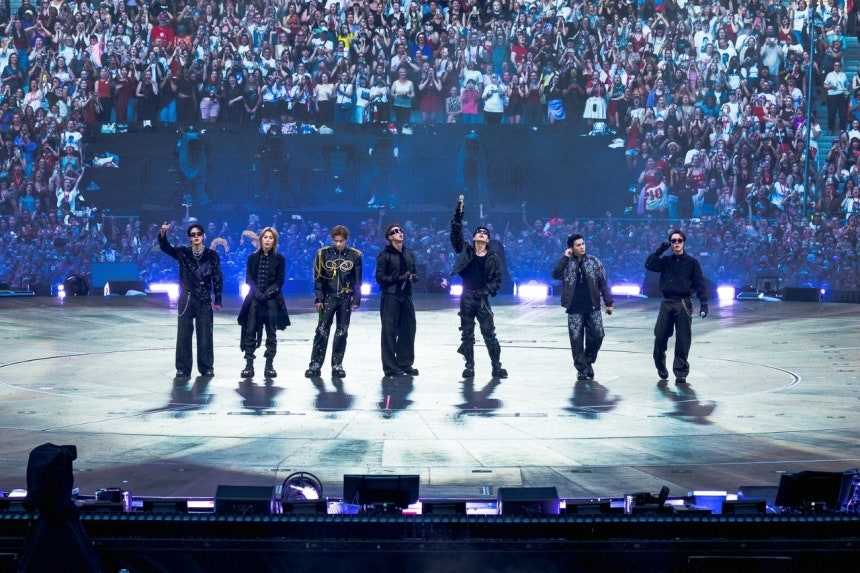
360-degree all-round artists, K-pop's huge appeal
Even in such a complicated market, K-pop stands out as a genre of choice — it offers qualities that Indian audiences find compelling.
Guzral cited the artists themselves as K-pop's biggest strength. "K-pop artists are 360-degree artists," she said. "Being able to talk about fashion, looks, dance, creativity and talent all at once is a huge advantage." It is another way of describing what is called, in Korean terms, a "hexagonal artist" or a "multi-tainer."
"India has plenty of singers who sing well, look great or dance well. But artists who combine all of those elements in one person are relatively rare. Many Indian music videos are story-driven and demand acting ability as well, so a K-pop artist who packs singing, performance, fashion, visuals, acting and creativity into a single star has a real competitive edge."
Fashion, too, is a huge opportunity. Many K-pop group members serve as ambassadors for global high-end brands, and their airport looks and off-duty style are constantly on display on social media. "India is a country hungry for fashion," Guzral said. "K-pop artists' fashion and style can appeal strongly to Indian consumers."
As a genre, K-pop's strength lies in its "new sound." When this sound — distinct from Indian music — combines with India's diverse musical traditions, it can open up new possibilities.
But the biggest hurdle K-pop must clear now is K-pop itself. Guzral pointed to what she called an oversupply of K-pop. "When BTS and BLACKPINK were first introduced to India, they were something completely new," she said. "But now there's simply too much Korean content. If a cosmetics store carries three sunscreen brands, choosing is easy. If it carries 200, it becomes hard to decide which one to pick."
"Things are different now from when five Korean songs came in, compared with 500 coming in today. Indians carry the music they grew up with in their blood. New music doesn't stay relevant just because it's new."

The illusion of a 1.4 billion market: K-pop must reach beyond Gen Z to millennials
The powerful lure of a population as vast as 1.47 billion — a "dream number" — breeds all sorts of misconceptions about the Indian market. Guzral pointed to the generational and geographic biases she sees among leading Korean entertainment companies regarding India.
"A common misconception among Korean entertainment companies is that only young people listen to music in India. Right now, everything is focused on K-pop's fandom and Gen Z. But Gen Z isn't as large a segment in India as people assume. The market is really shaped by millennials — roughly ages 24 to their mid-40s — who hold the real economic and cultural spending power."
Because the target age group has been narrowed to Gen Z, K-pop fails to appeal to a broader range of ages, she said. "Even millennials are aware of K-pop, but they don't listen to it regularly," Guzral said. "If you can't widen the target, you can't expand your reach."
Region matters just as much. Many foreign agencies entering India see only the glamour of first-tier cities like Mumbai and Delhi, but Guzral said "real consumption potential comes from smaller cities. Companies need to go beyond the big cities and dig into local communities."
Winning a place in this complicated market requires a careful strategy. Guzral pointed to three keys: collaboration, connecting with fans, and localization.
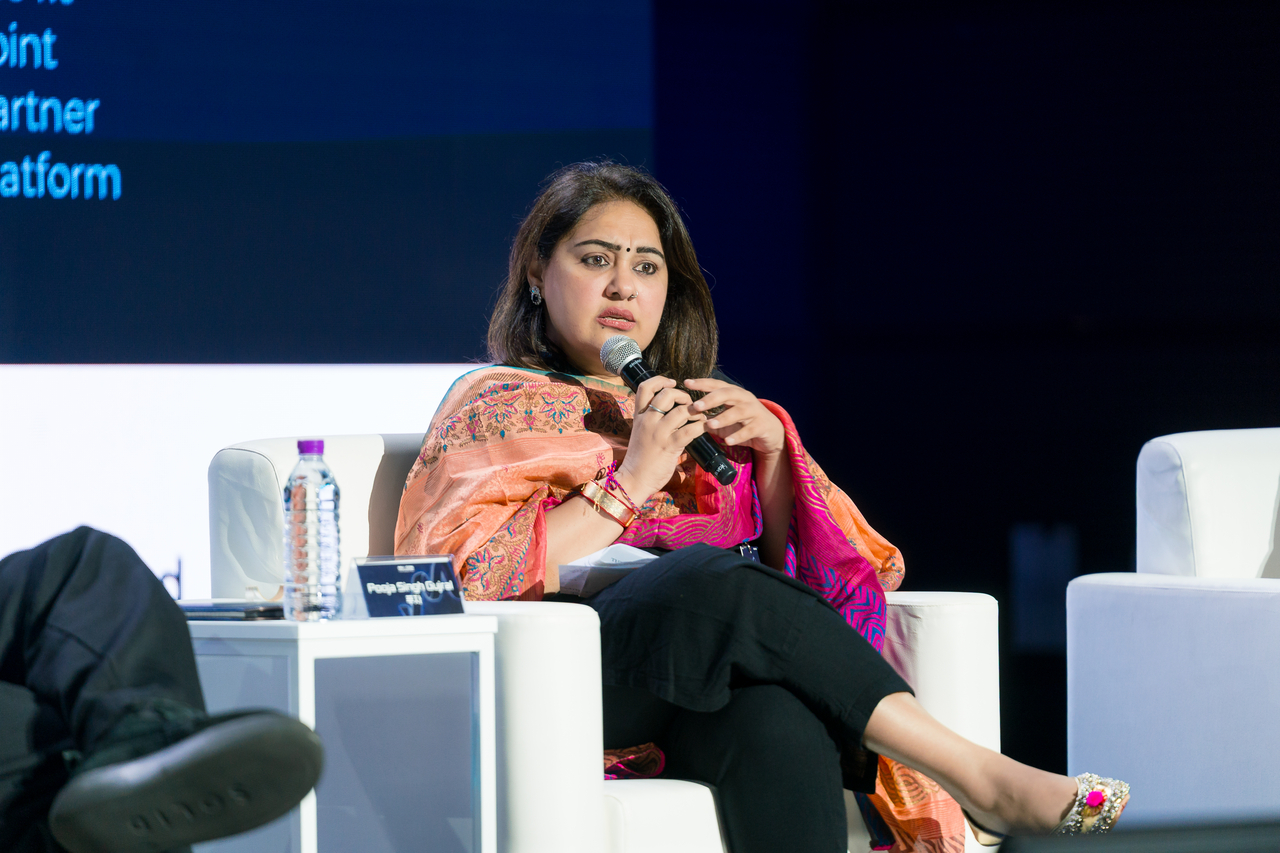
The safest and surest way to break into the local market is to collaborate with Indian artists who already have loyal fan bases. "A collaboration between an Indian artist and a K-pop artist creates a '1+1' effect, winning over both artists' fan bases at once," Guzral said. "An organic marriage of Indian and Korean music can create new experiences in both markets."
Building connections with local creators and celebrities is another good strategy. If a creator or actor with a large following in India publicly expresses fondness for K-pop, their fans may be prompted to check it out — leveraging the trust built with an existing fan base to spark discovery of new music.
Collaboration between industries, not just individuals, is another niche strategy. "Bollywood is an enormous industry," she said. "In the past, foreign artists gave songs to major Bollywood films and scored mega hits. Given the current fandom and skill level of K-content, now is the right time to move into Bollywood and television."
Guzral is skeptical of the recent trend, led mainly by major Korean agencies, of exporting the K-pop system overseas or training idols locally in India. "Recruiting and training local talent is merely an agency's strategy — it's far from what the Indian public actually wants," she said.
"It's the same logic as authentic hansik made by Koreans having the deepest flavor and succeeding. Even if Indians try to make hansik themselves, it's hard to match the original in authenticity and originality. Consumers, too, would rather choose the real original. If Indian talent were trained through the K-pop system, it might draw attention and do reasonably well, but I believe collaborating with genuine Korean artists who have their own distinct identity would produce far better results in the market."
Increasing contact with local fans matters too — meeting them directly through concerts, fan meetings and meet-and-greets, and having artists actually travel to India.
"BTS, with its enormous global fandom, still hasn't held a concert in India. Local fans can feel left out whenever India is missing from a world tour announcement," Guzral said. "A country that gives so much love deserves different treatment. Indian audiences value emotional bonds above all else."
India, often symbolized by its "enormous scale" and "massive capital," is not a market that opens its doors simply because someone knocks. Guzral stressed that localization is the single most important factor — market acceptance, she said, can only follow once localization is in place.
"India is not what you see on social media. People say 'namaste' is India's universal greeting, but less than half the population actually uses that word. Each of the 28 states has its own language, culture and even its own traditional footwear. Companies shouldn't cling to a homogenized, North-India-centric stereotype. Above all, there needs to be deep observation and genuine sincerity behind the question of why you want to enter India in the first place."
shee@heraldcorp.com




