Choi wins landslide vote on audit committee seat
Korea Zinc's Baek In-gyu wins 82 percent support
MBK, Yongpoong's Park Yu-kyung gets just 28 percent, falls short of majority
Independent director seats split 2-2 between sides
Choi camp expands board lead to 12-7
Bylaw revision passes, adding second separately elected auditor
Two-year ownership battle to resume at March annual meeting
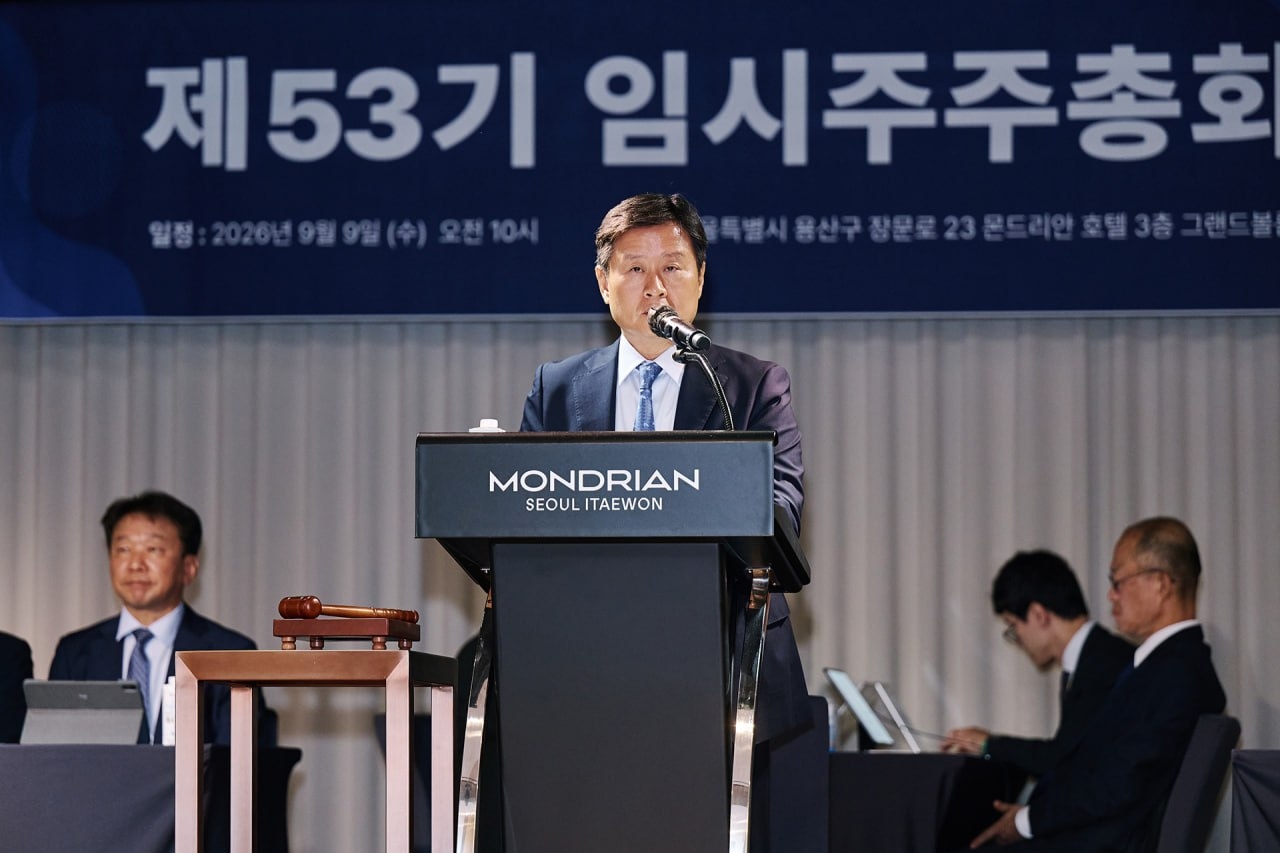
Chairman Choi Yun-beom of Korea Zinc scored another victory over the MBK Partners-Yongpoong alliance in a shareholder vote showdown. Korea Zinc's side won the audit committee seat that had been seen as the decisive battleground of the ownership dispute, widening its edge on the board from 9-5 to 12-7 and further cementing Choi's grip on the board.
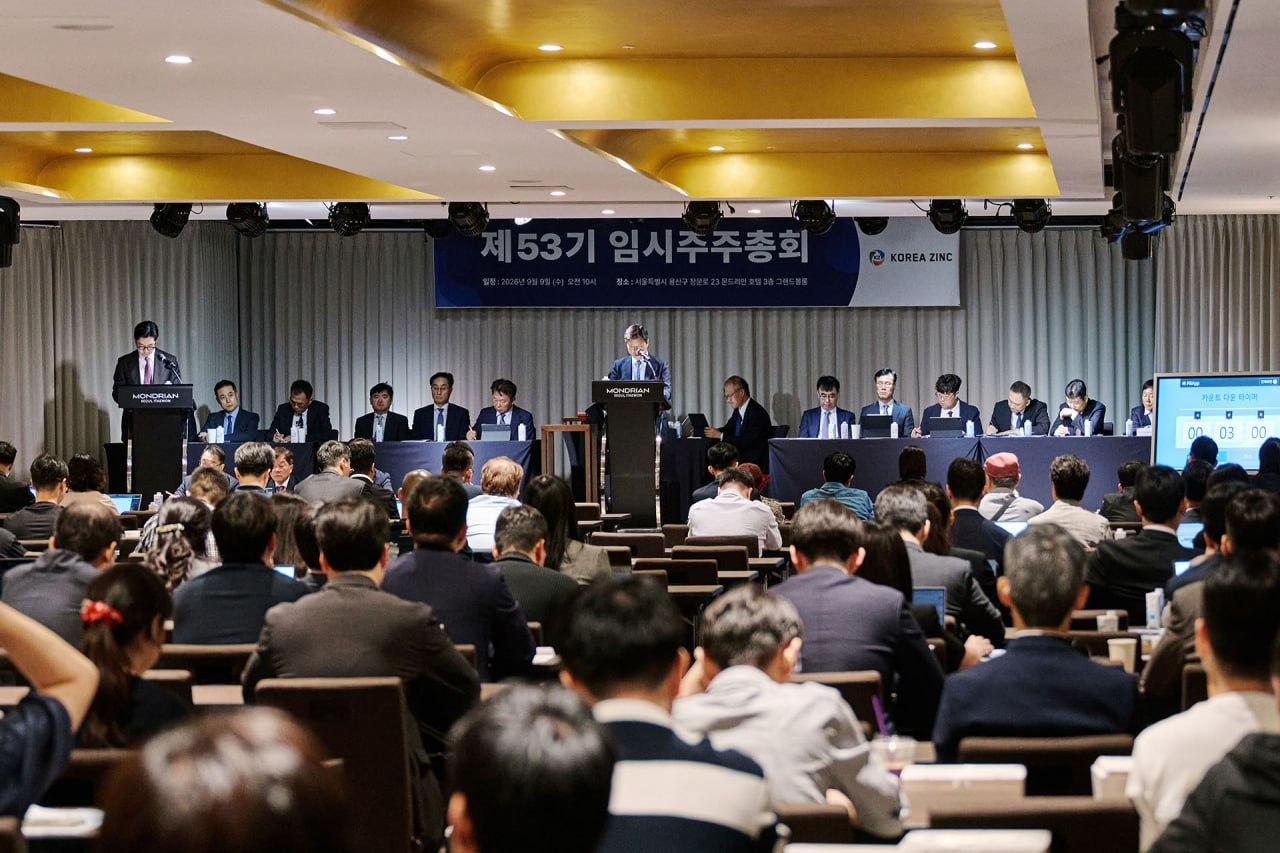
Korea Zinc held its 53rd extraordinary general meeting of shareholders on Wednesday at the Mondrian Hotel in Yongsan-gu, Seoul, where it processed three agenda items — a bylaw amendment to expand the number of separately elected audit committee members, the cumulative-voting election of four independent directors, and the election of an independent director to serve as an audit committee member. The meeting drew intense interest, with more than 90 percent of voting shares represented through electronic voting and proxy submissions.
The outcome hinged on the final agenda item, the third. Korea Zinc put forward Baek In-gyu, a certified public accountant licensed in both Korea and the US who spent 30 years in auditing and financial advisory work at Deloitte. MBK and Yongpoong countered with Park Yu-kyung, who spent about 17 years at APG, a Dutch pension fund manager, handling responsible investment and corporate governance in the Asia-Pacific region.
In the vote, Baek's appointment won support from 81.8 percent of the voting rights present. Park's appointment, by contrast, drew only 27.9 percent, falling short of the majority requirement. Because the two candidacies were separate agenda items, a shareholder could have voted for both, but in the end only Baek cleared the majority threshold and was elected as the independent director serving on the audit committee. The audit committee vote ended in a win for Korea Zinc.
3 percent rule tips the balance as institutional, retail investors side with Choi
The audit committee seat emerged as the biggest battleground of the extraordinary meeting because overall shareholding alone could not determine the outcome.
The MBK-Yongpoong alliance held about 42.1 percent of shares, ahead of Choi's 38.76 percent, but the election of the separately elected audit committee member was subject to the so-called "combined 3 percent rule," which caps the combined voting rights of the largest shareholder and related parties at 3 percent. That significantly diluted the largest shareholder's advantage, turning institutional investors, major shareholders and retail investors into the decisive variable.
Ahead of the vote, momentum had swung toward Korea Zinc. Eight of nine major domestic and international proxy advisory firms — including ISS, Glass Lewis, Egan-Jones, PIRC, Sustinvest, the Korea ESG Research Institute, Korea Voting Rights Advisory and the Korea ESG Evaluation Institute — recommended shareholders vote for Baek, citing his expertise in accounting, auditing and internal controls. Only the Korea Institute of Corporate Governance and Sustainability backed Park.
The National Pension Service, which holds a 5.44 percent stake in Korea Zinc, effectively stayed neutral by voting in favor of both Baek and Park. That made the choices of major strategic shareholders such as Hanwha and LG Group, along with institutional and retail investors, all the more important.
The two sides traded sharp exchanges until the very end of the meeting. A proxy for Yongpoong questioned Baek's independence, citing his ties to Deloitte, which does business with Korea Zinc. A shareholder friendly to Korea Zinc countered, "He holds CPA licenses in both Korea and the US and spent 30 years in auditing and financial advisory work at Deloitte. Given the role of the audit committee, that is exactly the kind of expertise needed."
Park herself took the floor to make her case. "Having one independent director serves the interests of all shareholders far better than having none," she said. "I would put the interests of all shareholders first and fully carry out the role of checking and monitoring management." Her appeal did not change the outcome.
Independent director seats split 2-2, but Choi wins the audit seat
In the second agenda item — the election of four independent directors — the two sides split the seats evenly, as had been expected.
All four candidates were elected as independent directors: Lee Hyung-kyu, professor emeritus at Hanyang University's law school; Seo Eun-sook, professor at Sangmyung University's Department of Economics and Finance; Lee Jun-bong, professor at Sungkyunkwan University's law school; and attorney Shim Hye-sup.
Lee Hyung-kyu was nominated by Yumi Development, a shareholder classified as friendly to Choi, while Seo was recommended by Korea Zinc's board. Lee Jun-bong and Shim were nominated by YPC, Yongpoong and Korea Corporate Investment Holdings.
The election used cumulative voting, under which shareholders can multiply their shares by the number of directors to be elected and concentrate all their votes on a single candidate. MBK-Yongpoong-backed candidates Shim Hye-sup and Lee Jun-bong finished first and second in the vote count, followed by Lee Hyung-kyu and Seo Eun-sook, and all four secured board seats.
While the four independent director seats were split evenly, Korea Zinc's side widened its overall board lead by also securing the audit committee seat. The board, previously made up of 14 members split 9-5 in Choi's favor, expanded to 19 members with the addition of the four independent directors and audit committee member Baek. The board now stands at 12 members aligned with Choi versus 7 with MBK and Yongpoong.
The first agenda item, a bylaw amendment to expand the number of separately elected audit committee members, also passed, with 100 percent approval. The measure had been rejected once at the annual general meeting in March, clearing the threshold about six months later.
The amendment increases the number of audit committee members elected separately from other directors from one to two, in line with the revised Commercial Act. With the bylaw change approved, Korea Zinc separately elected Baek as the additional member, completing an audit committee structure aligned with the new system.

Bylaw change rejected in March finally passes
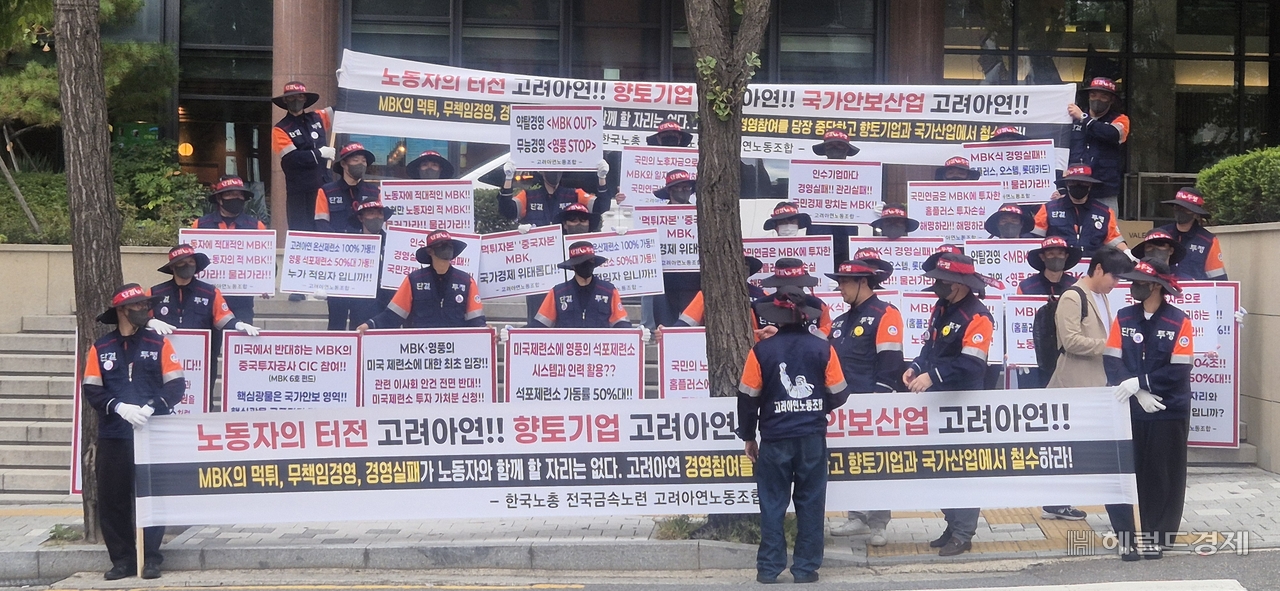
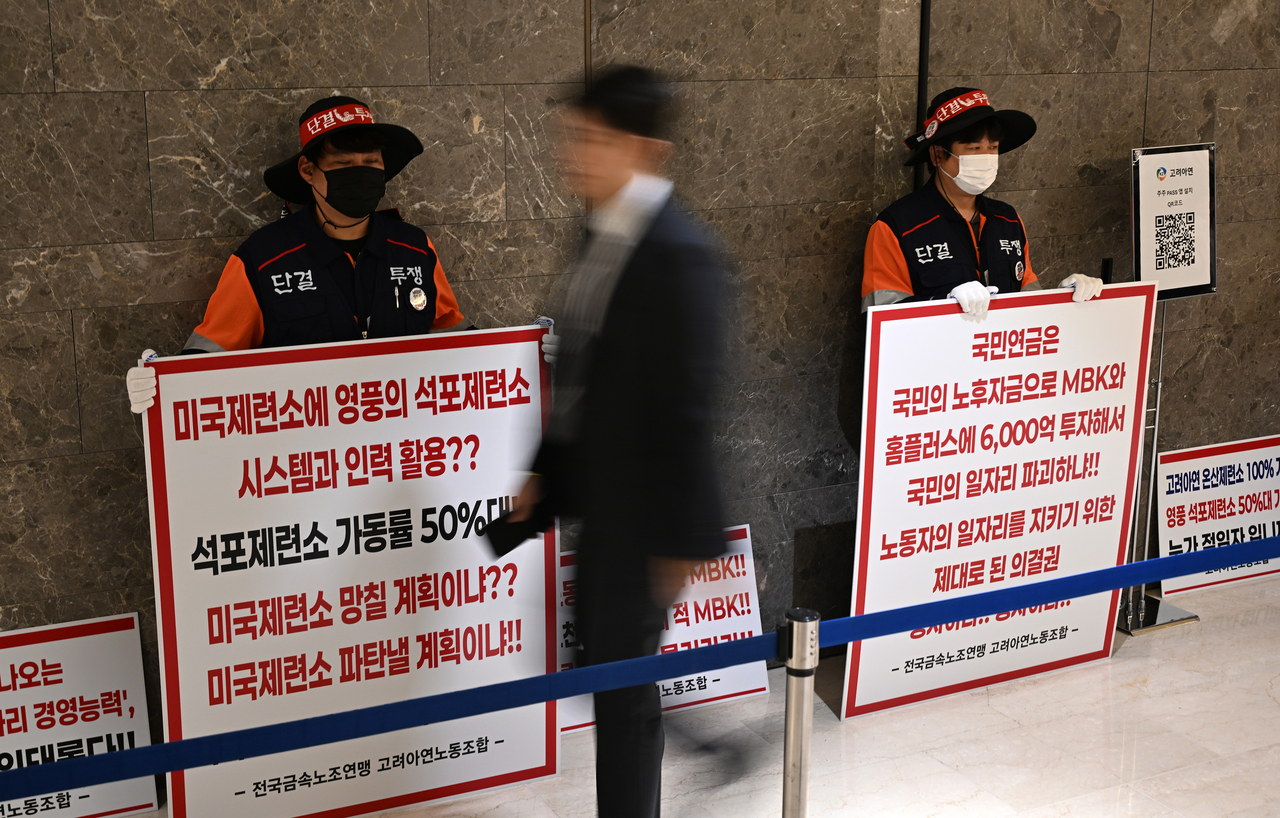
Tension also ran high outside the hotel as the vote battle unfolded inside. Members of Korea Zinc's labor union, wearing orange and navy work uniforms, held a rally opposing the takeover attempt by Yongpoong and MBK, carrying banners and picket signs reading "Korea Zinc, a workers' home" and "MBK OUT."
Inside the meeting, the two sides also clashed over how to characterize the fight — as a hostile takeover or an ownership dispute. A proxy for Yumi Development, a shareholder friendly to Choi, argued, "It is only natural that financial capital, which can only look at a company on a three- or five-year horizon, cannot offer a proper vision for a company like Korea Zinc, which must pursue growth on a 50-year horizon."
A proxy for YPC countered, "The essence of the current situation is not a hostile takeover but an ownership dispute," arguing that the board needs directors with independence and expertise.
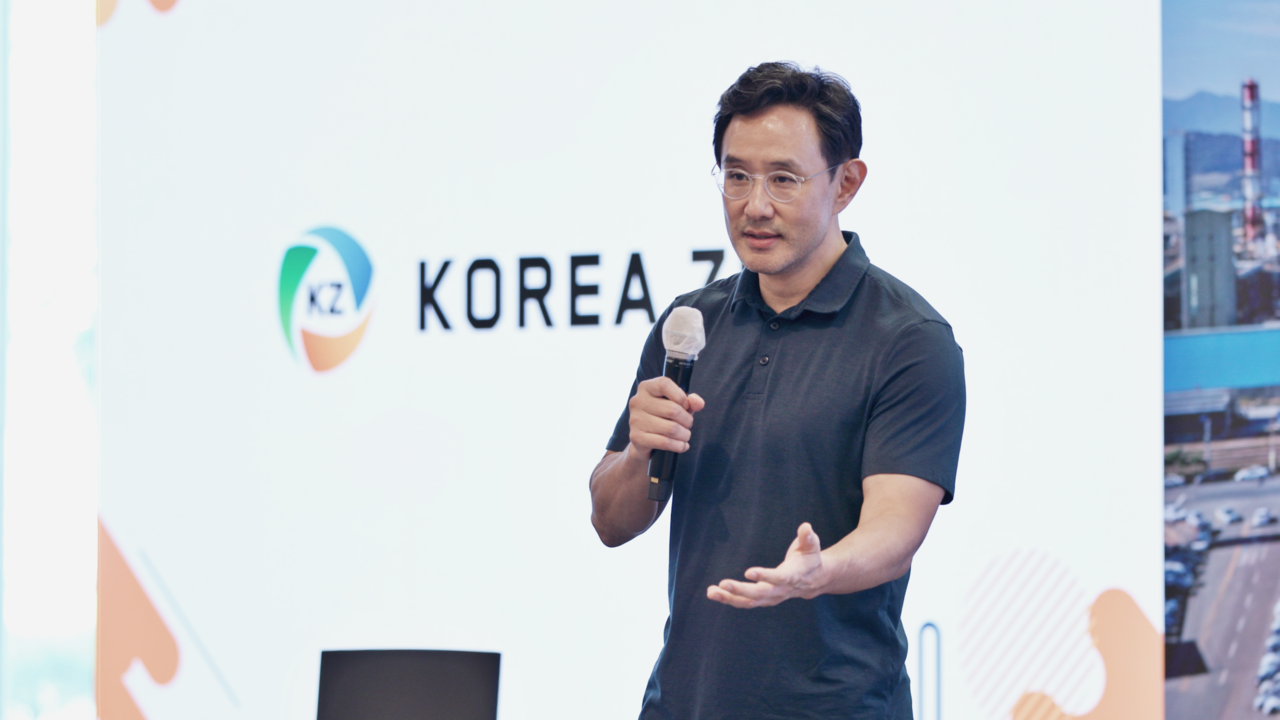
Record earnings serve as a shield, bolstering Choi's leadership
The latest win gives Choi's side both the moral high ground and practical advantage once again in the ownership fight.
Korea Zinc has repeatedly highlighted the current management's earnings and future growth strategy in response to the MBK-Yongpoong side's attempts to seize control.
In the second quarter of this year, consolidated sales rose 66.6 percent year on year to 6.37 trillion won ($4.75 billion), while operating profit jumped 126.8 percent to 587.1 billion won. Cumulative operating profit for the first half of the year reached 1.33 trillion won, a record for a first half.
Rising nonferrous metal prices also boosted earnings. According to Korea Zinc's shareholder meeting materials, average international prices in the first half of this year rose about 22 percent for zinc, 53 percent for gold, 141 percent for silver and 39 percent for copper compared with the same period last year.
Korea Zinc is also working to expand beyond its traditional zinc- and lead-focused smelting business into critical minerals, resource recycling and battery materials. Kemco is expanding its nickel sulfate production capacity, while Korea Zinc is pursuing a large-scale smelting project in the US aimed at building a critical minerals supply chain.
In particular, Korea Zinc's integrated nonferrous metal smelter in the US is targeting a 2029 startup and is designed to produce 13 types of nonferrous metals, including 11 critical minerals, along with semiconductor-grade sulfuric acid. Korea Zinc aims to secure a production base in the North American critical minerals market in line with the US policy of reducing reliance on China for supply chains.
The fight is not over — another big showdown looms in March
The win, however, does not mean the nearly two-year battle for control of Korea Zinc is over.
While Choi's side kept its board majority in this extraordinary meeting, the MBK-Yongpoong alliance still holds a substantial stake as part of Korea Zinc's largest shareholder group. Both sides are bracing for a prolonged fight.
The next battleground is expected to be the annual general meeting in March, when the terms of eight directors and one audit committee member are set to expire, raising the likelihood of another large-scale vote battle over the board's composition.
If the bylaw amendment expanding separately elected audit committee seats holds, the competition between the two sides to secure voting rights over audit committee appointments and board control is expected to intensify further at next year's meeting.
MBK and Yongpoong said of the outcome, "This election brings the number of directors we recommended to seven in total, expanding the foundation for strengthening the board's checks and oversight functions. We regret that Park was not elected to the audit committee."
An industry official said, "This extraordinary meeting was less a simple election for a single audit committee seat than a midway battle that will gauge who controls the board going forward. The competition between the two sides to secure friendly shares and win over shareholders is likely to continue until next year's annual general meeting."
kwater@heraldcorp.com