'Politics fuels conflict, so politics must show unity first'
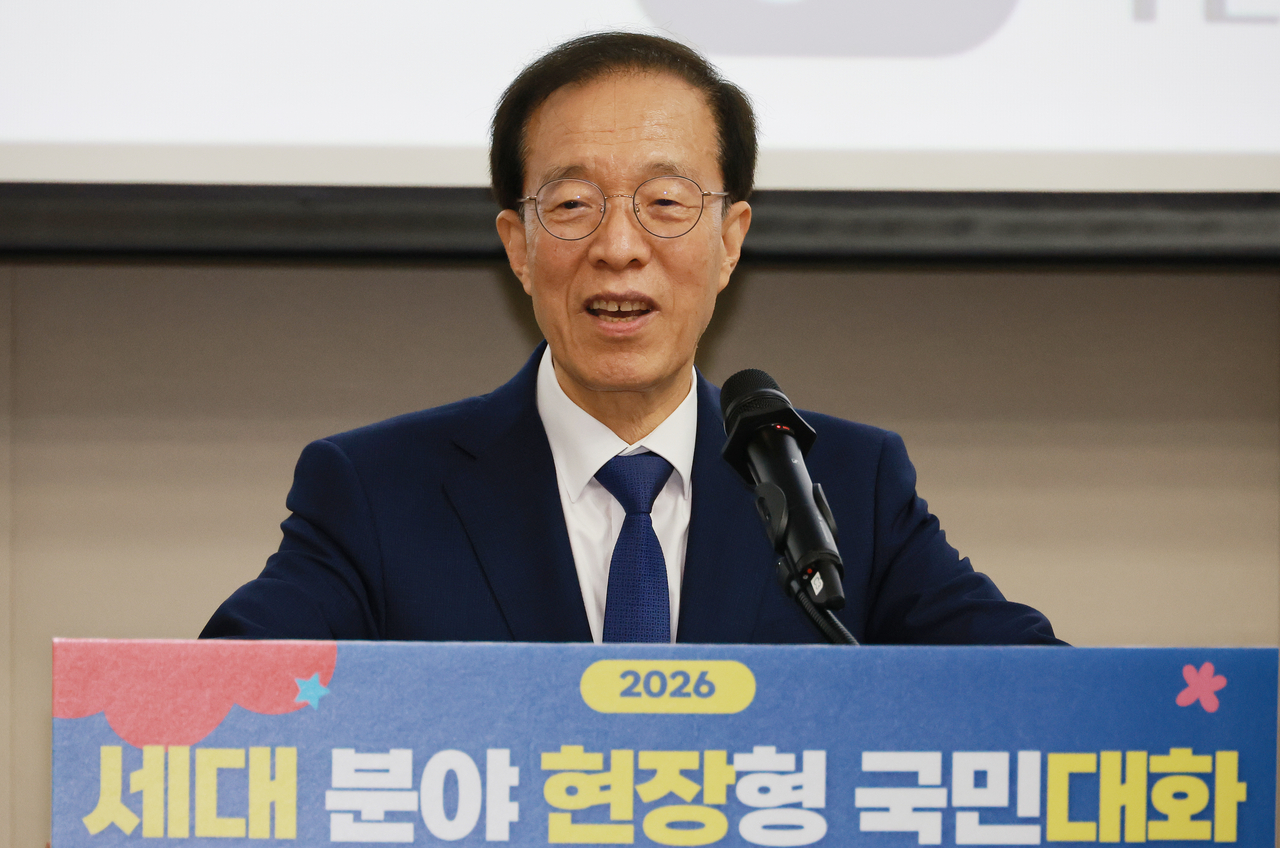
Lee Seok-yeon stepped down Wednesday after a year as chairperson of the presidential National Unity Committee. He warned that the body must never become a show organization that caters to those in power and directly criticized politics for deepening conflict along factional lines.
"I am leaving my post as chairperson of the presidential National Unity Committee on Sept. 9," Lee said in a Facebook post that day. "The past year gave me a close look at the scenes of division and conflict in our society, and it was a deep and heavy time in which I asked myself what unity truly means for South Korea."
Lee sharply criticized the political establishment for failing to heal social conflict. "In a democratic society, conflict and division are unavoidable, but what matters is how we handle that conflict," he said. "If we see the other side as an enemy and exclude them simply because their views differ from ours, democracy loses its footing."
"At the scene, I realized that division and conflict among the public run far deeper than expected, but that the public is also far wiser and more tolerant than politicians assume," he then said. "More often than not, it is politics itself that amplifies conflict, splitting our society through confirmation bias and factional logic. That is why politicians must show unity in politics itself before they speak of national unity."
Lee particularly stressed his role in offering candid criticism to the government and those in power. "There is one thing I can say for certain: I tried to be the unity chief for the people, not for any one side," he said. "I tried to speak from the public's perspective rather than worry about how power would react, and when necessary, I did not hesitate to offer criticism to the president and the government."
"The National Unity Committee must serve as a channel for delivering the public's pain, anger and the voices of the silent majority to those in power," he went on to say. "An organization that only tells power what it wants to hear, or puts on a show of sycophancy toward power, has no reason to exist."
He appealed earnestly to political leaders: "Please think of coexistence over victory. Please look at the whole nation, not just your own supporters. Please think of tomorrow's South Korea, not today's power."
To civil servants across the country, he urged them to uphold the spirit of the Constitution. "Please always keep in mind Article 7, Paragraph 1 of the Constitution, which states that 'public officials shall be servants of the entire people and shall be responsible to the people,'" Lee said. "The mission of a public official is nothing more and nothing less than that. No one can undermine or hollow out this fundamental principle of the Constitution."
sunpine@heraldcorp.com