
Future aviation ecosystem showcased at Bexco in Busan
Manufacturing AX, AI MRO, UAM integrated control and more
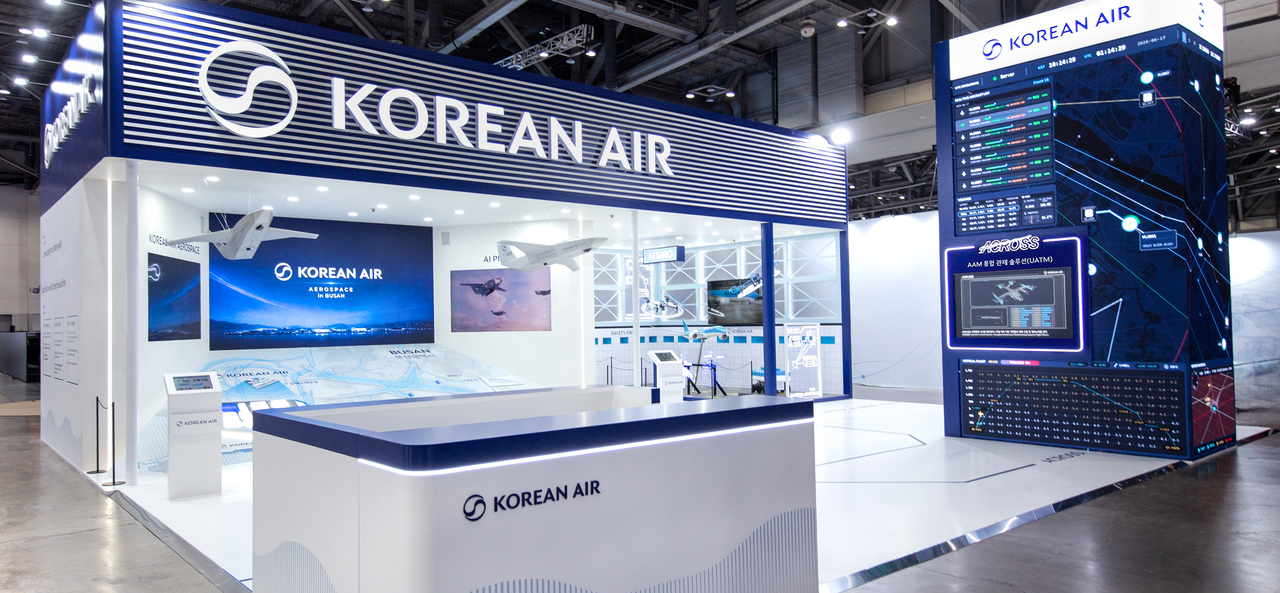
Korean Air said Wednesday it will take part in the 2026 World Smart City Expo, running for three days through Friday at Bexco in Haeundae-gu, Busan.
The World Smart City Expo, hosted by the Ministry of Land, Infrastructure and Transport, the Ministry of Science and ICT and Busan Metropolitan City, is Asia's largest smart city expo and marks its 10th anniversary this year. The event features exhibitions, conferences and a range of business programs offering the latest technology and insights on AI solutions, transportation, mobility and infrastructure.
At the exhibition, Korean Air will present a future aviation industry ecosystem that combines AI with advanced manufacturing processes. The company plans to showcase its vision for future smart cities by building next-generation aviation infrastructure centered on advanced automated manufacturing, AI-based aircraft maintenance, repair and overhaul (MRO), and integrated air traffic control for urban air mobility (UAM).
The Future Aviation AX Zone in Korean Air's booth highlights the manufacturing innovation that underpins the smart city industry. A video display depicts an advanced, multipurpose production line that uses AI to mass-produce a range of aircraft parts and airframes, presenting a blueprint for a smart factory and a vision for large-scale, next-generation aviation production innovation centered in Busan.
Korean Air will also display its automation technology, currently under development, for manufacturing commercial aircraft parts, along with a low-observable unmanned wingman aircraft, a future core air power asset, demonstrating its capability to directly produce advanced aircraft.
The AI Aviation MRO Zone introduces cases in which intelligent maintenance technology has been applied to commercial aircraft servicing. It features an automated system, developed by Korean Air, in which inspection drones and ground-based mobile rovers precisely scan an aircraft's exterior, detect defects and report them in real time. The system is expected to enable unmanned, intelligent maintenance of core systems for large-scale mobility in smart cities.
The ACROSS Zone showcases core technology for a three-dimensional transportation network linking future smart cities with the sky. ACROSS is an integrated UAM operation solution developed by Korean Air. It previously demonstrated its capabilities by successfully completing the second-stage demonstration project of the Korean Urban Air Mobility (K-UAM) Grand Challenge, led by the Ministry of Land, Infrastructure and Transport.
A Korean Air official said, "A true smart city can only be completed when advanced aviation manufacturing technology, air traffic control and maintenance infrastructure are connected as one, beyond the ground," adding, "Through our vision for a future aviation cluster, we will lead automated production in the global aerospace industry."
Meanwhile, Korean Air has been actively expanding its business portfolio for sustainable growth, recently partnering with Thailand's state-run aircraft maintenance company TAI as part of its strategy to enter the Southeast Asian aviation MRO market.
eyre@heraldcorp.com




