AI services and infrastructure, domestic and overseas expansion, legal framework and more
The government has unveiled a detailed roadmap for building a "K-AI City," a project it is pursuing as a key state initiative. The plan aims to integrate AI and robot technology across urban spaces to create a people-centered city of the future that residents can experience in everyday life. It also aims to cultivate the city into South Korea's flagship export model.
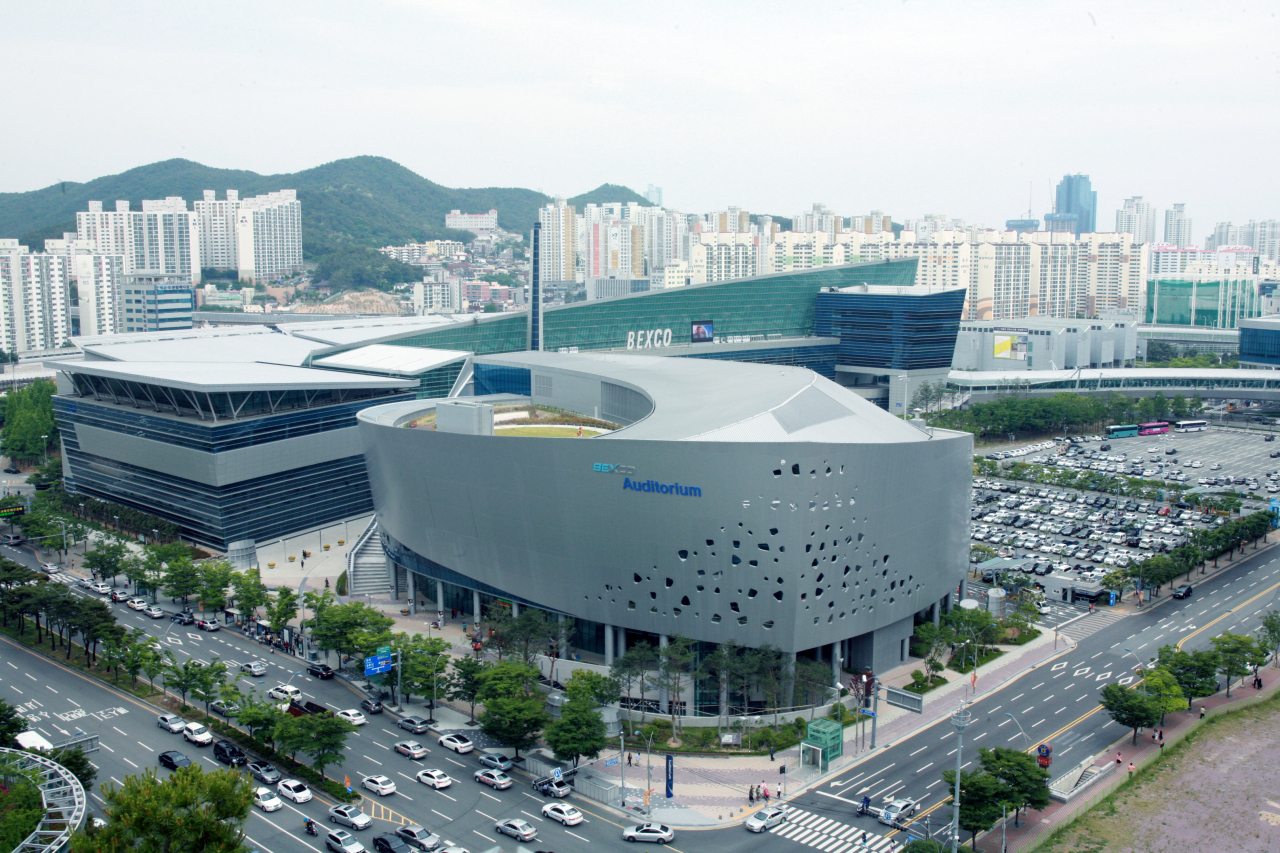
The Ministry of Land, Infrastructure and Transport announced the "K-AI City Implementation Strategy" on Wednesday at the 2026 World Smart City Expo at Bexco in Busan. The strategy pursues five key tasks under three basic directions. These directions are building a people-centered city of the future, creating an environment for the free testing of technology and robots, and realizing an export-oriented city model.
The ministry will first introduce AI into highly visible public sectors such as urban administration and planning, and identify "AI City+X" services through private-sector open calls. It will also draw up a technology roadmap dividing urban development into five stages, from foundation-building (Level 1) to a fully autonomous city (Level 5), to systematically manage progress. It will secure national standard technologies through data standardization and research and development on urban operating technology.
Urban infrastructure will also be upgraded into a three-layer system. It includes an urban intelligence center serving as the brain, a data pipeline functioning as the nervous system, and physical AI and intelligent facilities acting as the body. Existing facilities will be made smarter, centered on the country's five growth hubs and three special zones. The ministry will also introduce "smart-plus buildings," in which the building itself functions as an AI platform, along with guidelines for autonomous-driving- and robot-friendly facilities. These measures will expand the approach citywide.
Pilot city projects that apply AI technology to actual urban spaces will also move forward in earnest. Wonju and the Cheonan-Asan area will be developed as "testbed-type" cities, where private companies build services using public infrastructure. Saemangeum and Gwangju will become "model-type" cities that incorporate AI and robot technology from the urban design stage.
To build an industrial ecosystem, the ministry will restructure projects so that local governments, companies and universities collaborate. It will also open an "AI and Smart City Solution Market" for trading solutions. In addition, it will draw up tailored export strategies combining leading services and reorganize the K-City Network project around AI to support overseas expansion.
To lay an institutional foundation, the ministry will rename the existing Smart City Act as the AI and Smart City Act. It will also introduce regulatory exemptions along with a planning-type regulatory sandbox. The ministry plans to complete the legislative overhaul by 2027, finish building pilot cities by 2030, and then spread successful outcomes both domestically and abroad.
Kim Yun-deok, minister of land, infrastructure and transport, said, "Whether the K-AI City succeeds depends less on how advanced the technology looks and more on whether it actually works in the city to make people's lives more convenient and safer." He added, "We will build an AI city centered on people, not one where technology is an end in itself."
Meanwhile, the WSCE, the largest smart city event in the Asia-Pacific region, opened in Busan this year, marking its 10th anniversary. The WSCE is co-hosted by the Ministry of Land, Infrastructure and Transport, the Ministry of Science and ICT, and the Busan city government. It was launched to help domestic smart city technology expand overseas and to broaden global networks. The event runs for three days, from Wednesday through Friday, at Exhibition Hall 1 of Bexco.
This year's event adopted the slogan "Beyond Smart City, Into AI City." Moving beyond simple urban digitization and intelligence, it aims to accelerate the spread of "K-AI City," a key state initiative under the Lee Jae Myung administration. It also aims to present a new vision for the cities of the future.
hwshin@heraldcorp.com