
Reserve fund rises from 3.8 trillion won last year to 9 trillion won this year — a 2.4-fold increase
Quarterly reporting now mandatory, yet spending rationale and cost breakdowns remain opaque
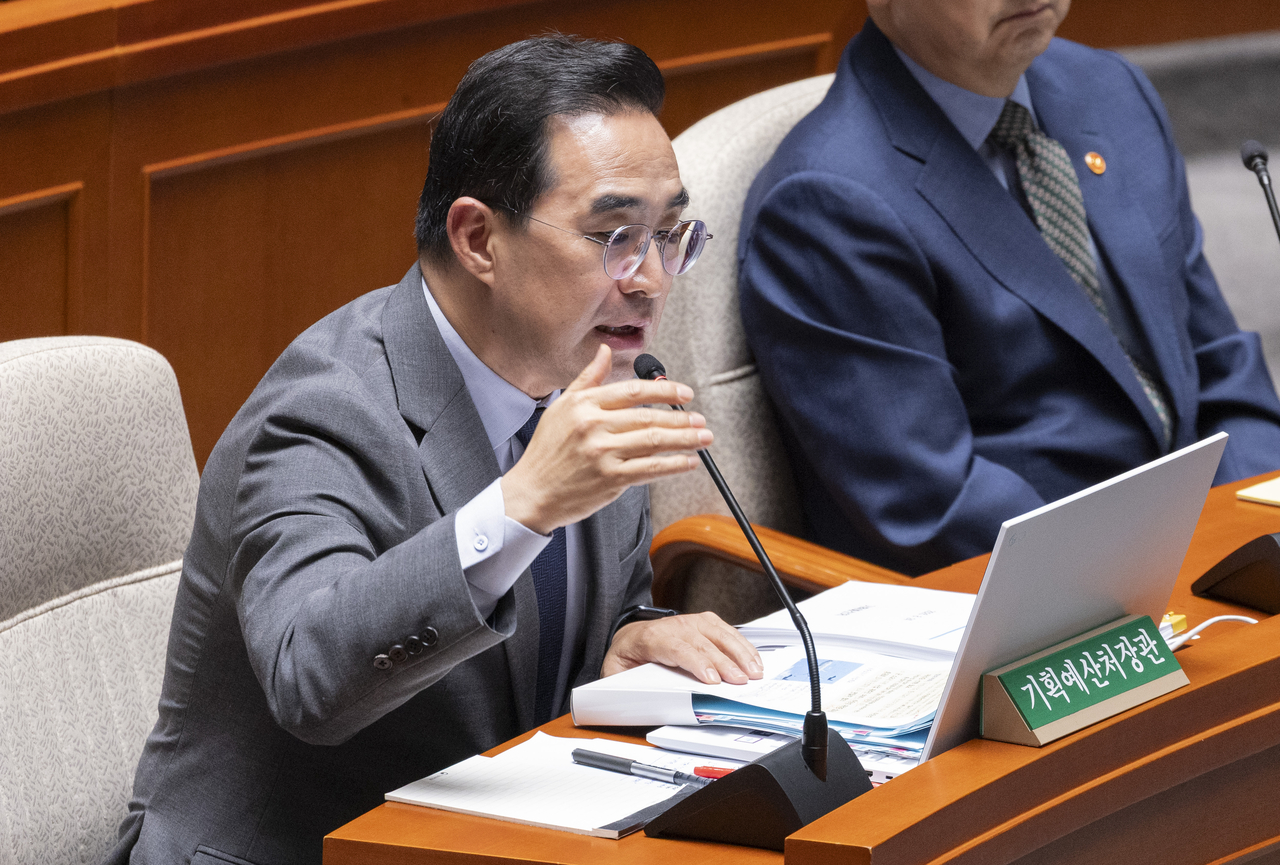
This year's reserve fund has grown to 9 trillion won ($6.64 billion) — 2.4 times last year's 3.8 trillion won — yet the quarterly spending plan statements submitted to the National Assembly contain only broad outlines such as project names and amounts, making it difficult to assess specific spending plans. Critics say that despite a reform of the reserve fund system for the first time in 19 years and the introduction of mandatory quarterly reporting, the National Assembly's fiscal oversight may remain little more than a formality.
According to the National Assembly Research Service, this year's reserve fund budget totals 9 trillion won. The fund swelled to 9.7 trillion won in 2021 for emergency COVID-19 response before declining to 5.5 trillion won in 2022, 4.6 trillion won in 2023, 4.2 trillion won in 2024 and 3.8 trillion won last year.
This year, however, 4 trillion won was included in the original budget, and a further 5 trillion won in targeted reserve funds was added through the first supplementary budget. The increase was driven by plans to introduce an oil price ceiling mechanism to guard against external variables such as oil prices, exchange rates and instability in the Middle East.
Reserve funds are set aside to cover fiscal needs that are difficult to anticipate when the budget is drawn up. Under the National Fiscal Act, spending from the reserve fund is permitted only when the need could not have been foreseen at the time of budgeting, when expenditure is urgently required during the fiscal year, when existing budget allocations cannot cover the cost, and when the funds can be spent within the same fiscal year.
Until now, reserve fund spending followed a process in which the administration carried out disbursements through internal procedures and then sought retroactive National Assembly approval the following year. Critics have long argued that this arrangement makes it difficult for the Assembly to track reserve fund use during the year and to check improper spending before it occurs.
To address these shortcomings, an amendment to the National Fiscal Act passed the National Assembly in January — the first overhaul of the system since the act was enacted 19 years ago. The revised law requires the heads of central government agencies to clearly state the grounds for eligibility and the basis for calculating the requested amount when applying to use reserve funds, and to submit that documentation to the minister of the Ministry of Planning and Budget.
The amendment also requires that quarterly spending plan statements approved by the president be submitted to the relevant standing committees and the Budget and Accounts Special Committee of the National Assembly, allowing lawmakers to review reserve fund spending plans within the same fiscal year.
The first quarterly reserve fund spending plan statement submitted under the new rules this year, however, contained only general information such as project names and amounts. The National Assembly Research Service said the document falls short of what is needed to verify specific spending plans, the justification for reserve fund requests, or the basis for calculating the amounts.
Citing media reports, the National Assembly Research Service noted that first-quarter reserve fund spending this year totaled 95.8 billion won, of which 23 billion won went to bodies including the Basic Society Committee, the Truth and Reconciliation Commission and the Commission on Gwangju. The quarterly statements alone, however, are insufficient to judge the specific reasons for channeling reserve funds to each project or to assess whether the spending levels are appropriate.
The retroactive approval structure also remains in place. The National Assembly has issued correction requests regarding reserve fund spending every year — 35 in 2020, 22 in 2021, 27 in 2022, 26 in 2023 and 20 in 2024. Under the retroactive approval system, however, the Assembly has little practical ability to affect the validity of funds that have already been disbursed.
The National Assembly Research Service said the quarterly spending plan statements must include detailed cost breakdowns and specific spending plans for each project so that the reports do not remain a mere formality. It also called on the Ministry of Planning and Budget to submit the first- and second-quarter reserve fund spending plan statements for this year, the detailed statements filed at the time of each reserve fund request, the drafting guidelines, and records of the Assembly's correction requests and each ministry's responses over the past five years.
fact0514@heraldcorp.com




