
Treacherous terrain cited as Nepal army blocks on-foot search; aerial operations intensify
Survivors pulled from tunnels offer hope as phone tracking efforts stall
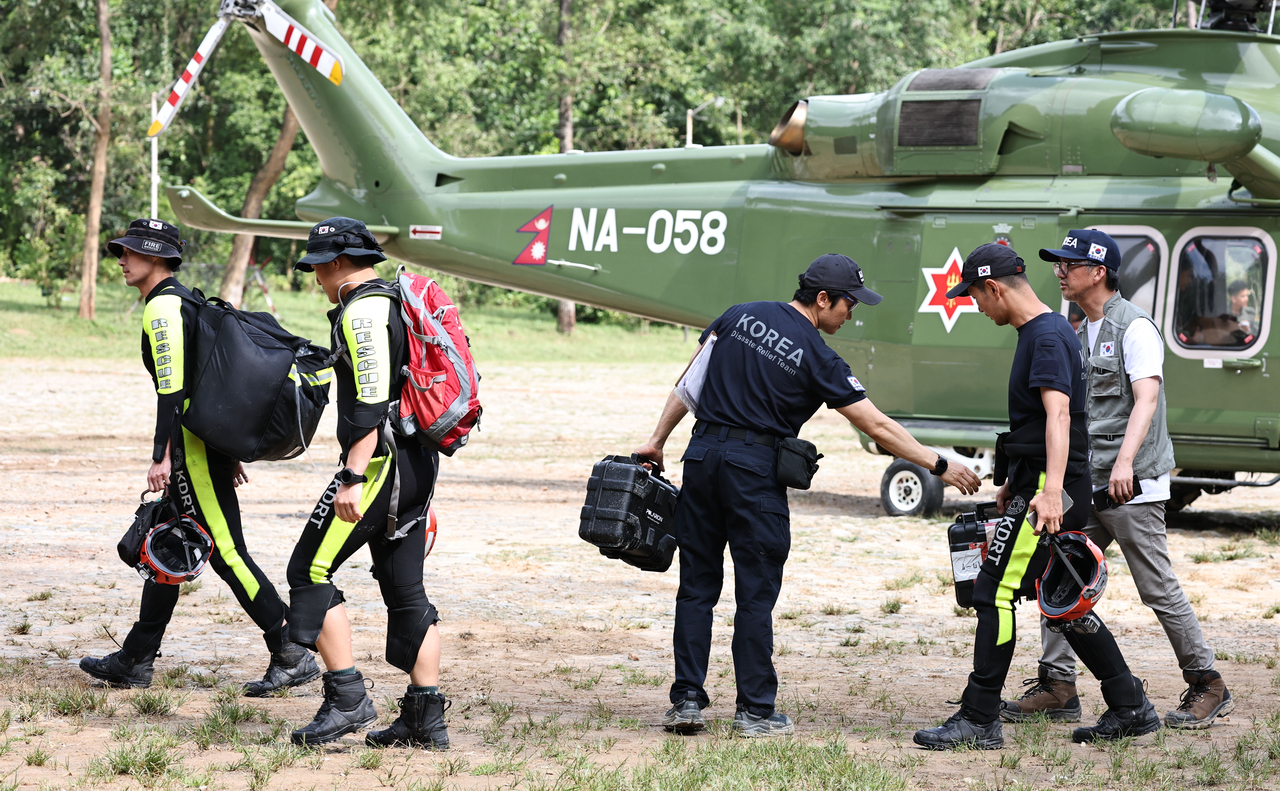
South Korea's overseas disaster relief team is struggling to locate nine missing Koreans in flood-ravaged Nepal, with search operations hampered by extreme terrain hazards and restrictions imposed by the Nepali military. Ground searches in key areas requested by the Korean side have been blocked, and efforts to track the missing persons' mobile phones have also failed to gain traction.
A Ministry of Foreign Affairs official told reporters Monday that on-foot searches in areas of particular interest to the Korean side had not been carried out. "It is true that ground searches are not being conducted in the zones we have identified," the official said. "The Nepali military is not permitting foot searches, citing the rugged mountain terrain and dangerous conditions."
The areas where rescue teams and the families of the missing are most eager to search include the mountainous terrain behind the "main camp" — where the administrative building once stood — as well as the powerhouse area and the vicinity of the Yellow Bridge south of the power plant.
Those areas feature steep slopes and dense vegetation, and the terrain has been drastically altered by riverbank erosion from flash floods and heavy sediment deposits, making on-foot access extremely dangerous. The Nepali military, which holds operational control of the site, has barred entry on safety grounds.
In response, the Korea Disaster Relief Team has concentrated its efforts on aerial searches using drones and helicopters. Over the weekend, three drones were deployed to the Mailung and Ramche areas for detailed reconnaissance, but no meaningful traces of the missing Koreans have yet been found.
Hopes for mobile phone location tracking have also stalled. "We are in ongoing discussions with Nepali authorities, but sufficient information for location tracking has not yet been gathered," the Foreign Ministry official said. "There has been some progress, but we have not yet reached the stage where tracking is possible."
However, a series of survivors rescued from tunnels has kept hope alive. On Friday, nine days after the flooding began, two Nepali workers were pulled from a tunnel at the Trishuli 3A hydropower plant. The following day, a Chinese national was rescued alive from a tunnel near the weir dam where Korean workers had been stationed.
The relief team plans to continue operations Monday, conducting additional searches of the tunnel near the weir dam where survivors were confirmed, in coordination with the Nepali military, while deploying drones and helicopters to areas of interest that remain inaccessible on foot.
sunpine@heraldcorp.com




