
Setting a new course for a more open, responsive Seoul Metropolitan Council
"I will make it younger, listen more deeply, and answer to the people"
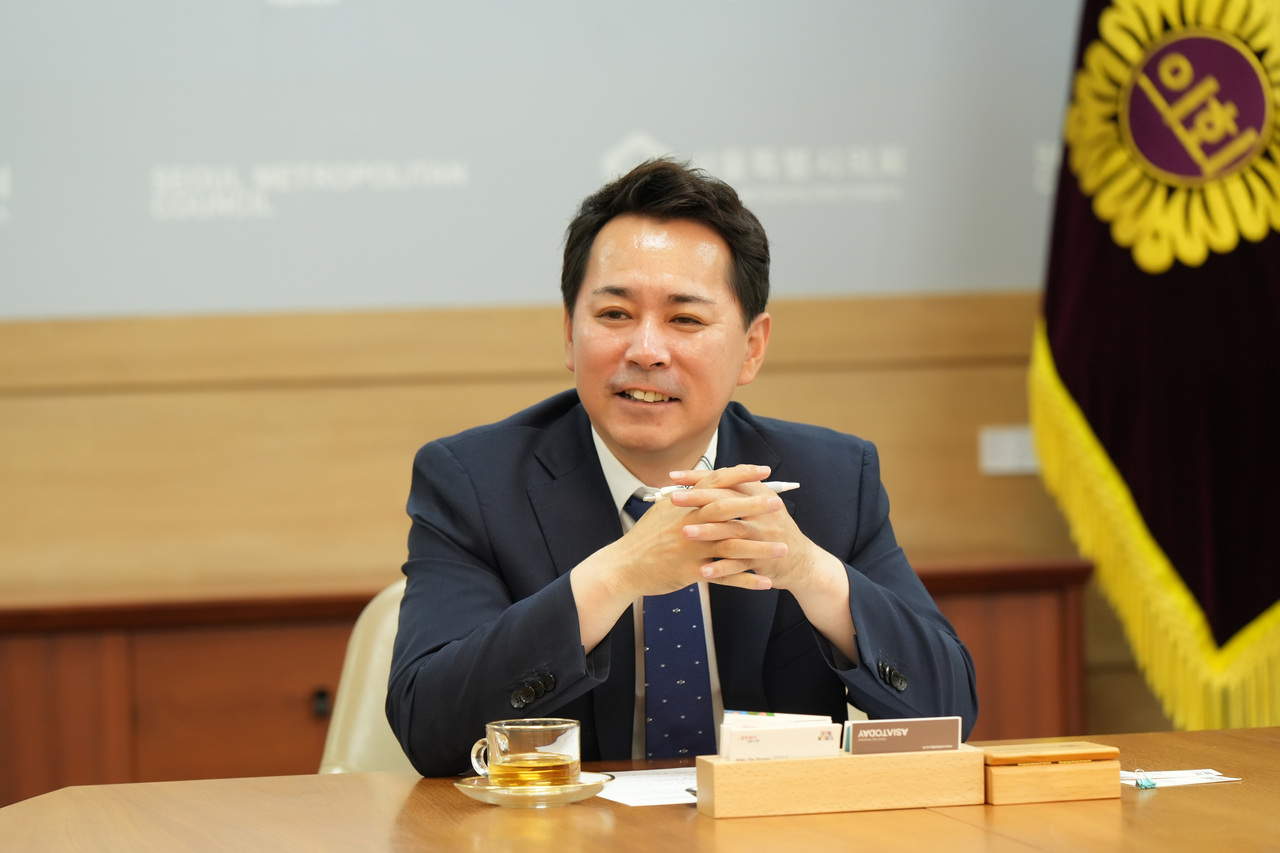
Im Man-gyun, a three-term lawmaker from the Democratic Party of Korea representing Gwanak District 3, has made history as both the first speaker from Gwanak-gu and the youngest speaker in the history of the Seoul Metropolitan Council. Now leading all 118 council members, Im has set out to combine youthful leadership with legislative experience — strengthening internal communication and unity while balancing oversight of the city administration with cooperation on behalf of Seoul residents.
Im won the speakership on June 29 in a six-candidate race and immediately put council reform and innovation at the center of his agenda. He has outlined plans to broaden public engagement, build a more open council, and create an institutional foundation that allows members to focus fully on their legislative duties.
Im's background spans labor relations, urban administration, and legislative work. As a licensed labor attorney, he mediated labor-management disputes on the ground, building hands-on experience in communication and negotiations. On the council, he served on urban planning committees during the 10th and 11th terms, and he holds a master's degree in urban administration from the University of Seoul.
In the community, Im led the Gwanak Junior Chamber International as its president before entering the Seoul Metropolitan Council, where he has served three terms and engaged with both local issues and major city policies. During his tenure as chair of the Environment and Water Resources Committee in the latter half of the 11th term, he focused on scrutinizing and checking key projects of the city administration.
A prominent example was the Han River Bus project. Im closely examined the project's viability and operational plans, scrutinizing the city's implementation process and effectiveness. During administrative audits, he exercised the council's oversight function by calling project officials as witnesses.
That experience has shaped how he approaches the council's relationship with the city administration since taking office as speaker. Rather than reflexive opposition, his standard for judgment will be whether a given policy genuinely serves the people of Seoul.
Livelihoods, safety, youth: a council focused on what citizens feel
Im identified economic recovery for ordinary residents, public safety, and youth policy as the three areas the Seoul Metropolitan Council should prioritize.
On the economic front, he plans to examine whether support for small business owners and the self-employed — who have struggled under the economic slowdown and high prices — is producing real results on the ground. He also intends to check whether budgets and policies for traditional markets and neighborhood shopping districts are keeping pace with the expansion of the support regime and genuinely reflecting what those communities need.
On public safety, Im said the emphasis will be on prevention rather than response. Rather than simply managing the aftermath of accidents, the council will work to identify hazards in advance and verify that relevant projects and budgets are actually performing a preventive function.
On youth policy, Im plans to take a comprehensive view — covering not only jobs and residential support but also marriage and asset formation, addressing the full range of challenges young people face in their daily lives. He said he will expand direct communication with young people themselves and strengthen the council's role in ensuring that voices from the field feed into policy discussions.
Another pillar of Im's approach to running the council is communication and cooperative governance. He noted that while the 118 members represent different parties and districts, they share the common goal of serving Seoul's residents — and he intends to build a culture in which disagreements are resolved through debate and decisions, once made, are respected.
In the council's relationship with the city administration, Im said he will maintain a balance between oversight and cooperation — exercising the council's watchdog function clearly when policies or projects go wrong, while working with the administration to deliver results when a policy genuinely serves the public.
"I will check flawed policies and projects without hesitation, but I will actively cooperate on policies that the people need," Im said. "There will never be opposition for opposition's sake. The only standard for every policy judgment is the citizen."
From a local government law to field-based legislative work
Strengthening the independence and expertise of local councils through institutional reform is another priority for Im. While local councils play a vital role in checking and overseeing city administrations, their institutional authority over the organizational and budgetary foundations of their own legislative work remains limited, he said.
Im supports enacting a dedicated local council law that would comprehensively define the operations and powers of local councils. He plans to work with councils across the country to establish the rights and responsibilities of local legislatures on a firm institutional footing and to build a stronger foundation for independent legislative activity.
He also intends to expand field-based legislative work — going beyond his own constituency to hear directly from residents across Seoul and work with the city administration to find solutions. The aim is to move beyond policies debated inside the council chamber and create changes that citizens can actually feel.
Im's leadership draws on the mediation and communication skills he developed in labor relations and on the legislative experience accumulated over three terms. He said he intends to weave into the council's operations a sense of balance — holding firm on principle where strong oversight is needed, while cooperating on policies that serve the public.
The distinction of being Gwanak-gu's first and the council's youngest-ever speaker weighs on Im as a new responsibility. As a young speaker, he faces the challenge of accelerating the pace of change while drawing on his experience as a three-term lawmaker to bring together the diverse voices within the council.
"When my term ends, I want citizens to say that the Seoul Metropolitan Council was the most reliable council by their side," Im said. "I will build a council that listens to the people's voices to the very end and answers with results — a Seoul Metropolitan Council where citizens can feel the change."
Whether Im, who rose from Gwanak-gu to lead the Seoul Metropolitan Council, can drive meaningful change through his combination of youthful leadership and legislative experience remains to be seen. How he navigates public engagement, oversight of the city administration, cross-party cooperation, and the institutional independence of local councils will be the early tests of his tenure.
7toy7@heraldcorp.com




