Mayor Koo Ja-yeol seeks support for smooth relocation of public institutions
Officials who championed Wonju's innovation city join meeting
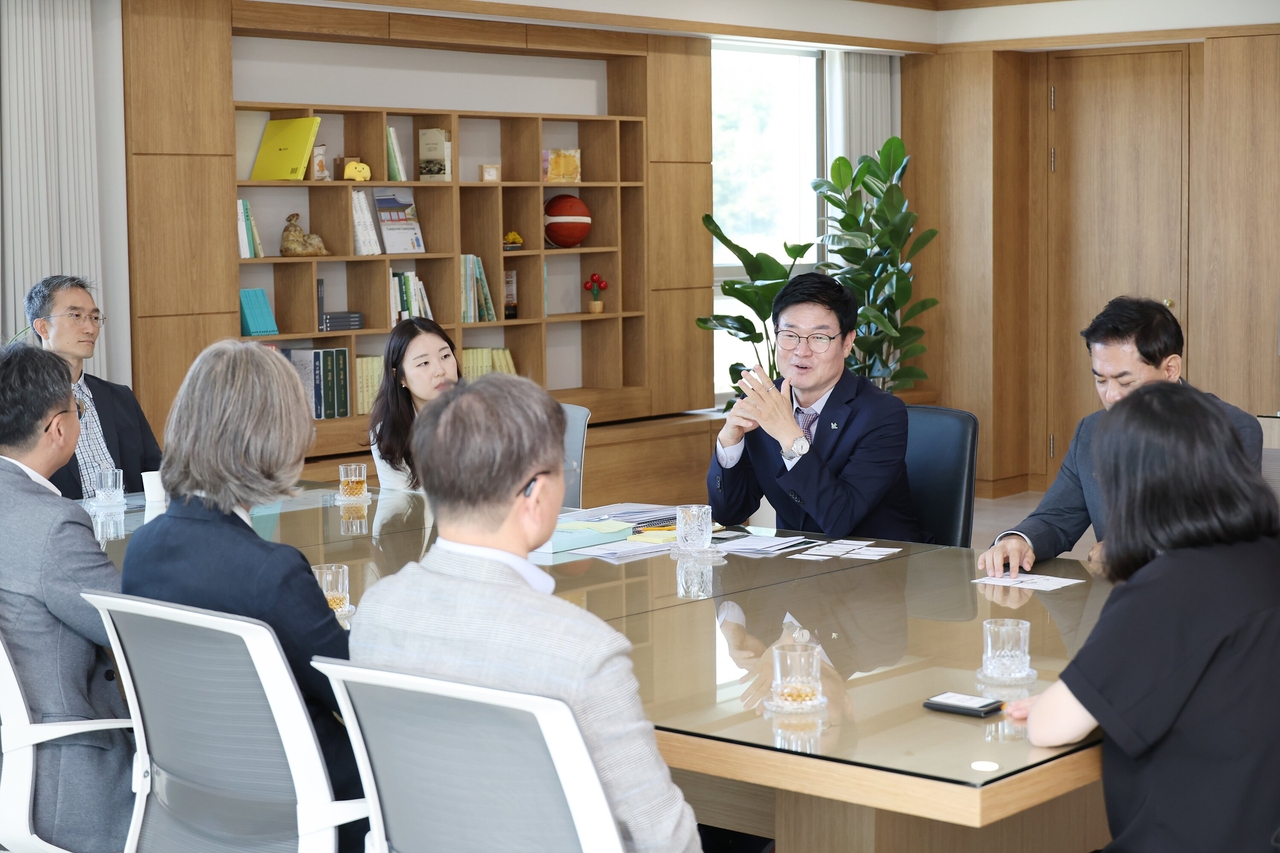

Wonju, a city in Gangwon Province, held a meeting Friday with officials from the National Assembly Research Service to discuss ways to address regional imbalances and promote balanced national development.
At the meeting, city officials outlined key priorities for sustainable local growth — attracting an advanced medical complex, securing a Gangwon Institute of Science and Technology, and easing the eligibility requirements for large-city special status — and called for regulatory reforms and policy support.
Wonju Mayor Koo Ja-yeol attended alongside Jang Il-hyeon, head of the city's planning division and former head of its regional development division, and Cho Eun-hee, head of the public institution attraction task force. Both were credited with playing a major role in persuading the central government to include Wonju's innovation city in the second round of public institution relocations.
"This meeting was an opportunity to jointly examine the challenges facing our region and explore solutions under the shared goal of reducing regional disparities," Koo said. "We will continue to work closely with the National Assembly to ensure that Wonju's local issues translate into effective legislation and national policy, so that Wonju can grow into the key hub city of the central inland region driving balanced national development."
The National Assembly Research Service provides foundational research to support lawmakers' legislative activities.
Member-initiated legislation moves through several channels — lawmakers drafting bills based on public sentiment, codifying reasonable citizen petitions, incorporating proposals from government officials, and turning civil society recommendations into law — with the largest share of such legislation drawing on research and materials produced by the National Assembly Research Service.
The service's proximity to the National Assembly Budget Office also allows for swift and accurate coordination, making it particularly effective at linking legislative content to budget planning.
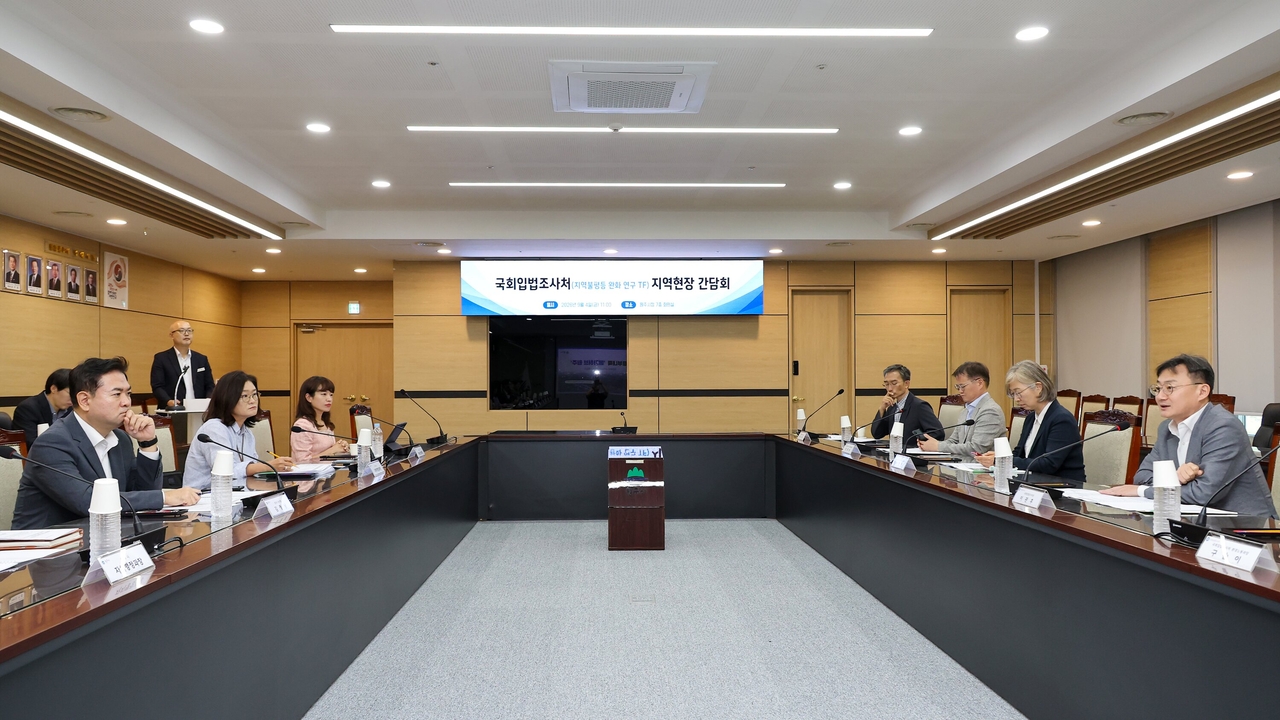
Wonju said easing the eligibility requirements for large-city special status is necessary to smoothly advance the second round of public institution relocations in connection with Gangwon Province's AI and clean industry innovation hub initiative, and to build the growth foundation that would follow. The city formally requested related regulatory reforms.
City officials also said conditions must be created to allow the high-quality medical data held by public health institutions — including the National Health Insurance Service and the Health Insurance Review and Assessment Service — to be used for regional industrial development. Given the difficulties in utilizing data under existing regulations, the city conveyed its position that a regulatory special zone for Wonju is needed to enable the private sector to access and use medical data as well.
Officials also highlighted Wonju's strengths as a central inland hub city and a center of the medical device industry, stressing the need to establish an advanced medical complex anchored in that industry and to attract a Gangwon Institute of Science and Technology to train specialized medical industry talent. Participants agreed on the need to build a virtuous cycle in which locally needed talent is trained and encouraged to settle in the region.
After the meeting, the group visited the 22nd Gangwon Medical Device Exhibition (GMES 2026) to assess the current state of Wonju's medical device industry, then held follow-up meetings with officials from the National Health Insurance Service and the Gangwon Innovation City Development Support Center to hear views from the field.
abc@heraldcorp.com