Rep. Cho Ji-yeon's office analyzes NEC filings
Queer parade expenses charged to women's fund 3 years running
'Need to examine whether spending fits the fund's purpose'
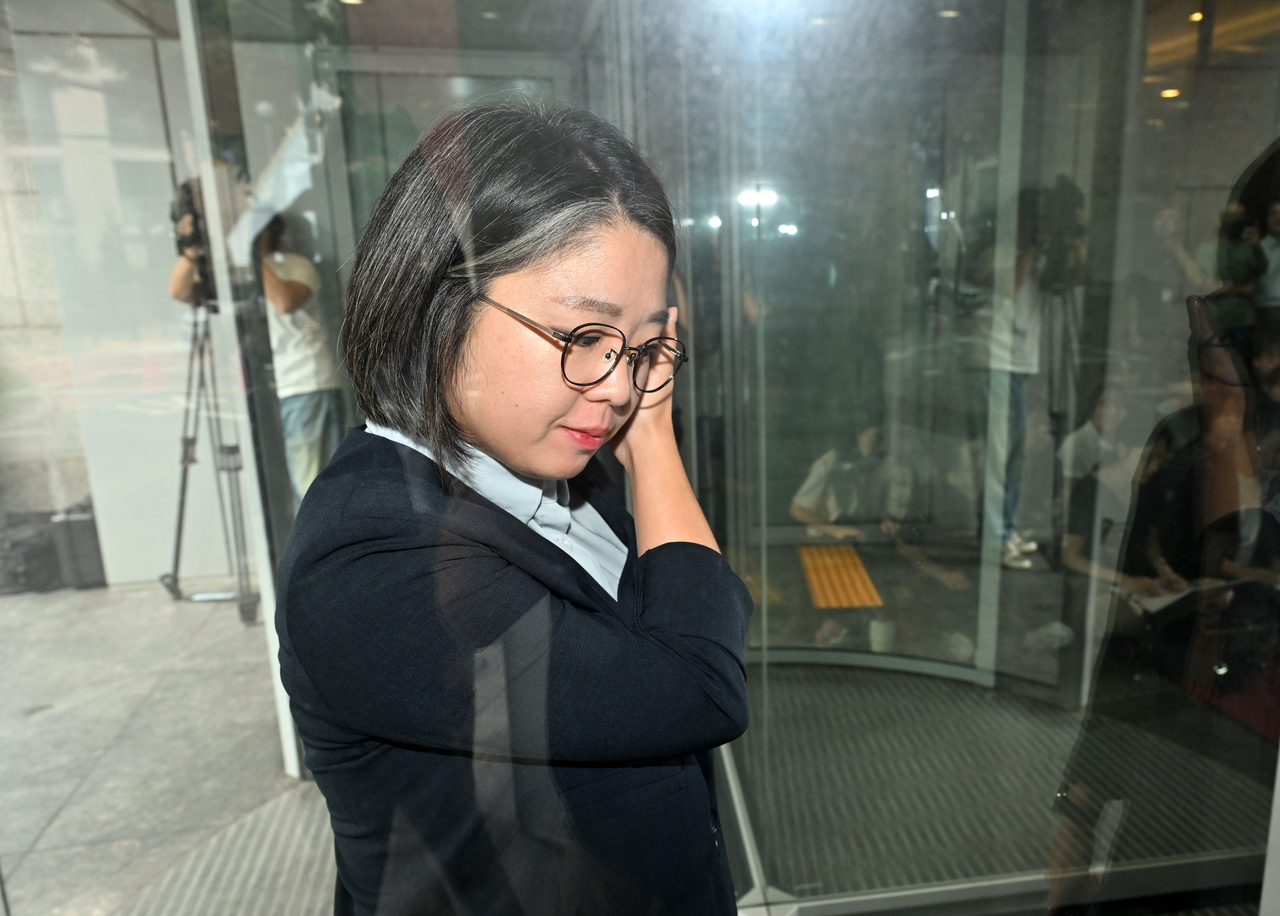
The Basic Income Party, once led by gender equality and family minister nominee Yong Hye-in, spent part of its government-subsidized women's political development fund on queer parade-related expenses for three consecutive years, it has been confirmed.
According to the Basic Income Party's accounting reports submitted to the National Election Commission and obtained Friday by the office of People Power Party lawmaker Cho Ji-yeon, the party spent more than 2.4 million won of the roughly 18 million won ($13,200) in women's political development funds it received between 2023 and 2025 on queer parade-related costs.
The expenditures were recorded as subsidy-funded and covered goods purchased for queer parade participation, booth pickets, banners, promotional materials and booth entry fees. Critics have called for scrutiny of whether the spending aligns with the intended purpose of the women's political development fund.
Under the Political Funds Act, parties are required to allocate a portion of their regular government subsidies toward advancing women in politics. Eligible uses include developing women's policy, identifying and training female politicians, and funding exchanges and cooperation with international organizations and countries related to women's political advancement.
The Basic Income Party's total spending classified under the women's political development fund has declined each year. According to the accounting reports, the fund accounted for 7.91 million won — 0.93 percent — of the party's total expenditure of 846.68 million won in 2023. The share fell to 3.87 million won, or 0.56 percent, of 693.8 million won in 2024, and further to 6.49 million won, or 0.48 percent, of 1.35 billion won last year.
Even as the overall fund shrank, the party continued to charge queer parade expenses against it each year.
Meanwhile, the government subsidies flowing to the Basic Income Party have themselves become a flashpoint, tied to questions about Yong's dual roles. Yong is the party's sole National Assembly member. If she resigns her seat upon being appointed minister, the Basic Income Party would lose its status as a parliamentary party.
According to the National Assembly Secretariat and the National Election Commission, if Yong retains her seat, the Basic Income Party stands to receive an estimated 1.94 billion won in regular subsidies for the remainder of the current term. Election subsidies for the 2028 general election are also expected to exceed 1 billion won. Should she give up her seat, the party would no longer meet the eligibility criteria for the subsidy allocation formula applied to parties with parliamentary representation.
Questions about her spouse's role at the party have also persisted. The People Power Party has criticized the Basic Income Party as a "family party," pointing out that Yong's spouse has served as secretary-general and head of the planning and coordination office and continues to hold a party post. The spouse, who has held key positions at the party, received a total of 123.66 million won in salary from the party over five years through this year.
Yong has said she will address the various controversies at her confirmation hearing. Arriving at her preparation office in Seodaemun-gu, Seoul, on Wednesday, she told reporters, "There are many opinions on these issues, and I am listening carefully to the many concerns and worries that have been raised."
mp1256@heraldcorp.com