Ministry of Economy and Finance interagency task force reviews support progress
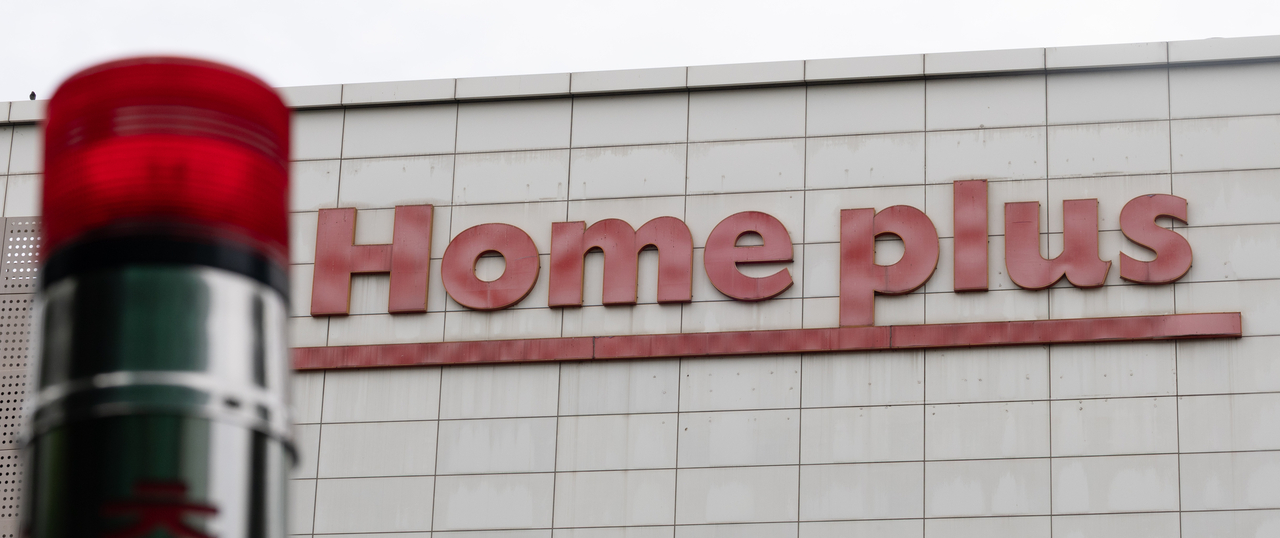
The government will continue supporting Homeplus workers and suppliers even after the court approved the retailer's rehabilitation plan, and will keep monitoring how the plan is carried out as the company works toward a full operational recovery.
The Ministry of Economy and Finance convened an interagency task force meeting on Homeplus at Government Complex Seoul on Thursday, chaired by Vice Minister for Policy Kang Ki-ryong, to review the impact of the court's approval of the rehabilitation plan and assess progress on support for workers and suppliers.
Officials from the Ministry of Employment and Labor, the Ministry of SMEs and Startups, the Ministry of Trade, Industry and Energy, the Financial Services Commission and the Financial Supervisory Service also attended. The fourth rehabilitation division of the Seoul Bankruptcy Court had approved Homeplus' rehabilitation plan on Wednesday.
Participants agreed that because court approval marks only the starting point of a return to normal operations, all stakeholders must take responsibility for faithfully implementing the plan and securing a stable business foundation.
The government said it would continuously monitor Homeplus' implementation of the rehabilitation plan while sustaining support for workers' livelihoods and the financial stability of suppliers. It also plans to pursue broader measures to strengthen the competitiveness of the retail industry.
Since Homeplus entered rehabilitation proceedings in March last year, the government has tracked damage across relevant sectors and provided support to workers and suppliers. After the rehabilitation proceedings were suspended in July, it expanded the scope of that support.
From March 4 last year through Tuesday, unemployment benefits and wage advance payments disbursed to workers totaled 27,739 cases worth 41 billion won ($29.9 million). Wage-arrears livelihood loans and living-stability loans added another 9,110 cases totaling 42 billion won.
For suppliers, the government assembled an emergency liquidity package totaling 440 billion won. This included 90 billion won in emergency business stabilization funds from the Korea SMEs and Startups Market Promotion Agency and the Korea SMEs and Startups Agency, along with 350 billion won in special guarantees from the Korea Credit Guarantee Fund and Kibo. The government has also worked with banks to extend loan maturities and defer repayments, and is providing new emergency loans of up to 500 million won per company.
Emergency business stabilization funds actually disbursed by the two agencies came to 321 cases worth 17.1 billion won. Guarantees issued by the two guarantee funds covered 104 cases totaling 66.2 billion won. Separately, maturity extensions and repayment deferrals reached 8,540 cases worth 5.6 trillion won, while new emergency loans covered 145 cases totaling 43.6 billion won.
mp1256@heraldcorp.com