Korea Real Estate Board weekly apartment price survey
Gangnam apartment price decline deepens to -0.41% from -0.11%
Songpa-gu narrows to 0.01%, momentum fading
Dongdaemun up 0.42%, mid-to-lower-priced districts continue to climb
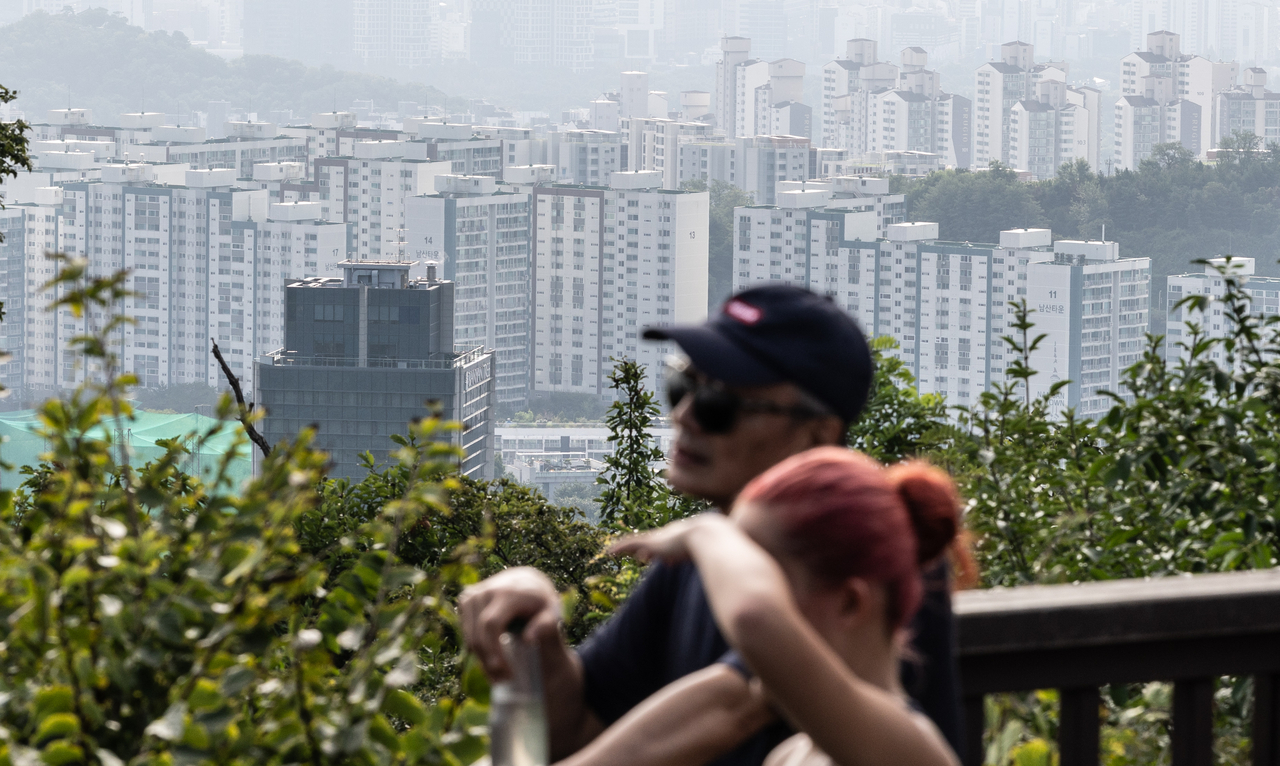
Apartment prices in Gangnam and Seocho have now fallen for a full month since the government unveiled a tax reform package on Aug. 3 targeting ultra-high-priced and non-owner-occupied single homes — yet prices across 23 of Seoul's 25 districts continued to rise, deepening a decoupling trend within the city's real estate market.
According to the Korea Real Estate Board's weekly apartment price survey for the fifth week of August 2026 (based on Monday), Seoul's overall apartment price growth rate eased to 0.22% this week from 0.29% last week.
Breaking down the figures by district, only Gangnam and Seocho recorded declines. Gangnam's drop widened to -0.41% this week from -0.11% last week, while Seocho's decline steepened to -0.23% from -0.05% over the same period. Songpa-gu — home to a concentration of high-priced apartments above 3 billion won ($2.19 million), centered on the Jamsil area — saw its rate of change narrow to near flat at 0.01% this week, down from 0.09% last week.
By contrast, Dongdaemun posted a 0.42% gain this week, up from 0.37% the previous week, while Seongdong-gu's rate accelerated to 0.15% from 0.10%. Along with those two districts, all 23 remaining districts recorded price increases this week.
Outer districts such as Nowon (0.54% to 0.50%), Seongbuk (0.55% to 0.54%) and Jungnang (0.56% to 0.52%) saw their gains trim slightly from the prior week but still posted relatively strong increases.
"The three Gangnam districts — Gangnam, Seocho and Songpa — are showing signs of contraction due to policy uncertainty and high interest rate concerns, while mid-to-lower-priced areas of Seoul and southern Gyeonggi Province, which are relatively insulated from those pressures, are seeing healthy price movement," said Nam Hyeok-woo, a real estate researcher at Woori Bank. "Since purchases in Seoul's mid-to-lower-priced areas are mostly driven by first-time buyers without existing homes, the current decoupling trend could persist even within Seoul."
Nam added that key Han River belt areas in Seoul "are moving in a narrow range, oscillating slightly and tracking the price trend of the three Gangnam districts." He said distressed listings from sellers looking to trade up to the three Gangnam districts are appearing intermittently, and that lending restrictions by financial institutions are limiting the flow of upgrade demand from mid-to-lower-priced areas — a dynamic he said is being reflected in prices.
hwshin@heraldcorp.com