
Taiwan unions conduct strike survey at Micron
More than 80% of members back work stoppage
'Wage gap with Korean chipmakers has widened'
Micron pledges record bonus announcement in October
Taiwan government assigns officials to monitor situation

Labor unions at Micron Technology's Taiwan factories have threatened to strike, demanding an overhaul of the US chipmaker's bonus system and a larger share of its profits.
The unions cited the bonus structures at Samsung Electronics and SK hynix as benchmarks, calling on Micron to pay each employee a one-time bonus equivalent to roughly seven years' salary this year and, starting next year, to set aside 15 percent of operating profit as a bonus pool. Applied to Micron's projected earnings, 15 percent would amount to about 20 trillion won ($14.5 billion).
Two unions representing workers at Micron's factories in Taoyuan and Taichung said Tuesday, local time, that an internal online survey conducted last month showed more than 80 percent of members supported a strike, according to Reuters.
Combined membership in the two unions stands at nearly 10,000 — about two-thirds of the 15,000 Micron employees working at the two sites. The survey was a preliminary internal poll, however, not a formal strike authorization vote.
Should a strike materialize, the impact could be significant. Taiwan is Micron's largest production hub, manufacturing DRAM and high-bandwidth memory (HBM).
For fiscal year 2026, the unions are demanding a one-time bonus of 83 months' salary per employee, on top of existing bonuses. For a typical engineer, that would amount to roughly 200 million won as a lump-sum payment.
From fiscal year 2027 onward, the unions want the current bonus system scrapped entirely and replaced with quarterly payouts funded by 15 percent of operating profit, moving away from the existing once-a-year structure.
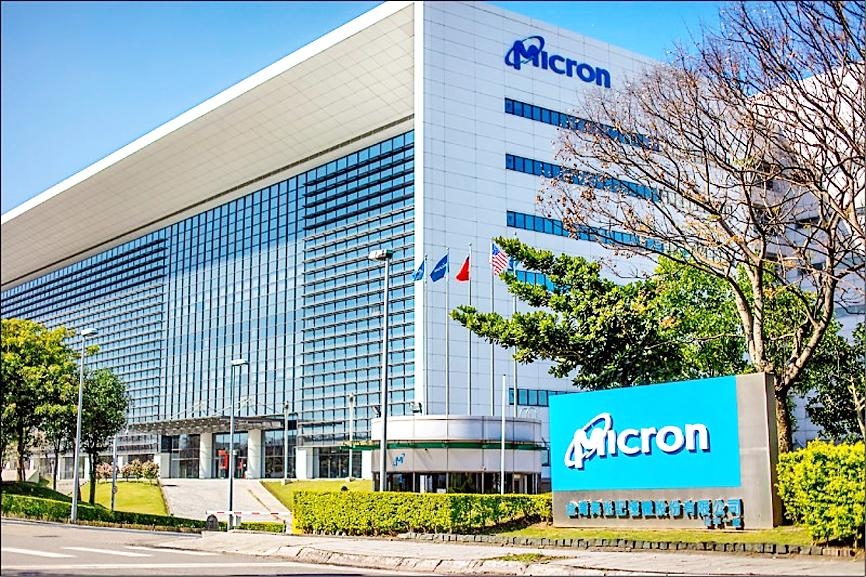
According to securities analysts, Micron's operating profit for this year is projected at around $97 billion. Fifteen percent of that figure would come to $14.5 billion. Micron's fiscal year 2026 ends Thursday.
The unions' 15 percent demand was directly inspired by profit-sharing arrangements at Samsung Electronics and SK hynix. Samsung agreed with its union earlier this year to allocate 10.5 percent of the operating profit from its semiconductor division, known as the DS unit, as a special bonus pool. SK hynix reached a labor-management agreement last year to set aside 10 percent of annual operating profit for bonuses.
Pointing to those profit-linked bonus schemes, the Micron unions argued that "the wage gap between Micron employees and workers at Korean chipmakers has widened further." The unions also contend that Micron's current bonus system fails to adequately reflect the company's profitability and lacks transparency in how payouts are calculated.
The strike threat comes as surging AI demand has deepened a global memory chip shortage and driven a sharp improvement in chipmakers' earnings. Micron, the world's third-largest memory chipmaker, posted sales of $41.46 billion in the March–May quarter, a 346 percent jump from the same period a year earlier. Operating profit surged 1,253 percent over the same period.
As employee discontent grew, Micron's Taiwan unit moved to contain the situation. The company said "the dedicated efforts and contributions of our team members are the core foundation of Micron's success" and announced plans to pay out the highest bonus — referred to internally as an incentive performance payment, or IPP — in the company's history this year. Details of the IPP payout will be announced in October.
The company added that it would "continue to communicate with employees through existing channels and respect the relevant legal procedures."
The Taiwan government also stepped in. The Central Taiwan Science Park administration expressed "serious concern" and assigned a dedicated official to assess the unions' demands.
The agency warned that a strike "would not only affect employees' livelihoods and company operations, but could also have an adverse impact on the domestic semiconductor supply chain and the broader economy," urging the unions to follow procedures under the Act for Settlement of Labor-Management Disputes. The agency said it was maintaining close contact with both sides and would facilitate labor-management consultations or formal dispute mediation if needed.

go@heraldcorp.com




