
New apartments to receive tax base cap — proposed in late July via enforcement decree revision
Property tax relief expansion near Pungnaptoseong — proposed in late August via special act revision
Focus on protecting residents' property rights and ensuring tax fairness
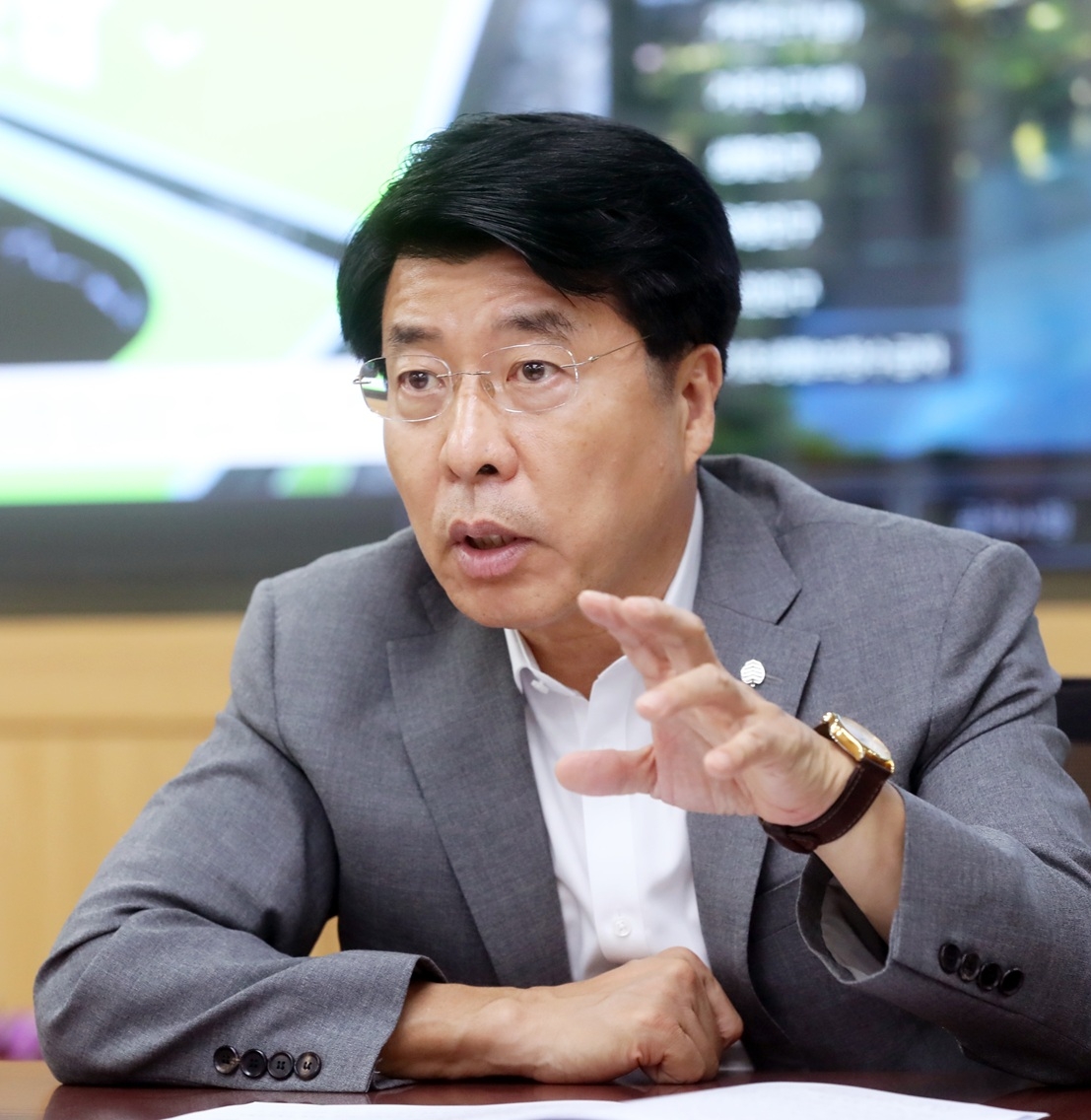
Seoul's Songpa-gu announced Wednesday that it has submitted two property tax reform proposals to the Ministry of Interior and Safety aimed at reducing the tax burden on residents.
The district first called for an amendment to the enforcement decree of the Local Tax Act to prevent sharp property tax increases on newly built homes.
Property tax is assessed annually based on home values. To prevent sudden spikes in tax bills when prices rise sharply, the government applies a "tax base cap" — a mechanism that limits how much the taxable standard can increase over the previous year's level. The problem is that this cap is calculated using the prior year's home value, which means newly built homes have no prior-year figure to reference and therefore receive no cap protection. Their tax base is instead set by multiplying the current year's assessed value by a fixed ratio, leaving new homeowners exposed to significantly higher tax bills during periods of rising prices.
For example, an older apartment valued at 2.1 billion won ($1.53 million) carries a tax base of 800 million won and a property tax bill of roughly 4.2 million won. A nearby newly built apartment valued at 2.97 billion won, by contrast, has a tax base of 1.34 billion won and a property tax bill of 7.6 million won. Residents in the same neighborhood face a heavier tax burden simply because their home is new.
About 4,500 households moved into new developments in Songpa-gu this year — including Jamsil Raemian I'Park (2,678 units) and Jamsil Le'El (1,865 units) — and further reconstruction move-ins are scheduled from 2027 onward, making property tax on new homes a pressing concern for residents.
In late July, the district proposed amending Article 109-2 of the Local Tax Act enforcement decree so that a separate prior-year value is calculated for new homes, allowing them to benefit from the tax base cap. The measure is intended to ease the burden on owner-occupiers who own a single home for their own use.
In late August, the district submitted a second proposal to broaden the criteria for property tax relief on real estate near Pungnaptoseong, an ancient earthen fortress. Properties within areas designated as "designated cultural heritage zones" or "national heritage protection zones" currently receive a 100 percent property tax exemption, but those outside such designations receive no relief. In Zone 3, no additional historic site applications have been filed since March 2015, leaving some properties without access to the exemption.
The district accordingly proposed an amendment to Article 55 of the Local Tax Special Restriction Act to allow local governments to grant property tax relief by ordinance for real estate whose use is restricted due to cultural heritage preservation, regardless of official designation status.
"It is not fair for residents to bear an unreasonable financial burden because of gaps in the system," District Mayor Seo Gang-seok said. "We will continue to work more actively with relevant authorities to protect residents' property rights and ensure tax fairness."
seouldream01@heraldcorp.com



