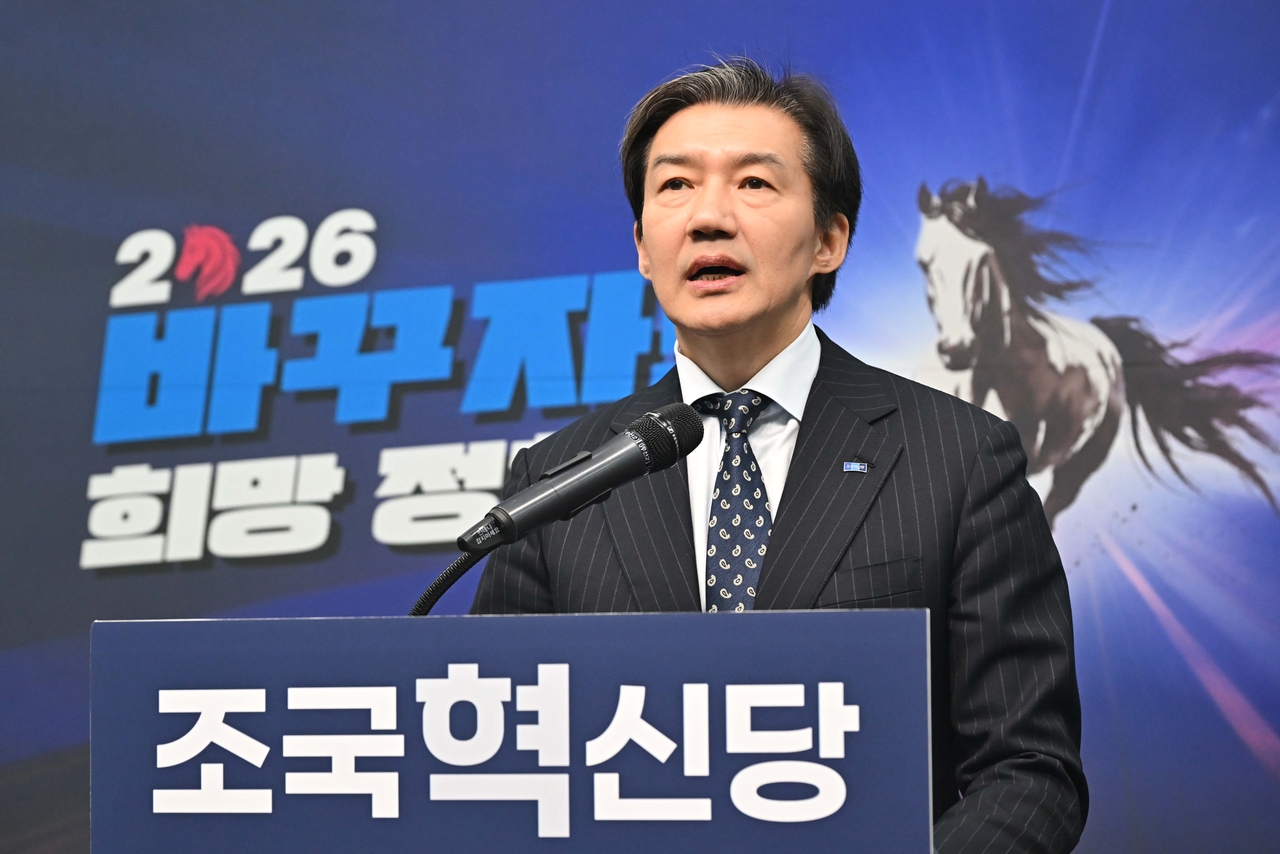
Cho Kuk, head of the Rebuilding Korea Party's policy research institute, criticized the Democratic Party of Korea's move to ease the comprehensive real estate tax burden on non-resident single-home owners, saying the party "must not walk the path of tax cuts for the wealthy."
Cho said Tuesday on his Facebook page that Democratic Party leader Kim Min-seok and the party "have gone a step further, announcing they will also relieve the comprehensive real estate tax burden on 'non-resident single-home owners.'" He added: "At this rate, the share of single-household, single-home owners subject to the tax will fall below 1 percent. Is the Democratic Party now doing politics for that 1 percent?"
Cho also criticized the government's Aug. 3 tax reform package. He said the plan had already "rolled back the comprehensive real estate tax threshold from a publicly assessed value of 1.2 billion won ($869,000) to 1.4 billion won," and estimated that if the new threshold were applied, roughly 75,800 homes nationwide — including about 56,900 in Seoul — would be removed from the tax base.
Citing data from People's Solidarity for Participatory Democracy, Cho said that as of 2025, only about 3 percent of the roughly 15.98 million homeowners nationwide paid the residential comprehensive real estate tax, with single-household, single-home owners accounting for no more than about 1 percent. "I cannot help but ask whether this is consistent with the Democratic Party's identity," he said.
Cho also raised concerns that the tax relief push may be driven by electoral calculations ahead of next year's local elections and the 2028 general election. "A rational tax base on high-value properties must be established," he said. "The comprehensive real estate tax has been revised 28 times since it was enacted in 2005. The system can change with the times, but if those exceptions are made with an eye on a possible Seoul mayoral race next year and the 2028 general election, they will come back as a backlash, not votes."
Cho said "the spirit of the comprehensive real estate tax, as originally pursued by the Roh Moo-hyun government, was equity," adding that "the purpose was the realization of tax justice itself, not the total fiscal revenue generated by the tax." He also said "discussions on asset taxation, including the financial investment income tax, have also retreated," and that "the most important things in tax policy are direction, consistency and credibility."
Cho urged Kim and Democratic Party lawmakers to change course, saying the party "is currently listening only to the voices of those with economic power." He said the Lee Jae Myung government "must make it the top priority to represent the voices of asset-poor, low-income youth without homes and renters."
thanks@heraldcorp.com