
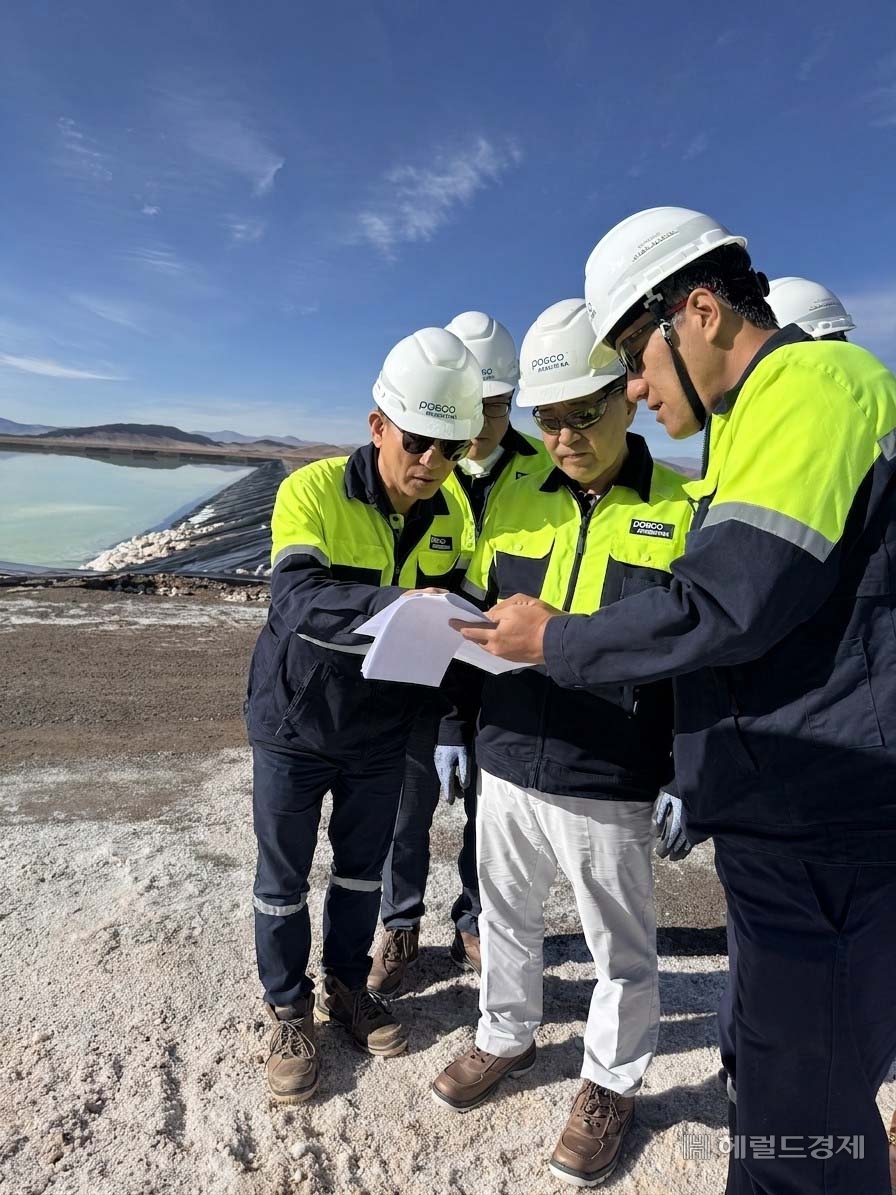
The project is called "Sal de Oro" — Spanish for "golden salt." It is the name Posco gave its lithium venture in Argentina, a project that President Lee Jae Myung personally mentioned on social media last month during his state visit to the country. After steel, it is the business Posco is counting on to sustain the company for the next 100 years.
The starting point was not securing a mine. Posco Group first developed its own lithium extraction technology in 2010, and only after establishing that technological edge did it acquire the Hombre Muerto salt flat in Argentina in 2018 — the exact opposite path taken by most mining companies.
Posco's reasoning was clear. The company concluded that success in the lithium business would hinge not on how many mines a company controlled, but on how efficiently and reliably it could extract high-purity lithium from brine laden with impurities.
At the time, Posco had almost no experience in mine development. It judged that securing mineral rights without proprietary technology would make long-term competitiveness difficult to sustain. The company was also driven by a conviction that relying on Chinese technology — then dominant in the industry — would leave it unable to gain control over critical mineral supply chains.
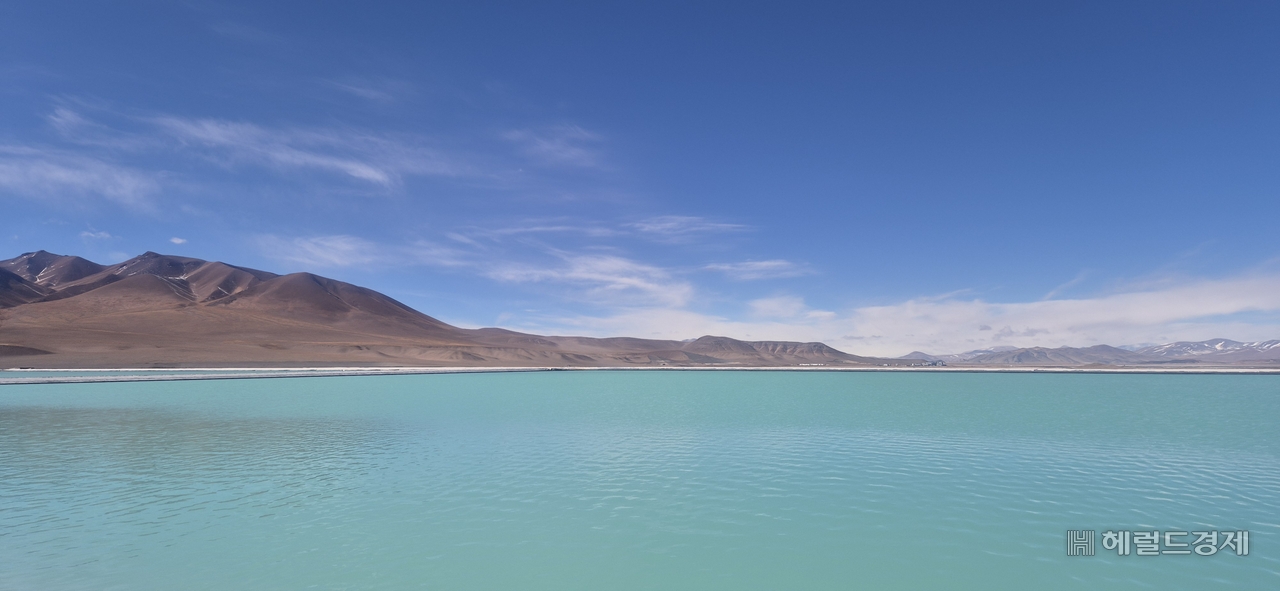
A decade of validation: How Chang built the lithium project
At the center of this technology-first strategy was Posco Group Chairman Chang In-hwa. As head of the new business division in 2014, Chang personally oversaw the operation of a pilot plant using actual Argentine brine and the development of lithium extraction technology. The work went beyond confirming feasibility in a laboratory — it was about verifying commercial viability using real brine from the field.
After moving to head the technology investment division in 2017, Chang accelerated development further. He brought together roughly 130 researchers from the Research Institute of Industrial Science and Technology (RIST), the Technology Research Institute and the secondary battery materials business unit into a single team, leading the construction of a demonstration plant and the validation of production processes. By linking research and development, production technology and business operations into one integrated system, he laid the foundation for translating laboratory technology into commercial production.
After more than a decade of research and development, Posco completed its proprietary brine lithium extraction technology in 2020. That technology led to commercial production at the first plant in Argentina in 2024, and this year the ramp-up is effectively complete, with the operation recording its first quarterly profit. From laboratory to revenue-generating business, the journey took 16 years.
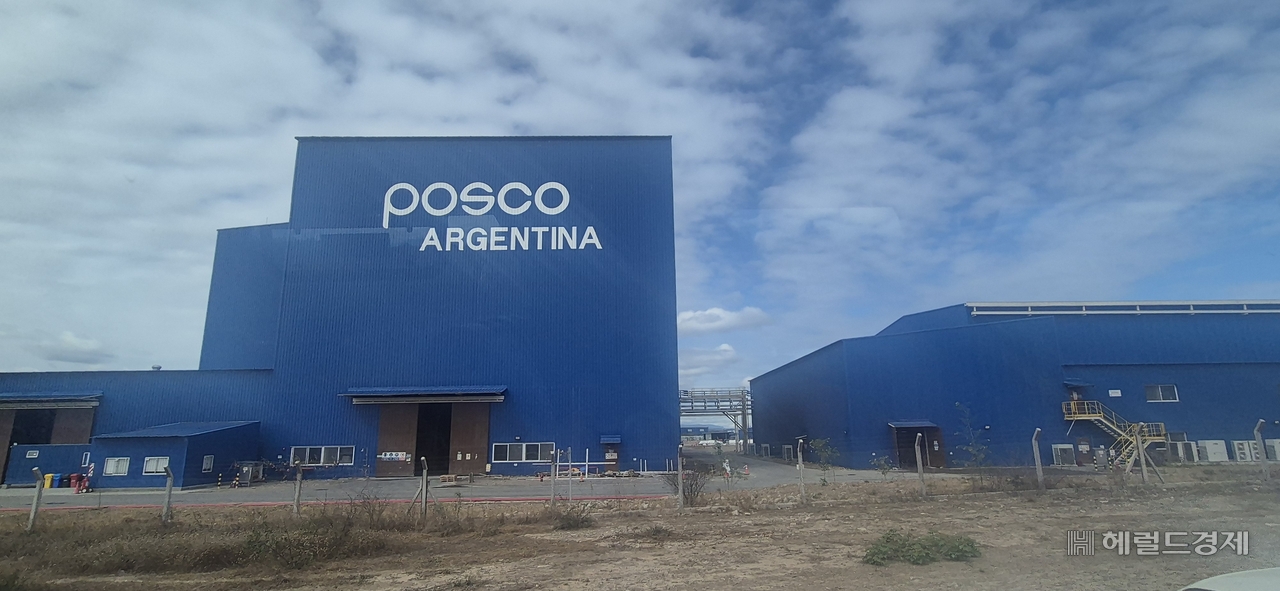
Mineral rights found, not bought
Posco began exploring the potential of South American lithium starting with Bolivia's salt flats in 2010, and after a period of trial and error, chose Argentina based on a comprehensive assessment of commercial viability and development conditions.
The Hombre Muerto salt flat, acquired in 2018, was not on the open market either. Posco had long assessed its commercial potential highly and approached the owner first, then negotiated with Australia's Galaxy Resources, which was facing financial difficulties at the time, securing the mineral rights ahead of competitors.

"We are not a company that buys mineral rights to resell them — we develop them ourselves and make products," said Park Hyun, head of Posco Argentina. "The key was that we did not wait for assets to appear on the secondary market. We went out and found high-value mineral rights ourselves and made the approach."
Exploration has not stopped since. While the industry typically drills to around 100 meters, Posco extended its range to as deep as 400 to 500 meters, and the lithium resource base has grown from roughly 2.25 million tons at the time of acquisition to approximately 15 million tons today. The average lithium concentration stands at around 920 parts per million, among the highest in the world. By securing direct access to brine, the company has also reduced the share of raw material costs in its manufacturing cost to below 1 percent.
![Posco Group Chairman Chang In-hwa. [Provided by Posco Group]](https://wimg.heraldcorp.com/news/cms/2026/08/25/news-p.v1.20260130.9a2594aefaac4365b50e33cf8f20b057_P1.jpg)
Steel DNA: Invest only after thorough validation
Posco's approach to the lithium business directly reflects the investment philosophy it honed in steel: validate the technology through pilot and demonstration plants before committing to commercialization. Even after acquiring the mineral rights, the company did not immediately begin construction. Instead, it spent roughly two years verifying commercial viability and process stability before deciding to proceed with commercialization in 2020.
The first plant uses Posco's proprietary technology, while the second plant — set to begin operation this year — applies an improved version of commercial processes used by global companies. The two-track strategy of combining proprietary technology with proven commercial technology was designed to secure both stability and profitability at the same time.
The first plant also incorporates Posco's in-house BPED (bipolar electrodialysis) process. The technology converts lithium sulfate into battery-grade lithium hydroxide and can reduce waste generation by about 50 percent and freshwater consumption by about 40 percent.

AI and DLE: Preparing for the next 100 years
Posco is not resting on its current competitive position. The company is also accelerating development of next-generation direct lithium extraction (DLE) technology. Natural evaporation is the most economical method for high-concentration salt flats like those it currently operates, but such deposits are rare worldwide. The strategy is to secure future technology in advance so that economic viability can eventually be achieved from low-concentration brine and clay deposits as well.
Posco completed a DLE pilot test using Argentine brine in 2019, and has more recently been conducting adsorption-based DLE demonstration work at a clay deposit near the McDermitt Caldera in the United States.
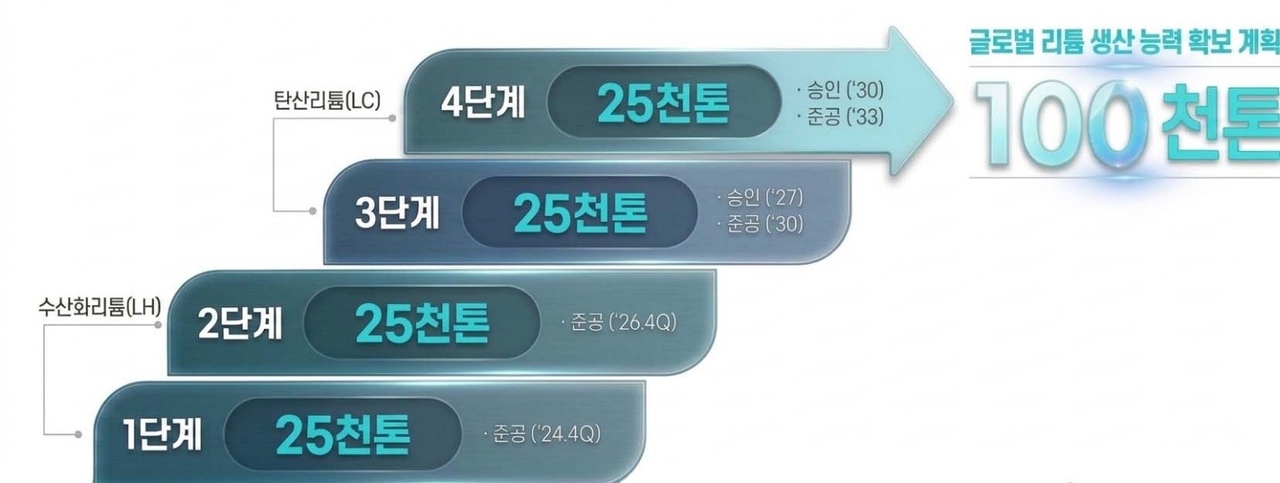
Alongside this, the company has reoriented the third and fourth plants toward lithium carbonate to align with the expanding market for AI data centers and energy storage systems (ESS) following the slowdown in electric vehicle demand. Plans are also in place to introduce an AI-based remote monitoring system and solar power generation at the high-altitude facilities some 4,000 meters above sea level.
"After changing the sequence of chemical processes hundreds, even thousands of times over more than a decade of research, we have achieved world-class technology for producing battery-grade lithium hydroxide," Park said. "Research to improve yields and advance our processes will continue going forward."
kwater@heraldcorp.com




