
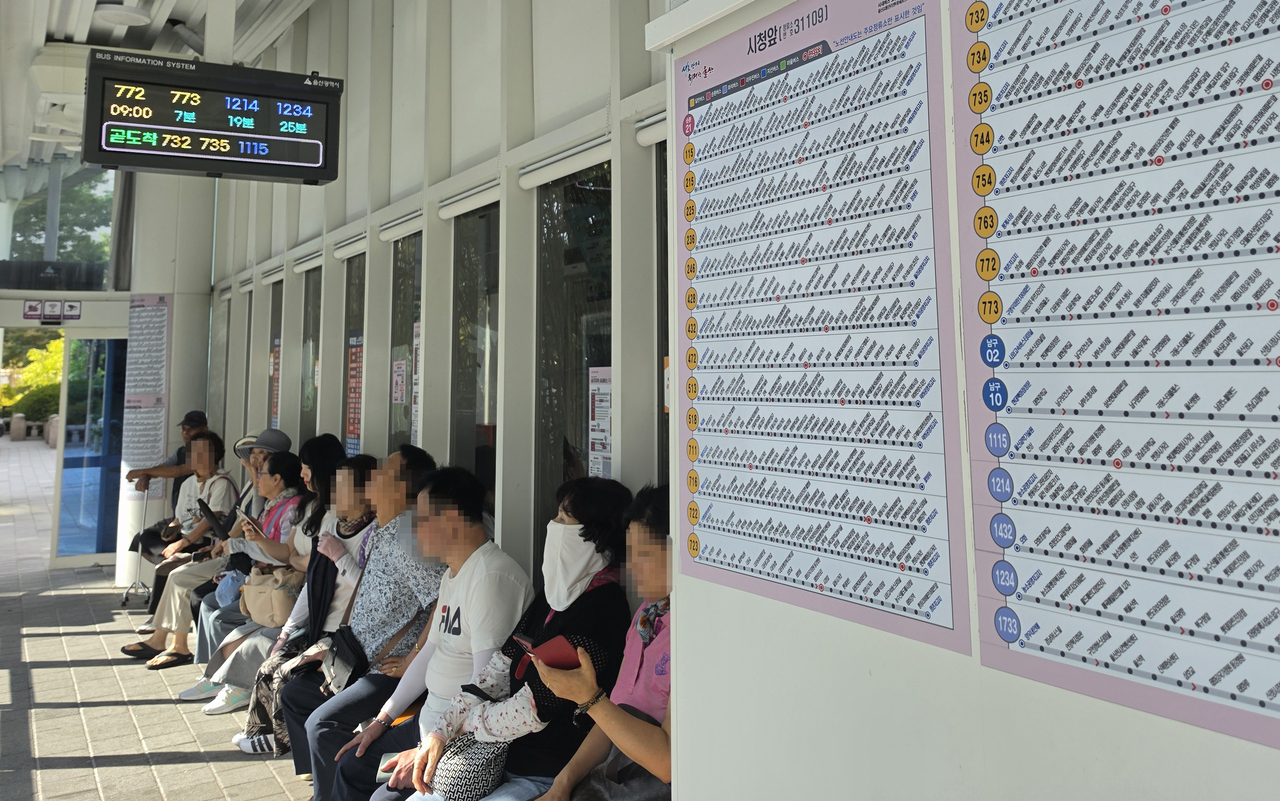
Ulsan is set to revamp its city bus network following a public consultation process, as the restoration of discontinued routes and a shift from private to public operation have emerged as key local issues under the city's ninth elected administration.
The city announced Tuesday that it will conduct a public opinion survey from Wednesday through next month to gather feedback on bus service inconveniences and improvement requests, alongside the release of a schedule for the July next year route overhaul. Restoring city bus routes is a core campaign pledge of the ninth elected administration.
In December 2024, Ulsan overhauled 100 of its existing 183 routes and added 22 new ones to improve efficiency, bringing the total to 185 routes served by 945 buses, with some routes adjusted in the process.
However, after residents filed complaints about discontinued routes, the city resumed service on Route 126 — covering the Kkotbawi, Yangjeong, Taehwagang Station, Gongeoptap, Yaeum and Deokha corridor — under the new administration. Routes 123, 307, 327 and 482 are also set to resume once new vehicles are secured. The city is also reviewing a plan to convert the current privately operated system to public operation. Alongside this, the city's third supplementary budget for 2026, announced Friday, included 2.46 billion won ($1.78 million) to purchase 37 hydrogen and electric low-floor buses for route restoration and adjustments.
The survey is being conducted both online and offline to make participation as easy as possible.
The online survey is being promoted through the websites and SNS channels of the city, the city education office, district and county offices, affiliated agencies, and schools and universities, as well as through the Ulsan Bus app and the bus information system. QR code notices have also been posted at bus stops, inside city buses, and at facilities frequented by residents, including welfare centers, sports facilities, senior centers and apartment complexes.
Residents who have difficulty participating online can fill out paper questionnaires available at community service centers in districts and counties, as well as at major public facilities.
The 13-question survey covers bus use purpose and frequency, primary routes used, requests for new routes and restoration of discontinued ones, route adjustments, and headway intervals, among other aspects of city bus service and route improvement.
The city plans to release the compiled feedback in November and use it as baseline data for a bus route overhaul study. The results of that study, combined with public input, will be reflected in a full route restructuring set to take effect July 1 next year.
"Through this feedback process, we will identify the inconveniences and improvements that residents experience in actual bus use, review them carefully, and establish a more convenient and efficient city bus route system," a city official said.
cityblue@heraldcorp.com




