![Deputy Prime Minister and Minister of Science and ICT Bae Kyung-hoon presides over the 11th Science and Technology Ministers' Meeting at the Government Complex Seoul in Jongno-gu, Seoul, on July 23. [Ministry of Science and ICT]](https://wimg.heraldcorp.com/news/cms/2026/08/24/news-p.v1.20260824.44d6f433ca204c85a2b83f5df8ef0f15_P1.jpg)
The South Korean government is moving to accelerate the early commercialization of domestically developed autonomous driving AI technology through a major expansion of pilot programs. It has also established national AI ethics principles to address safety and trust concerns as AI spreads across society.
The Ministry of Science and ICT said Monday it held the 12th Science and Technology Ministers' Meeting in written form and approved three agenda items: a roadmap for autonomous driving AI pilot programs and commercialization, the Republic of Korea AI Ethics Principles, and a strategy to promote deep tech startups.
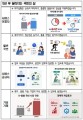
The government is stepping up efforts to secure autonomous driving technology — a flagship "physical AI" industry combining automobiles and AI. With the United States and China intensifying competition in development and commercialization, the strategy calls for a sharp expansion in the scale and geographic scope of domestic pilot programs to close the technology gap quickly.
Starting with a pilot city in Gwangju, the government plans to gather large volumes of driving data across diverse road and traffic environments and use it to train domestically developed autonomous driving AI. The aim is to improve both AI performance and versatility across varied conditions, paving the way for early commercialization.

The government also unveiled new ethical standards to keep pace with the rapid spread of AI into daily life and industry.
The Republic of Korea AI Ethics Principles, finalized by the government, are built around three core values — human dignity, the common good of society and the sustainability of humanity — and encompass seven principles: human-centeredness, privacy protection, fairness and inclusiveness, accountability, safety, trustworthiness and transparency.
The framework builds on the AI Ethics Standards established in 2020 while reflecting changes in the landscape, including advances in AI technology and the enactment of the Basic AI Act. A total of 116 public comments submitted by industry, civil society, academia and the general public following the release of a draft in early May were also incorporated into the final version.
The principles particularly emphasize the ethical responsibilities of AI users, not just developers and suppliers. They also include a message to the international community calling for differentiated responsibilities that account for the differing circumstances of AI-advanced and developing nations, as well as the peaceful use of AI.
The government is also strengthening support for deep tech startups to translate cutting-edge research into real businesses and industries. To commercialize research outcomes from the "7 SEED" future growth engines announced recently, the government will select outstanding R&D results and link them to startup support, while establishing a Deep Tech Integrated Support Center and sector-specific hubs.
An "AI startup agent" will also be built to reduce the burden on researchers looking to start companies. The TeX-Corps program, which develops entrepreneurial capabilities among young science and engineering students, will be significantly expanded, and institutional reforms will be pursued to transform universities and government-funded research institutes into startup-friendly organizations.
The government is also overhauling its funding approach. It plans to establish ultra-long-term funds capable of investing in deep tech companies over extended periods and will launch a pilot program for investment-based R&D.
Deputy Prime Minister Bae Kyung-hoon said "the true measure of success in the AI race lies not just in developing superior technology, but in realizing AI that is actually used on the factory floor and in people's daily lives," adding that the government would "build a healthy AI ecosystem where technological innovation and responsibility go hand in hand."
Bae said the 7 SEED project "is the product of deep deliberation, alongside the three mega-projects, on how to secure future growth engines," and said the government would "continue to provide challenges and support so that the seeds of innovative future technology can grow into the drivers of future growth."
nbgkoo@heraldcorp.com