The suspended Incheon e-eum cashback program is set to resume around the Chuseok holiday in September.
Incheon Mayor Park Chan-dae held a press conference at the City Hall briefing room Monday morning and said the city had included 77.9 billion won ($56.3 million) for the Incheon e-eum cashback program in its second supplementary budget for 2026, aimed at stimulating local consumption and boosting sales for small business owners.
If the Incheon City Council approves the supplementary budget after deliberation and a vote, the Incheon e-eum cashback will resume operations through the end of the year.
The program will cover merchants with annual sales of 3 billion won or less, and users will receive a 10 percent cashback on spending up to 500,000 won per month.
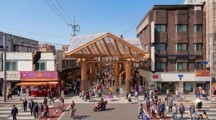
The revival draws particular attention because it is set to begin in September, ahead of Chuseok, channeling consumer spending toward traditional markets, neighborhood commercial districts and local small businesses during the holiday season. The city intends to use the Incheon e-eum platform once again as a key tool for revitalizing the local economy.
10% cashback up to 500,000 won per month for merchants with annual sales under 3 billion won
The move also carries significance as it marks the city's return to a policy it had effectively suspended due to deteriorating fiscal conditions.
The total supplementary budget rose 1.16 trillion won, or 7.3 percent, from 15.87 trillion won to 17.02 trillion won.
To secure funding, the city restructured 211.4 billion won by targeting projects with slow execution rates and those unlikely to be completed within the year.
Major cuts include 33.6 billion won from cash-based programs, 123.9 billion won from large-scale investment projects, 10.5 billion won from routine and event-related expenses, and 43.4 billion won from projected savings on contract awards and unspent balances.
Among the reductions, the city trimmed continuing projects under the Incheon Free Economic Zone Authority — cutting 30 billion won from the Songdo International City waterfront development project, 12.2 billion won from the expansion of Songdo's public sewage treatment facility, and 13 billion won from the K-biotech lab hub construction project.
The city adjusted annual investment schedules for large-scale projects and reduced budgets for underperforming ones, then redistributed the freed-up funds to livelihood-related areas.
In this supplementary budget, the city allocated 287 billion won to livelihood policy areas. In addition to the 77.9 billion won for the Incheon e-eum cashback, the budget includes 1.5 billion won to support a low-cost parcel delivery service, 700 million won to revitalize traditional markets and neighborhood commercial districts, and funding for social solidarity economy initiatives.
The city also allocated 27.9 billion won to transportation, directing funds toward easing residents' commuting costs through transfer discounts, free subway rides for eligible passengers, and toll support for privately operated tunnels during rush hours.
An additional 6.6 billion won was set aside for the Incheon i-Bada Pass program, which subsidizes ferry fares for Incheon residents to bring them in line with city bus rates. The funds cover a projected shortfall through year-end and support expanded benefits for military personnel, residents who have moved away from the islands, and those with family ties there.
In the welfare sector, the city will direct 12.7 billion won to four childbirth-related programs covering fertility treatment costs, maternal and newborn health care, postpartum care expenses, and transportation subsidies for pregnant women.
An additional 1.5 billion won was added to the youth monthly rent support program, raising the monthly subsidy from 200,000 won to 300,000 won for 5,000 recipients from October through December.
Another notable feature of this supplementary budget is that it pursues fiscal soundness at the same time.
Fiscal health reinforced alongside livelihood support
To cover a shortfall in general account revenue and secure essential expenditures, Incheon will draw on 330 billion won from internal available resources, including its integrated management fund. The city said it will not issue additional local government bonds.
As a result, the total fiscal size, including 1.63 trillion won in funds, was set at 18.65 trillion won. The city's debt ratio is projected to fall from 15.0 percent to 13.6 percent.
Through this supplementary budget, the city plans to continue existing livelihood policies — including the Incheon e-eum program — through year-end without interruption, while also filling gaps in statutory and mandatory expenditures that were underfunded in the original budget.
Essential expenditures added include 53.6 billion won for the bus quasi-public operation subsidy, 16.6 billion won for operating costs of subway lines 1, 2 and 7, 17 billion won for the Greater Seoul integrated transfer discount subsidy, and 8.2 billion won in compensation for free-ride transport services.
"This supplementary budget was drawn up with both fiscal normalization and livelihood stability in mind," Mayor Park said. "We will continue to explain our fiscal situation transparently and manage the budget in a responsible manner."
The city submitted the supplementary budget to the City Council on Friday, and the council's deliberation and vote are scheduled to be completed by Sept. 18.
gilbert@heraldcorp.com