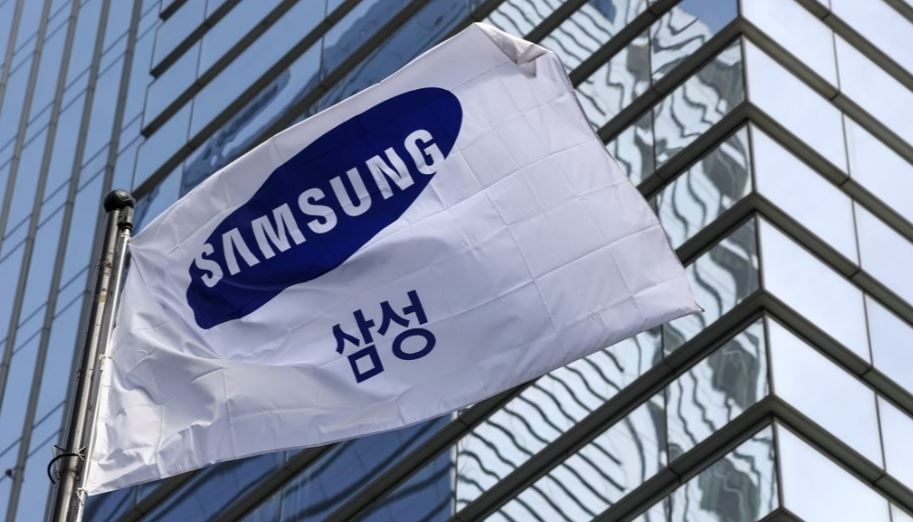
There was a time when Samsung Electronics shares traded at more than 2.5 million won ($1,790) apiece. That was back in 2018 — not ancient history, but a period when the stock was simply too expensive for most ordinary investors to buy.
Samsung Electronics responded with a stock split and relisting. The 50-to-1 split brought the price down to around 50,000 won, and trading volume exploded from the first day of trading. It was the moment Samsung Electronics became known as a "people's stock."
SK Hynix is following a similar trajectory. The chipmaker is one of two dominant stocks on the domestic market alongside Samsung Electronics, riding a semiconductor boom — but its price, hovering around 1.73 million won per share, is widely cited as a barrier to investment. That is why talk of a stock split keeps resurfacing.
SK Hynix recently closed at around 1.73 million won per share. In market parlance, a stock priced above 1 million won is called an "emperor stock," while one above 2 million won earns the label "luxury stock." SK Hynix sits closer to luxury-stock territory than emperor-stock territory. At its all-time high, it reached nearly 2.98 million won.
The lofty labels sound glamorous, but the reality is less flattering. A single share costs roughly a month's salary for many workers, making it difficult to trade in any meaningful quantity. High prices are one thing — prices this high are another matter entirely.
That is where stock splits come in. A stock split divides existing shares by a set ratio, increasing the total number of shares outstanding. A 10-to-1 split on a 1 million won stock, for instance, would leave an investor holding 10 shares at 100,000 won each.
The company's underlying value stays the same, and so does its market capitalization — but the lower per-share price makes it easier for retail investors to enter the market and can boost trading activity.
SK Group Chairman Chey Tae-won recently signaled openness to the idea. Speaking to reporters at the opening ceremony for SK Hynix's American depositary receipt listing in the United States, he said, "If a request comes in, we will of course review it."
The Samsung Electronics precedent is instructive. In May 2018, the company split its shares 50-to-1 when the price exceeded 2.5 million won. The par value fell from 5,000 won to 100 won, bringing the share price down to around 50,000 won. Trading volume surged more than 100-fold on the first day alone.
"Given SK Hynix's standing in the domestic market, there is a need to improve investment accessibility through a stock split," an industry official said. The official also noted that domestic investors have been showing interest in SK Hynix's ADR partly because of its lower price point. SK Hynix's ADR, listed on a US exchange, recently closed at $163.41 per share — equivalent to roughly 220,000 won.
However, while a stock split can improve accessibility, it does not in itself guarantee a share price increase. Some analysts argue the effect would be limited, given that small-lot investment is already possible through ETFs and similar instruments.
SK Hynix's share price surged after the company announced a 40 trillion won share buyback and cancellation program. Samsung Electronics has also unveiled a large-scale shareholder return policy. With major semiconductor stocks rolling out such measures, attention is turning to whether retail and foreign investor sentiment toward these names will continue to recover.
dlcw@heraldcorp.com