
Intermittent irrigation and a measurement system will be introduced across 262 hectares of rice paddies in Kampong Thom, Cambodia, with annual greenhouse gas reductions of 985 tCO₂eq expected.
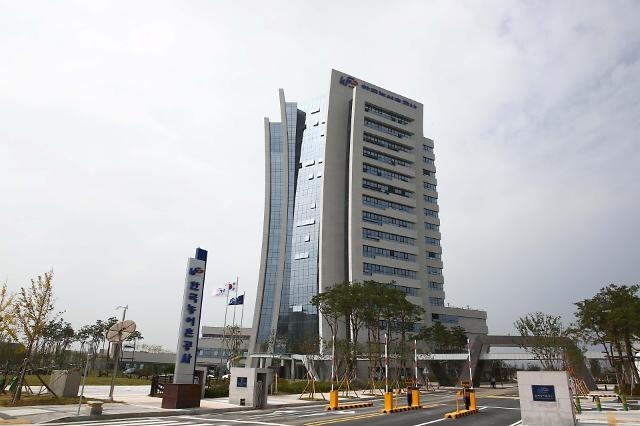
The Korea Rural Community Corporation said Thursday it will launch the first country-level pilot project under the ASEAN-Korea Cooperation for Methane Mitigation program in Cambodia, supporting efforts to reduce agricultural methane emissions across the ASEAN region.
The ASEAN-Korea Cooperation for Methane Mitigation program is funded through the ASEAN-Korea Cooperation Fund under the Ministry of Foreign Affairs. Its main components include building policy and institutional frameworks for methane reduction, improving methane emission measurement methods, and developing and implementing country-specific methane reduction projects.
The corporation is participating as an implementing agency in collaboration with the Global Green Growth Institute, which oversees the cooperation program. After receiving project plan approval last year, the corporation completed a local feasibility study and signed a pilot project contract this year. The project will run in Kampong Thom through May 2027.
Intermittent irrigation to cut methane from Cambodian rice farming
The agricultural sector accounts for 23 percent of Cambodia's greenhouse gas emissions. Among the sources is methane generated during rice cultivation: when paddies are kept flooded, microorganisms break down organic matter in oxygen-depleted soil, releasing methane in the process.
To reduce methane emissions, Cambodia has included a target in its 2035 Nationally Determined Contribution (NDC 3.0) to apply intermittent irrigation to 90,000 hectares of rice paddies. Intermittent irrigation is a low-carbon farming method that alternates between flooding and draining paddies to regulate soil oxygen levels and suppress methane generation.
The corporation will work with the Global Green Growth Institute and Cambodia's General Directorate of Agriculture under the Ministry of Agriculture, Forestry and Fisheries to support the country in reducing greenhouse gas emissions and meeting its targets.
Low-carbon farming across 262 hectares in Kampong Thom, with measurement, verification and farmer support
Through this project, the corporation will introduce low-carbon farming practices across 262 hectares of rice paddies in the Kampong Thom region. The first step is building the infrastructure needed for intermittent irrigation. Farmland will be leveled to maintain uniform water depth, and water-level observation pipes and sealed gas chambers will be installed to monitor water management practices and track methane reduction effects.
A system for measuring, reporting and verifying methane reductions will also be established. The corporation plans to develop and deploy a mobile app and other tools so that farmers can keep farming logs and submit documentation of their water management practices. A satellite-based implementation verification system will also be developed and deployed.
Farmer support will run in parallel to help low-carbon practices such as intermittent irrigation take root locally. Incentives will be offered to farmers confirmed to be practicing intermittent irrigation to encourage voluntary participation. Local farmer education programs will aim to ease concerns about reduced output and build understanding of and engagement with the new water management approach.
Annual reductions of 985 tCO₂eq expected, with results to spread across ASEAN
The Cambodia project is expected to reduce greenhouse gas emissions by 985 tonnes of carbon dioxide equivalent per year — roughly the amount absorbed annually by about 7,000 pine trees.
Nathalie André, country representative of the Global Green Growth Institute in Cambodia, said rice is central to Cambodian agriculture and directly tied to the livelihoods of millions of farmers. "Through this pilot project, we expect to identify ways to produce rice that is more resilient to climate change while improving water management efficiency and reducing methane emissions," she said.
Kwon Young-jun, head of the corporation's global business division, said the organization has built up expertise in paddy water management and low-carbon farming as a specialized agency for agricultural water management and a dedicated manager of low-carbon crop farming programs. "We will drive the project to success through field-centered technical support and cooperation, and use this as a starting point to spread low-carbon agriculture across ASEAN nations and lead sustainable development," he said.
kkm9971@heraldcorp.com




