
A vivid orange pavilion spanning roughly 20 booths drew a steady stream of medical professionals and visitors at the Korea Healthcare & Healthtech Forum (KHF 2026), which opened Wednesday at COEX in Samsung-dong, Seoul. The installation marks the public debut of the Daewoong Alliance, a consortium Daewoong Pharma has assembled with 12 of South Korea's leading digital healthcare companies.
Inside the booth, screens and cutting-edge wearable medical devices replaced the drug models typical of a traditional pharmaceutical company's exhibition space. Skylabs' CART BP Pro — worn like a ring on a finger — read pulse waveforms to measure blood pressure around the clock without the squeeze of a conventional cuff. Nearly imperceptible during sleep, the device captured hard-to-detect fluctuations such as nocturnal hypotension and nighttime hypertension. Data transmitted automatically to electronic medical records, sparing nurses from waking patients in the early hours for manual readings.
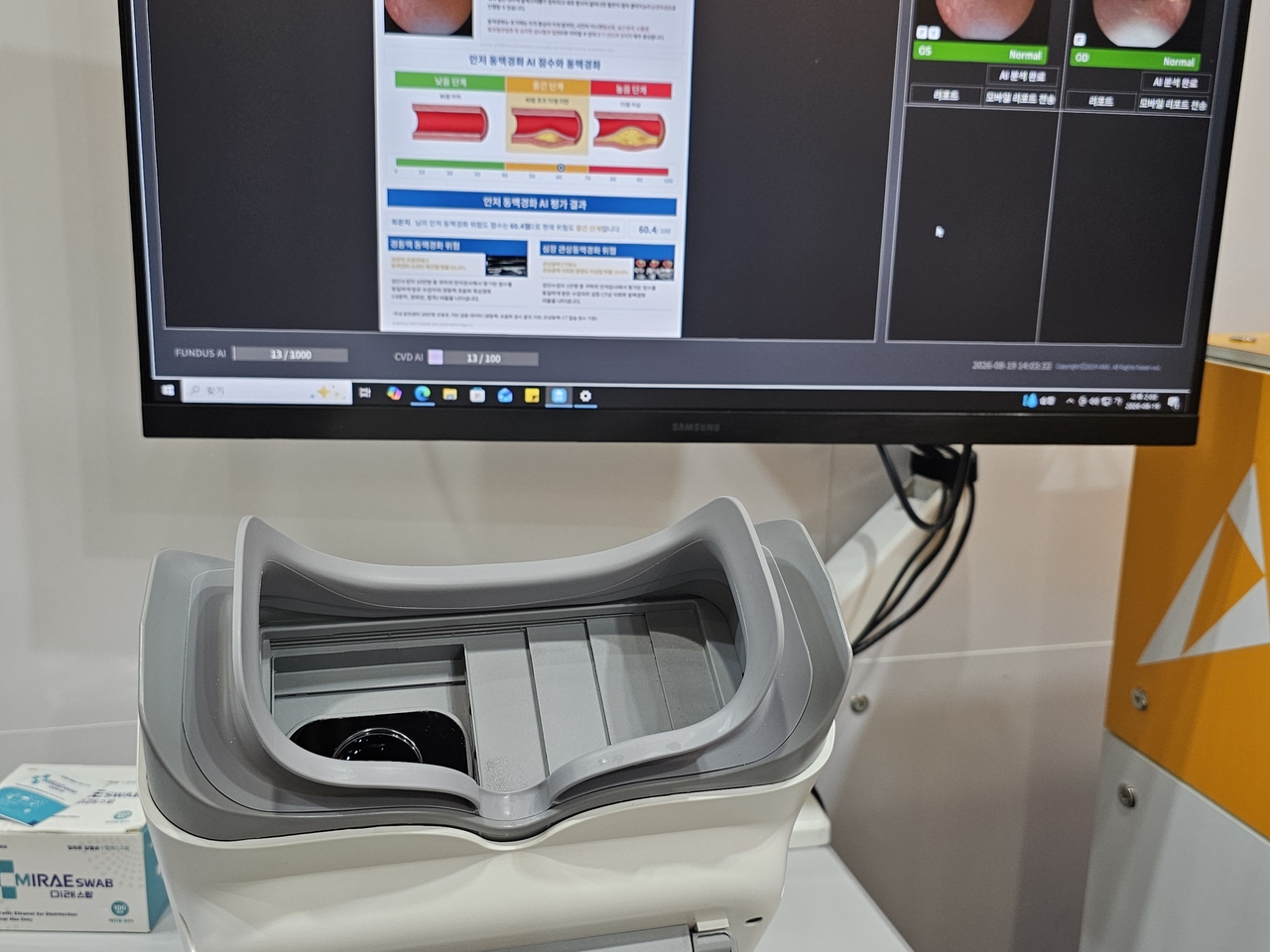
Early-screening and diagnostic devices were strikingly intuitive and fast. ARK's retinal examination device Optina scanned the retina in roughly three seconds simply by having a user hold their eye up to the lens. Without the cumbersome step of administering pupil-dilating drops, the device instantly printed a report on a connected monitor — complete with a fundus photograph and a risk analysis for the three leading causes of blindness: diabetic retinopathy, macular degeneration and glaucoma. The setup makes what was once a complex ophthalmological exam as routine as a standard health checkup at a neighborhood clinic.
Devices for respiratory and bone health were equally compact. TR's wireless handheld spirometer, the Spirokit, was small and light enough to fit in one hand — closer in form to a beauty gadget than a medical instrument. The moment a patient exhaled into the mouthpiece, a connected tablet displayed a real-time spirometry curve and an airway-obstruction risk assessment. Promedius' Osteo Signal screened for high-risk osteoporosis patients using nothing more than a standard chest X-ray taken during a routine health checkup, identifying potential patients early without a separate bone-density scan.
Technology supporting patients in their daily lives extended into cardiology and rehabilitation. Medical AI's AI electrocardiogram system Etia detected early warning signs of myocardial infarction and heart failure from basic ECG data, while Everex's Mora Cure used a smartphone camera to track joint movement in knee-pain patients, pairing rehabilitation exercises with psychological pain-management therapy.
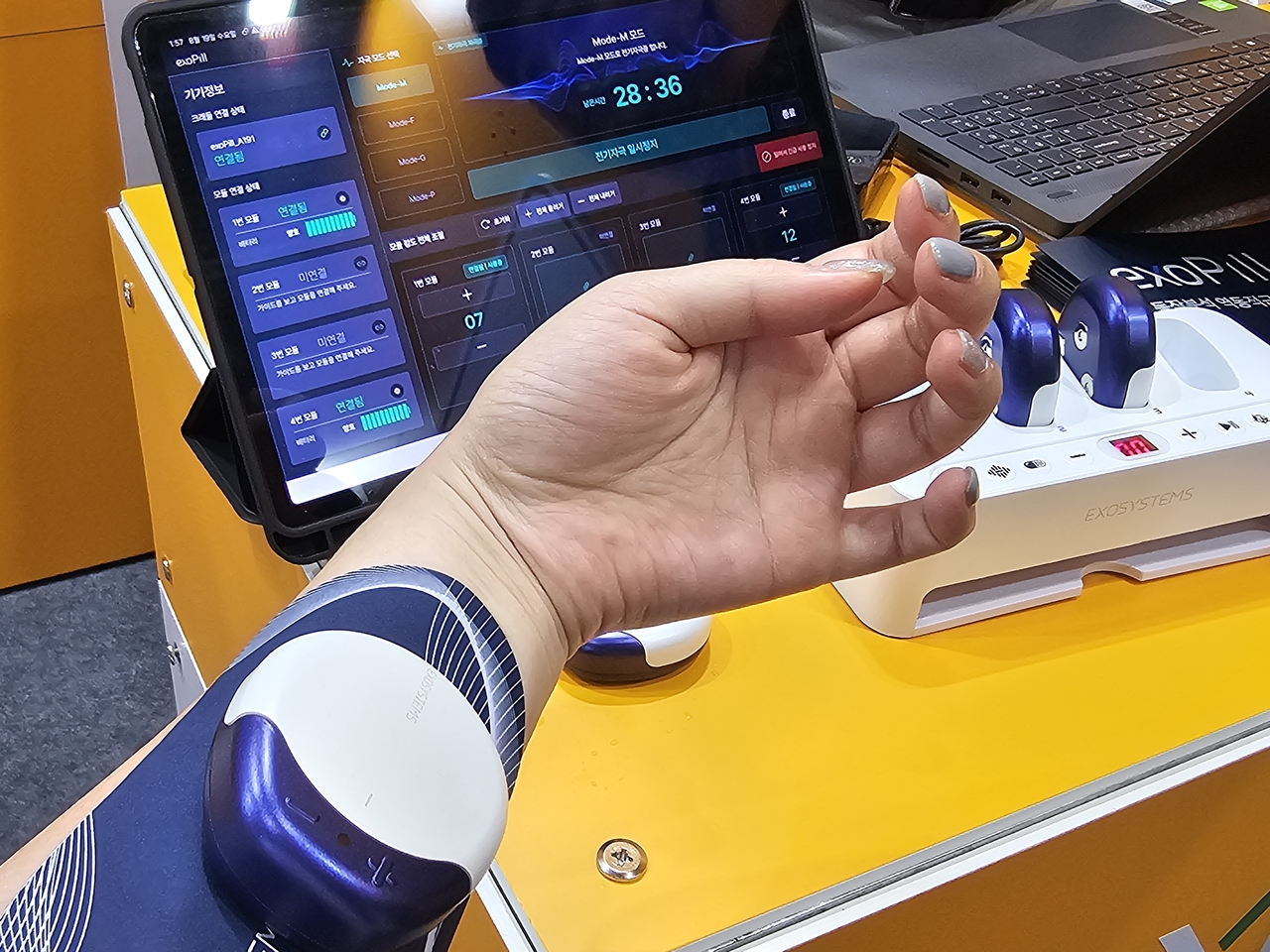
Hurotix's 4-kilogram ultralight wearable robot H-Medi, displayed on a mannequin, used wires to mimic artificial tendons and help stroke patients take steps with ease. Exosystems' electromyography patch, applied to the wrist and leg, displayed muscle activation levels on screen in real time, giving clinicians an at-a-glance view of rehabilitation progress.
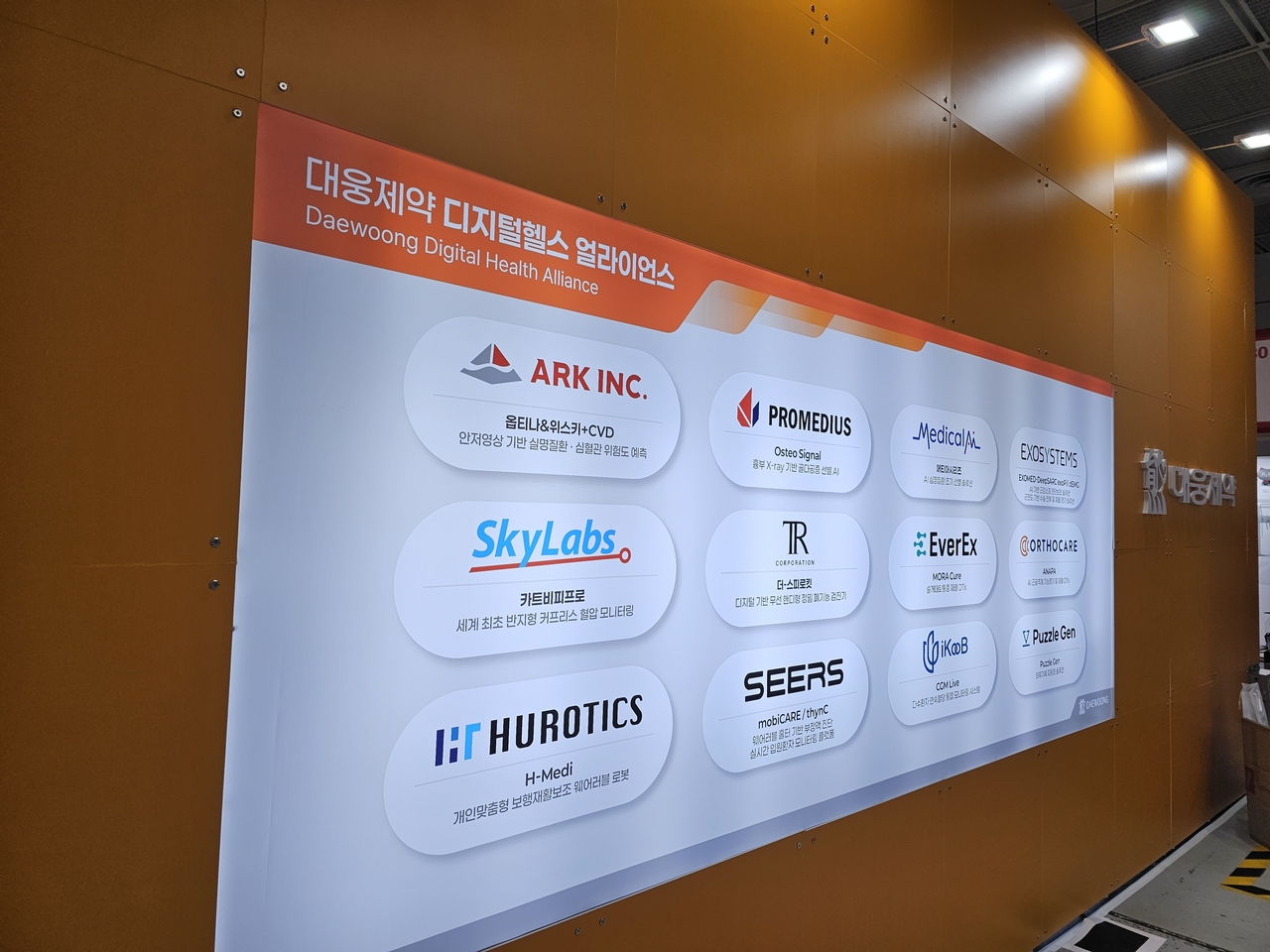
The exhibition was designed not as a simple showcase of individual technologies but as a coherent expression of the "4P paradigm" — preventive, predictive, personalized and participatory care. Puzzle AI's voice-recognition system for automated medical record entry and iCoop's multi-patient blood glucose monitoring platform served as key connective links between hospital data and everyday health data.
Over the three-day run of the expo, the 12 member companies of the Daewoong Alliance will hold a total of 34 relay sessions — 11 to 12 per day — each running 20 minutes and presenting real clinical data and case studies from medical settings.
The launch of the alliance signals a broader transformation in the traditional pharmaceutical industry. Rather than remaining a supplier of synthetic drugs and biopharmaceuticals, Daewoong Pharma is repositioning itself as an overarching platform company for a data-driven, full-cycle healthcare ecosystem — one that combines its own sales and marketing infrastructure with advanced AI technology.
"It is meaningful to showcase the distinctive capabilities of the Daewoong Alliance alongside partner companies with world-class technology," said Lee Chang-jae, chief executive of Daewoong Pharma. "We will continue building a data-driven total healthcare ecosystem that connects hospital and everyday data to cover everything from prediction to post-care management."
silverpaper@heraldcorp.com




