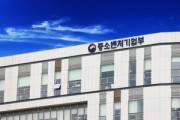
![SK hynix headquarters in Icheon, Gyeonggi Province. [Yonhap]](https://wimg.heraldcorp.com/news/cms/2026/08/19/news-p.v1.20260419.e78b212a9b59420e9f669037d4f9c389_P1.png)
SK hynix's labor and management have in effect concluded representative-level negotiations over a proposal to pay part of employee bonuses in company stock, and a vote on a tentative agreement is expected soon.
Tensions had run high after management proposed shifting bonus payments from full cash to a partial stock arrangement, prompting the union to threaten outright labor action. The two sides are said to have closed much of the gap, however, through marathon talks held over the Liberation Day holiday weekend.
According to the SK hynix union, labor and management held representative-level negotiations from Tuesday through the early hours of Wednesday. The two sides planned to finalize the wording of the tentative agreement Wednesday afternoon. The specific contents of the deal have not yet been disclosed; the union said details would be shared through an emergency extraordinary delegates' assembly.
The union is expected to hold a vote on the tentative agreement at that emergency assembly in the near future.
Gap narrows, but unified union vows signature drive against stock payments
The union had earlier escalated pressure on management after it proposed paying a significant portion of bonuses in treasury shares subject to a lock-up period, saying "a direct decision by Chairman Chey Tae-won is needed" and warning it would "fight" if management avoided making one.
After marathon talks from Saturday through Monday, the union said Tuesday that it had "achieved substantial convergence on key agenda items, with only some legal and detailed operational reviews remaining," adding that it believed negotiations had "crossed the nine-tenths mark."
Still, analysts say the embers of internal conflict sparked by the launch of a new unified union have not been extinguished.
SK hynix currently operates under a multiple-union structure in which three separate unions — the full-time workers' unions at Icheon and Cheongju and the technical and office staff union — each negotiate independently with management. The Icheon and Cheongju full-time unions have traditionally decided tentative wage agreements through delegate votes.
Frustration boiled over when management put forward a proposal seen as backtracking on a labor-management agreement reached last year, and existing unions were perceived as failing to push back adequately. That discontent gave rise to a new unified union spanning both full-time and office workers. As of Wednesday morning, the unified union had surpassed 3,000 members, exceeding the size of the existing technical and office staff union.
The unified union has said that even if it does not become the majority union, it will launch a member petition drive and pursue all lawful means to block any outcome that contradicts last year's agreement — including partial stock bonus payments.
SK hynix reignites bonus debate — industry watches for new norm
SK hynix set off an industry-wide debate last year when it agreed to pay bonuses equivalent to 10 percent of operating profit with no cap, sparking broader discussion about "N percent of operating profit" bonus formulas across the sector. The current tentative agreement is expected to have a similarly significant ripple effect.
Samsung Electronics, after its own prolonged dispute, agreed in May to set its semiconductor division's special management performance bonus at 10.5 percent of business results and to pay the entire after-tax amount in treasury shares.
If the SK hynix union also accepts a stock-based payment structure, it would effectively establish a new industry standard around the "N percent of operating profit" bonus model.
From the company's perspective, paying bonuses in stock reduces large cash outflows and ties employee compensation to long-term corporate value.
Employee resistance, however, is unlikely to fade quickly. Workers bear the risk of share price declines, and lock-up restrictions could further erode the real value of their compensation — factors analysts say will keep tensions simmering.
Shareholders push back: 'Invalid without shareholder vote'
Shareholder opposition is also expected. Paying bonuses in treasury shares reduces the stock available for shareholder returns, critics note, while issuing new shares would dilute the value of existing shareholders' stakes.
The Korea Shareholder Action Center has declared the "N percent of operating profit" bonus agreements at both Samsung Electronics and SK hynix invalid, and filed complaints against the chief executives of both companies for alleged breach of fiduciary duty under the Act on the Aggravated Punishment of Specific Economic Crimes. The group argues that because profit distribution requires a shareholder resolution, bonus agreements concluded without one are void.
As the dispute has dragged on, the government has begun reviewing a measure that would require board or shareholder approval before companies pay out bonuses exceeding a set proportion of operating profit. With per-employee bonuses reaching the 100 million won range, the government has also raised the need to discuss redistributing semiconductor "excess profits."
Similar debates are playing out beyond South Korea's borders. Taiwan's government recently announced plans to share the gains from the AI industry boom with the general public through an "AI bonus" of roughly 440,000 won per person.
A business community official said the combined market capitalization of Samsung Electronics and SK hynix exceeds $2 trillion — larger than South Korea's entire GDP. "They already affect the national economy as a whole," the official said. "This can no longer be left to companies alone; society needs to work through it together."
The official added that "there is still considerable confusion over whether an 'N percent of operating profit' bonus can be the subject of industrial action, and that issue needs to be resolved first."
go@heraldcorp.com