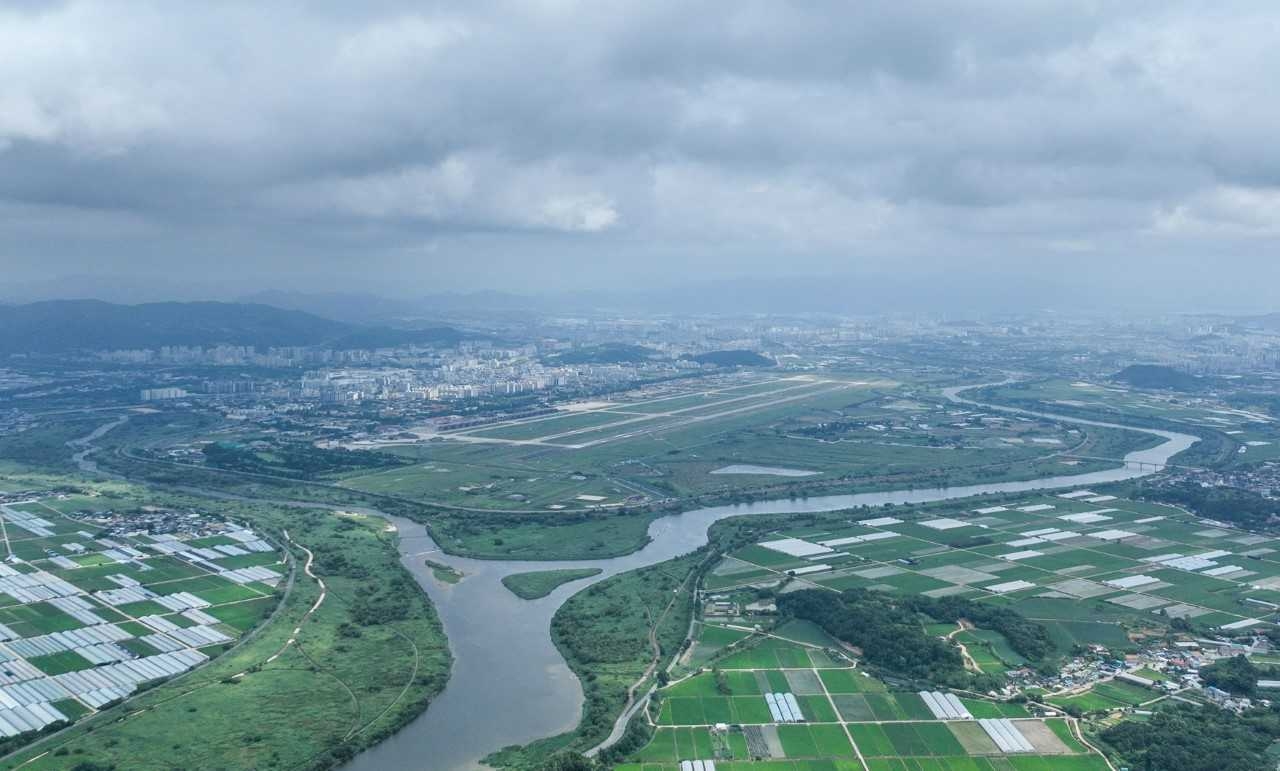
The South Jeolla-Gwangju Integrated Special City is moving to create a "semiconductor settlement city" where workers in the semiconductor industry and their families can live and put down roots. The plan goes beyond building industrial infrastructure, aiming to develop a living environment — covering housing, transport, education, culture and healthcare — that genuinely satisfies the employees who will work there.
To that end, the city held the inaugural meeting of its "Livable Semiconductor City Settlement Conditions Innovation TF" on Friday at a conference room in Gwangju city hall.
The TF has begun identifying priority tasks across key sectors needed to develop a support city behind the semiconductor cluster. The 20-member body is co-chaired by Deputy Mayor for Safety and Livelihoods Ko Gwang-wan and specialist commissioner Lee Hyo-won, and includes civil servants from the city's urban space, education and youth, culture, health and welfare, and transport divisions, as well as outside experts in architecture, urban planning, landscape design, transport, culture and sports.
The city has assessed that public rental housing within a 5-kilometer radius of the Gwangju military airport site — where the semiconductor cluster will be built — is insufficient.
Current housing supply plans also fall short of what will be needed to accommodate construction workers arriving during the fab (semiconductor production factory) construction phase, as well as the engineers, researchers, partner-company employees and their families who will follow.
In response, the city is reviewing a "residential belt adjacent to the industrial complex" that would include public rental units, publicly supported private rentals, housing for young people and newlywed couples, corporate dormitories and long-stay residences.
On transport, the focus is on linking the industrial complex, residential areas and central Gwangju within roughly 30 minutes.
Options under review include arterial roads, bus rapid transit, urban rail and transfer hubs. Industrial complex shuttle services and late-night transport are also on the table.
The education environment is being treated as a key condition for attracting companies. The city will examine demand for new and expanded schools for workers' children, improvements to school commuting conditions, and international education for the families of foreign and specialist workers. Plans are also being pursued to expand Meister high schools, specialized high schools, university contract departments and industry-linked curricula, creating a pipeline through which locally trained talent feeds back into semiconductor companies.
The city is also reviewing expanded everyday amenities suited to the semiconductor industry's heavy reliance on night shifts and rotating schedules.
The plan calls for placing 24-hour convenience facilities alongside healthcare, childcare, cultural and sports venues, parks and commercial outlets. Noting the absence of a five-star hotel in the Gwangju area, the city will also link the expansion of accommodation and MICE (meetings, incentives, conferences and exhibitions) infrastructure — needed to support international conferences and corporate events — to its broader settlement policy. To accelerate progress, the city will run a "100-day plan" through the end of the year.
By year's end, the city plans to assess the current state of each sector and identify priority projects covering residential support, wide-area and commuter transport, education and social overhead capital. It will then draw up an implementation plan — including project timelines, investment scale and financing — by the second half of 2027.
sij@heraldcorp.com