!["Line up!" — Visitors queue for the ray encounter experience on Fenjiezhou Island, Hainan. [From Hainan = Ham Young-hoon]](https://wimg.heraldcorp.com/news/cms/2026/08/14/news-p.v1.20260814.cf3459c440a2439192b07c0b07a5daea_P1.jpg)
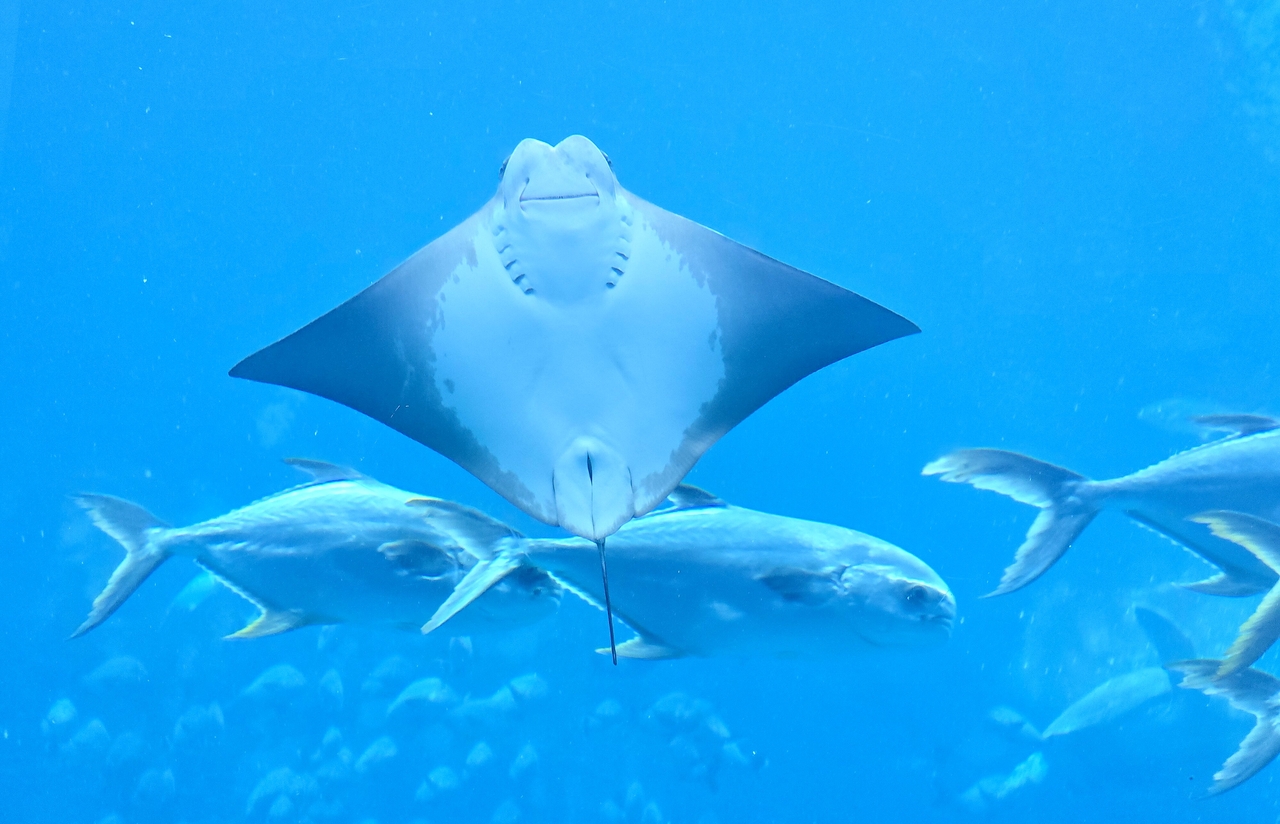
Of all marine creatures, rays and dolphins may be the animals most naturally inclined to bond with humans.
The dolphins of Tangalooma Island Resort on Moreton Island in Queensland, Australia, took months to build their friendship with people — wild dolphins that one day wandered ashore, connected with island residents, swam back out and apparently spread the word, then returned in groups to play. That friendship, which began more than 40 years ago when islanders started giving the visiting dolphins names, continues to this day on a kind of daily commute.
Rays are a different story. The rays of China's Hainan, Hawaii, Saipan in the South Pacific and the Maldives in the Indian Ocean take only a few minutes to decide that the person in front of them poses no threat — and from that moment, even on a first encounter, they are all in, showing off and flirting like creatures that fall hard and fast.
It is hard not to warm to a ray quickly when, out of all the creatures in the sea, it is the one that comes to you first.
With many animals, you may feel you are giving more affection than you are getting back. Rays reverse that equation — they make the first move and express their friendliness more openly than most humans do. Offer them a little food and they become even more enthusiastic.
Ray encounters are a celebrated activity in Hawaii and equally captivating in Hainan, often called the "Hawaii of the East." For sheer visual spectacle and a full eco-cultural experience, Hawaii has the edge; for up-close, hands-on contact, Hainan wins.
Korean middle-aged tourists cannot resist a pun even in the middle of the ocean. They work the English word "manta" relentlessly — "There sure are a lot of rays — man, that's a lot-a!" — repeating the joke until someone around them finally gets it.
Korea consumes rays and skate as food, but the country could do more to embrace them as subjects of ecological and cultural experience as well.
Fenjiezhou Island, off the southeastern coast of Hainan in Lingshui county, sits on the boundary between Lingshui and Wanning and is a designated national 5A-class scenic area — China's highest tourism rating.
The island is known for its split-personality weather: locals say "rain falls in front of the mountain while the sun shines behind it" and "the ox's head bakes in sunlight while its hindquarters get soaked," reflecting how sharply the island divides the climates of the two neighboring cities.
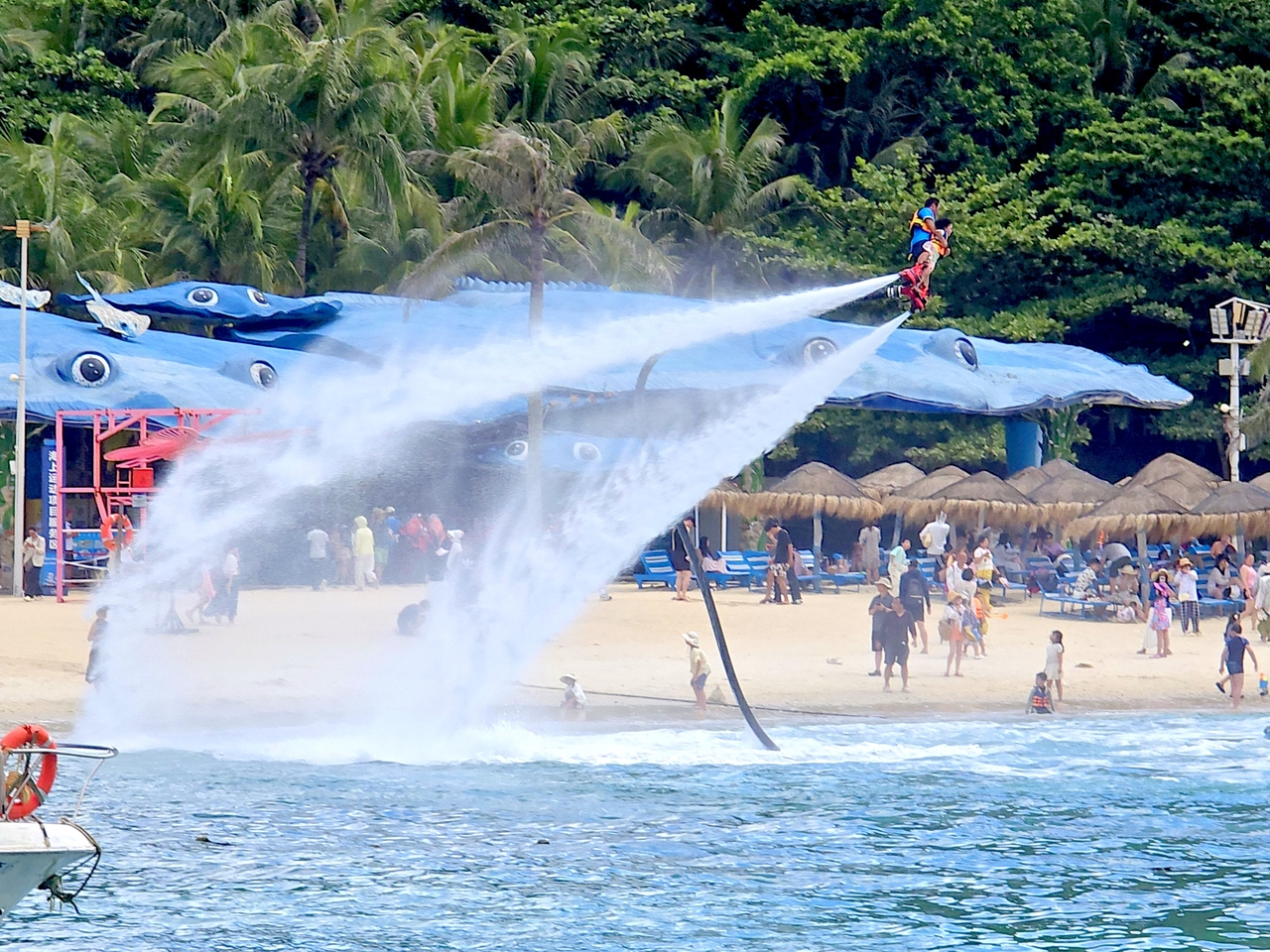
The island has served as a filming location for Korean variety programs including "Running Man" and "Dad, Where Are We Going?" and made headlines as the site of China's first underwater wedding ceremony.
A 10-minute boat ride from the mainland, Fenjiezhou Island offers a full menu of activities — diving, flyboarding, sailing, parasailing, cliff-top views at the Monkey King's Staff rock formation, fresh coconut juice at a beachside cafe, coconut desserts at the "Qingbuliang" stall, and seafood at the clifftop Languyulan restaurant. Among them all, the ray touch-and-feeding experience consistently ranks as the island's top attraction.
Groups of 30 to 40 tourists enter the encounter area at a time and wade into the shallows where the rays glide freely around them.
The rays seem to know people well — they are the ones making the first move. Their muscular, flexible bodies press right up against visitors, and more than a few Koreans have stepped back in surprise, as if startled by someone being too forward: "Why are they like this?"
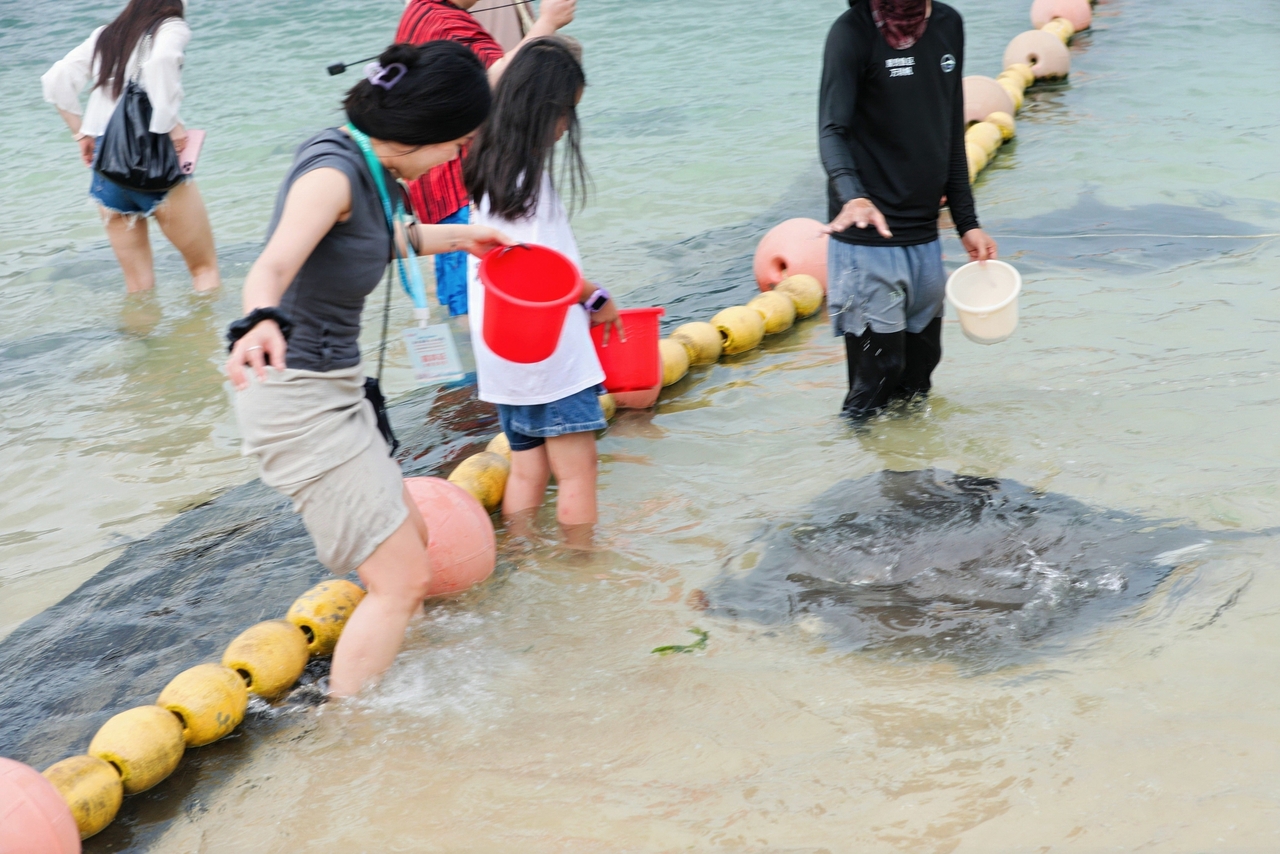
Hand a ray a small fish and it snaps it up, then glides smoothly away to charm the next visitor. Press gently on its back with a finger and it obliges by sinking slightly under the pressure.
There are five or six ray encounter destinations around the world, but the Hainan rays stand out — their sociability and the tactile sensation of touching them are simply the best.
However, the facilities could use a more polished look, and it would be worth adding ecology and marine conservation education programs nearby so the two experiences can complement each other.
The very name "Hawaii" comes from the Big Island. It is the archetypal island destination. The state capital sits on Oahu, but the island called Hawaii is the Big Island itself.
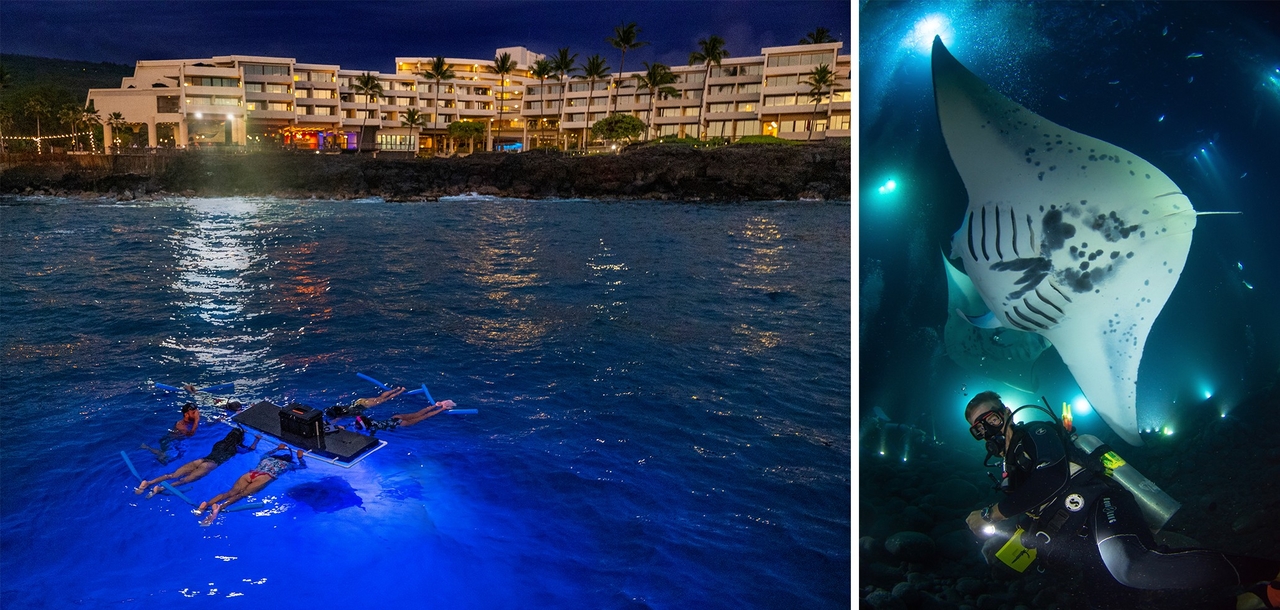
Outrigger Kona Resort & Spa on the Big Island runs ray programs year-round, and this year it is going further: on Sept. 12, World Manta Day, the resort will stage a full festival of marine ecology education and hands-on activities.
The event is being organized jointly with the Manta Pacific Research Foundation (MPRF), a Hawaii-based marine research organization, and will include educational programs, research presentations, exhibitions and interactive activities aimed at raising awareness of ray ecology and ocean conservation among tourists and local residents alike.
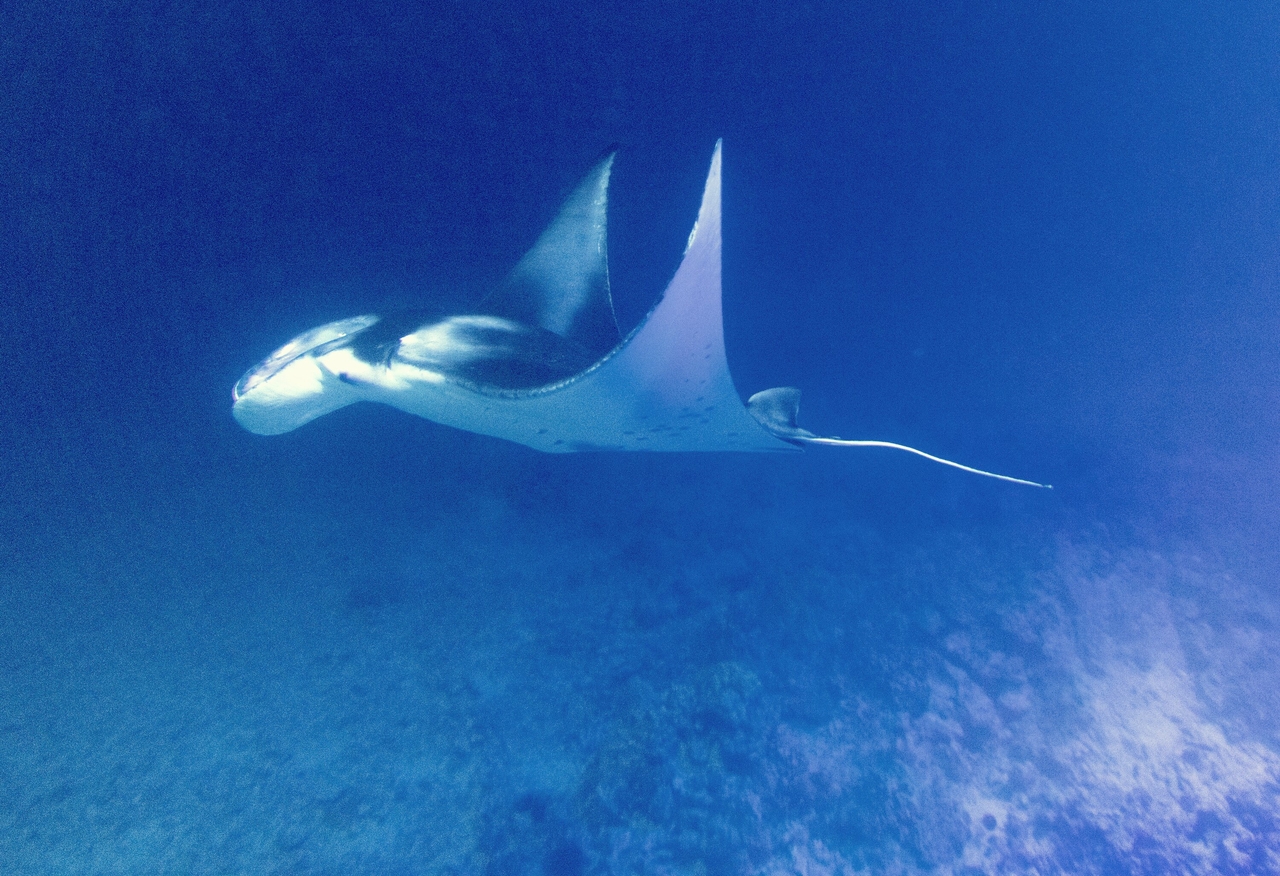
Kona on Hawaii's Big Island is known as one of the more reliable spots in the world for observing large manta rays, and its nighttime snorkeling and diving programs rank among the area's signature marine activities.
The waters near Outrigger Kona Resort & Spa in particular offer year-round ray sightings, drawing large numbers of tourists and divers. The Sept. 12 festival will also highlight conservation efforts, hands-on activities and local Hawaiian culture.
Outrigger Resort operates and supports a range of environmental protection programs as part of its ESG commitments. The Big Island, home to a volcanic national park and a wealth of ocean activities, is drawing growing attention as a destination for immersive nature experiences.
Reporting assistance: Han Dan, CEO of Lamita, a China health travel agency; S Marketing, the Hawaii Outrigger Korea office
abc@heraldcorp.com