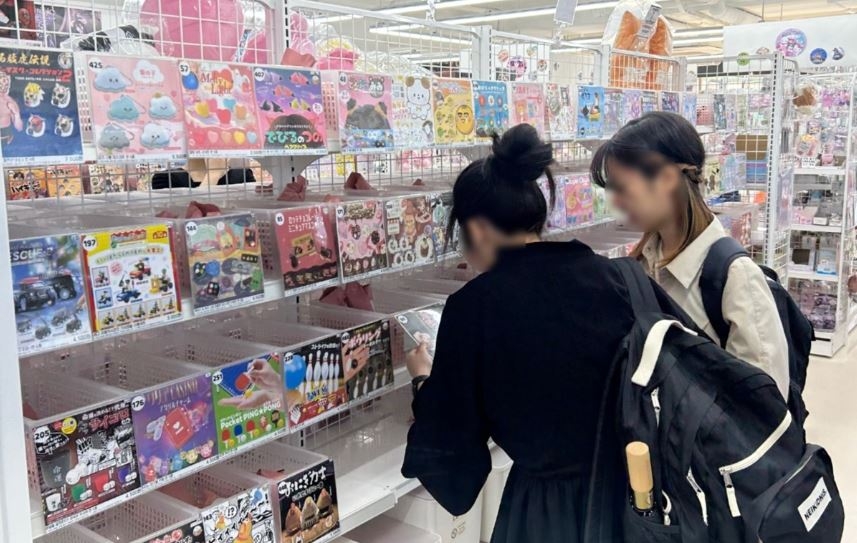
Where young Koreans spend their evenings after work is changing. The generation that once filled beer bars and pojangmacha — outdoor drinking stalls — is now gravitating toward gacha shops and figure stores, and the shift is reshaping the small-business landscape.
According to the National Tax Service's survey of the top 100 everyday business categories, the number of toy stores nationwide stood at 3,996 as of the end of June — up 673 from 3,323 in the same month last year, a 20.3 percent increase in a single year.
Even compared with the end of May, when 3,929 toy stores were counted, the number grew by 67 within a month — roughly two new stores opening every day. The National Tax Service said the surge tracks the spread of figure stores and gacha shops.
Meanwhile, bars are disappearing fast. The number of beer bars nationwide fell from 21,705 to 19,730 over the same period — a drop of 1,975, or 9.1 percent. Casual taverns and similar establishments also declined, from 8,648 to 7,853, a decrease of 795, or 9.2 percent.
The trend is even sharper in commercial districts popular with younger consumers. In Mapo-gu — home to the Hongdae area — toy stores jumped 42.9 percent, from 49 last year to 70 this year. Over the same period, beer bars in the district fell 7.0 percent, from 271 to 252, while casual taverns dropped 11.8 percent, from 212 to 187.
The spaces left behind by closing bars are being filled by gacha shops, figure stores and other retailers catering to taste-driven consumption.
Behind the toy store boom is a fundamental shift in who is buying. Children were once the primary customers; now, adult consumers with a passion for animation, gaming and character merchandise are flooding the market.
A gacha machine typically dispenses a random capsule toy for around 2,000 to 7,000 won ($1.50 to $5.40). Players often try multiple times to land a favorite character, and a culture of trading duplicates with friends or through online communities has taken hold. Figures, too, have moved beyond children's toys to become collectibles and a form of self-expression for adults.
The trend emerged first in Japan. According to KOTRA, the core gacha consumer base there has expanded from children to women in their teens through 30s, office workers and character fandom communities. As the practice of collecting small character goods and posting them on SNS spread, gacha shifted from a children's toy to a form of identity-driven consumption.
A similar dynamic is playing out in South Korea. With youth employment conditions unstable and the costs of dining out and housing rising, analysts say "small luxuries" — modest purchases that deliver satisfaction without a large outlay — are gaining ground among people in their 20s and 30s as an alternative to expensive nights out drinking.
Drinking-related indicators bear this out. According to the Korea Disease Control and Prevention Agency's 2025 Community Health Survey, the high-risk drinking rate among men in their 20s fell 41.6 percent over the past decade, from 17.8 percent to 10.4 percent — the steepest decline of any age group.
The slowdown in alcohol consumption is also visible in import data. According to the Korea Customs Service, whisky imports by weight in January and February this year totaled 2,880 tons, down 28.2 percent from 4,012 tons in the same period last year. Wine imports by weight fell 2 percent over the same stretch. Total alcohol imports last year came to $1.27 billion, down 13.5 percent from $1.47 billion two years earlier.
Liquor companies have felt the pinch. According to the Financial Supervisory Service's DART system, Lotte Chilsung's operating profit last year fell 9.6 percent year-on-year to 167.2 billion won ($118 million), while Hite Jinro's operating profit dropped 17.2 percent, from 208.1 billion won to 172.3 billion won.
Analysts say the weakening of drinking-centered work dinners and leisure culture, combined with a rise in taste-driven spending, is restructuring commercial districts. Rather than lingering for hours at a bar with friends or colleagues, more young consumers are stopping by a gacha shop on the way home to pull a capsule toy or browse figures.
Experts say the shift goes beyond a passing trend and amounts to a sectoral realignment in the small-business market. As consumers place greater value on what kind of experience they take away than on how long they stay, the competitive edge in districts targeting younger shoppers is moving away from drinking venues and toward spaces built around personal taste and hands-on experience.
rainbow@heraldcorp.com