Twenty Korean stories — including the classic tales "Simcheongjeong" and "Chunhyangjeon" — have been added to 14 textbooks across five Latin American countries, the Academy of Korean Studies confirmed Wednesday.
The inclusions came through the academy's overseas textbook improvement project, part of its broader effort to promote accurate knowledge of Korea abroad, the academy said.
The project had long focused on correcting historical and economic errors in foreign textbooks but has since expanded into narrative content that students can engage with more readily — a shift the academy described as a response to the global wave of interest in K-pop, K-dramas and hallyu.
Korean stories first entered foreign textbooks in 2016, when a Guatemalan private publisher included the founding myth of Silla's first king, Park Hyeokgeose, in a digital textbook.
In 2020, working with South Korea's embassy in Guatemala, the academy added five stories to elementary school reading materials: "The Rabbit and the Tortoise," "The Devoted Brothers," "The Sister and Brother Who Became the Sun and Moon," "Heungbujeon" and the Dangun creation myth. "Simcheongjeong" and "Chunhyangjeon" were included in middle school materials. "The Rabbit and the Tortoise" was also translated and published in four Mayan-language textbooks, reaching students who speak minority languages.
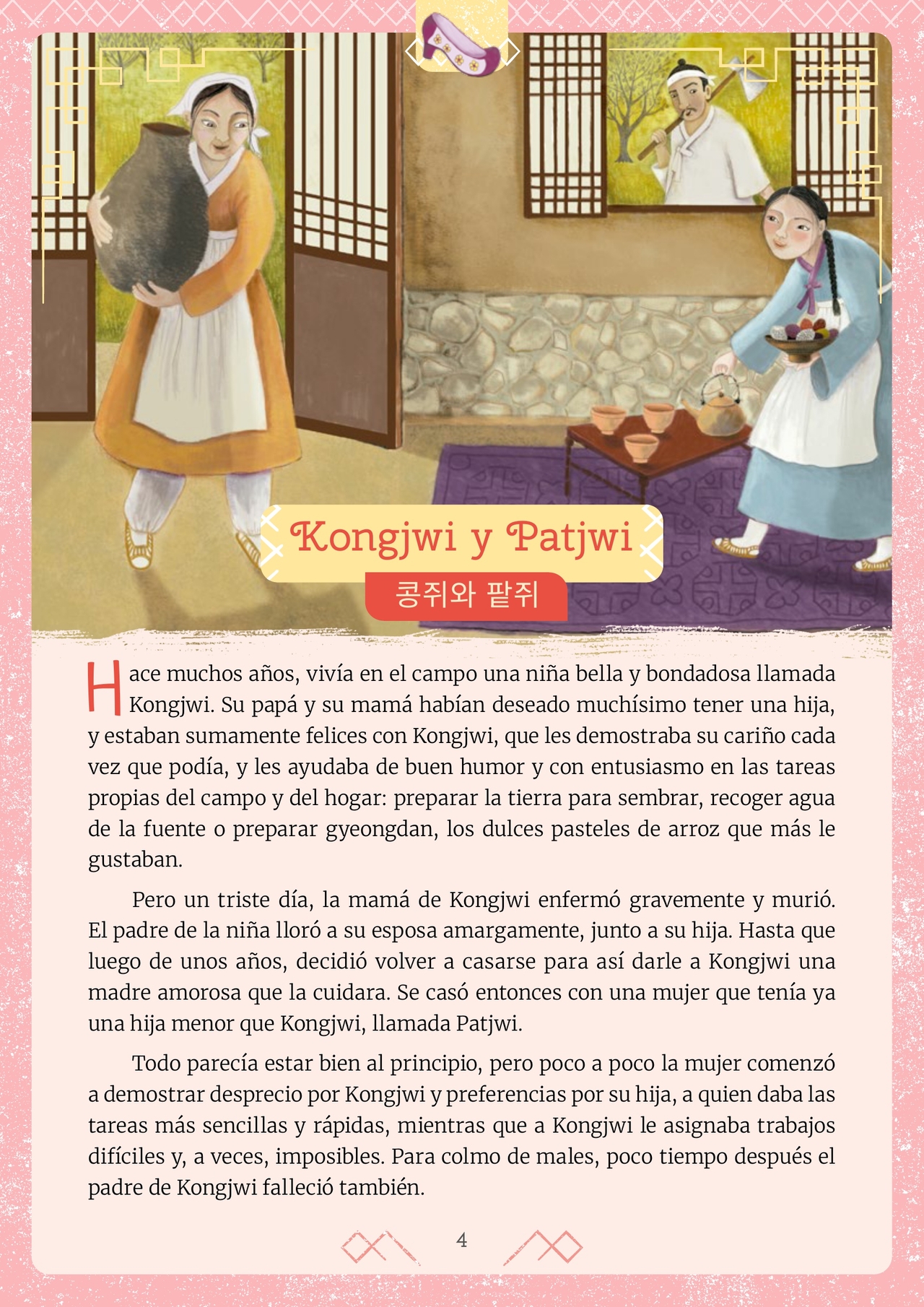
In 2024, a collection titled "Yenniyagi" — produced through a support project in Argentina — brought together 10 works: seven traditional folktales, including "Kongjwi and Patjwi," "The Red Fan and the Blue Fan," "The Gold Axe and the Silver Axe" and "The Rabbit and the Tortoise," along with three founding myths featuring Dangun, Park Hyeokgeose and Jumong.
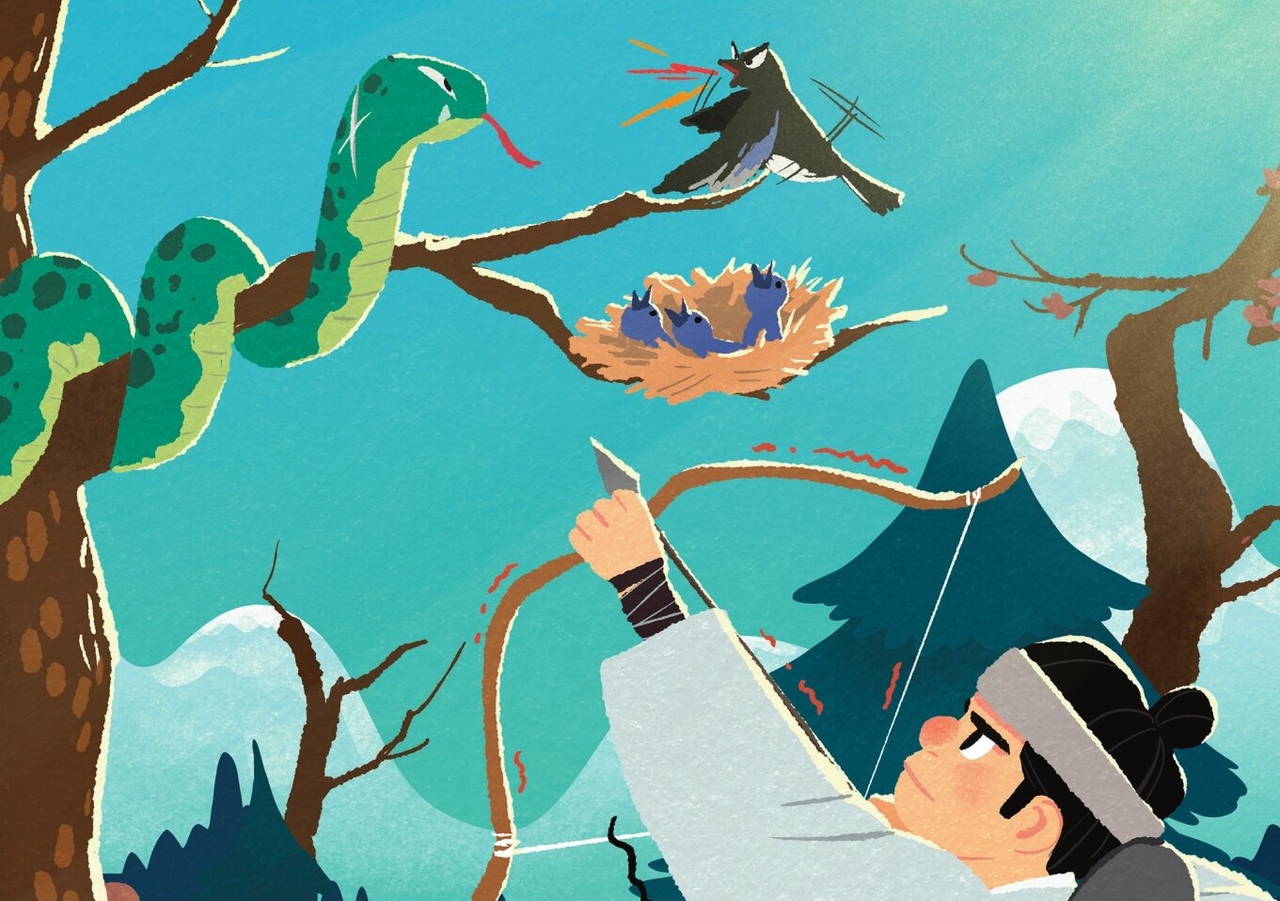
That same year, the academy partnered with a local publisher in Colombia to release "Korean Folktales and Myths," aimed at students in grades four through six. The collection contains 17 works, including "The Grateful Magpie" — the folktale behind the name of Wonju's Chiaksan — "Hokburiryeongam" and several founding myths, alongside content on Korean history, geography and culture. In 2025, the academy developed a teacher's guide to support classroom use.
In Uruguay, the academy registered the Argentina-published "Yenniyagi" collection with the national integrated digital library, Biblioteca País, in 2025, making all 10 Korean folktales and founding myths freely available to any Uruguayan — students and teachers alike.
In El Salvador, four stories — including "Heungbujeon," "The Grateful Tiger" and "The Green Frog" — were incorporated into a teacher's guide in 2026.
The Academy of Korean Studies has invited overseas textbook editors and education specialists to Korea to introduce the country's history, culture and educational materials, while maintaining ongoing exchanges with local counterparts to ensure Korean content is represented accurately and in depth. The Latin American cases stand as a prime example of such exchanges moving beyond information-sharing to directly shaping the development of textbooks and educational materials.
abc@heraldcorp.com