
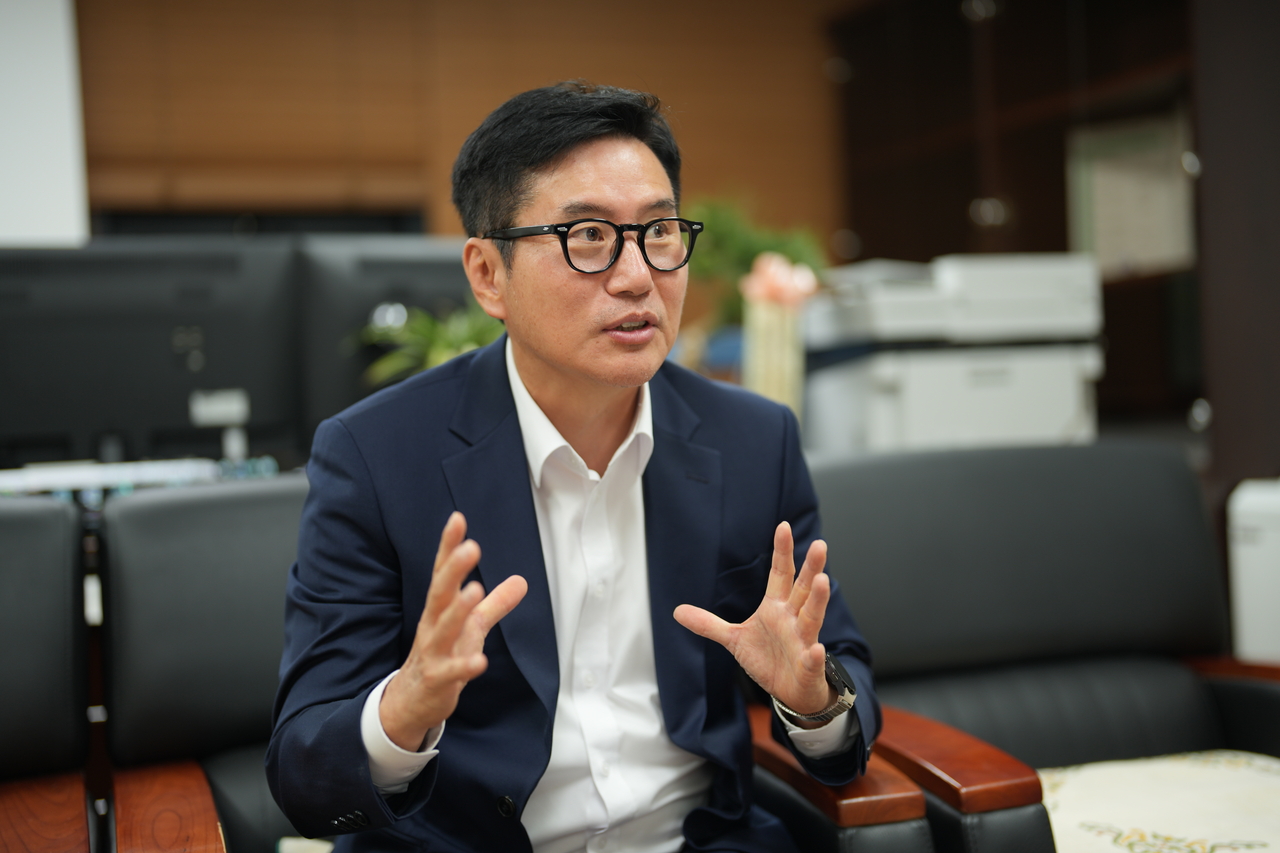
Kim Ho-jin, chair of the Seoul Metropolitan Council's education committee and a Democratic Party of Korea lawmaker representing Seodaemun 2, has identified restoring trust in public education as the top priority for Seoul's schools. Rather than rushing to adopt AI and digital technology, he said, schools must build systems that closely track each student's learning level and emotional state and deliver the right support at the right time.
He pointed to character education as the key to resolving conflicts over school violence, infringements on teachers' rights and student rights. Creating a school culture in which students, teachers and parents recognize and respect one another's rights and roles, he said, is the starting point for rebuilding the foundations of a weakened public education system.
'In the AI era, we must look beyond device distribution to actual learning outcomes'
"The chair of the education committee holds a weighty position that shapes education policy for the children of Seoul, the capital of South Korea," Kim said in an interview Monday. "I will listen carefully to diverse voices from the field, keep learning myself, and leave a meaningful mark on Seoul's education."
Drawing on his experience as a 10th-term Seoul city council member and years of close contact with residents and parents, he said his focus will be on narrowing the gap between policy and what actually happens in schools.
Kim said schools are changing rapidly amid a declining school-age population and the swift advance of AI technology. While those shifts cannot be avoided, he said, what matters is not how quickly new technology is introduced but how much it can raise the quality of instruction and the effectiveness of learning.
"Seoul schools have built a one-device-per-student environment centered on the digital learning device 'Dibut,'" he said. "We now need to move beyond expanding the scale of distribution and take a close look at how digital devices are actually being used in class, and what changes they have brought to students' learning ability and teachers' instructional methods."
He also cited the case of AI digital textbooks, which were originally set to be introduced as official textbooks but were reclassified as educational materials following a legislative amendment. Adapting regulations to keep pace with technological progress is unavoidable, he said, but without adequate preparation and genuine buy-in from the field, such changes can instead deepen confusion among teachers and students.
Education in the AI era must go beyond simply distributing digital devices, Kim said. The focus should be on creating conditions that allow students to adapt to a changing world and build the competencies they need.
On new rules such as restrictions on smartphone use during class, he said education authorities must establish clear, consistent standards so that implementation does not vary from school to school. The council, he added, must also scrutinize the process closely to ensure such policies are applied uniformly and that operational gaps between schools are kept to a minimum.
'Understanding each student is how we win back trust in public education'
Kim said that for public schools to reduce dependence on private tutoring, students and parents must first trust the schools themselves. In many cases, he said, parents do not turn to hagwon because they have given up on public education outright, but because they are not confident that schools have a precise grasp of where their children stand academically and where they are falling short.
Rather than simply promoting "personalized learning" as a slogan, he proposed combining basic academic assessments, teacher recommendations and consultations with students and parents to identify those who need help with greater precision. Equally important, he said, is the follow-through — connecting students to appropriate programs ranging from academic remediation to counseling based on those findings.
He also said responsibility for looking after individual students should not rest solely on homeroom teachers. A collaborative system in which subject teachers, counselors and school nurses together monitor not only academic progress but also students' emotional and physical well-being is essential for catching complex difficulties early, he said.
On the education gap between regions, he said uniform prescriptions are not the answer — responses must reflect the conditions and needs of each area. Where the foundation is relatively weak, he said, improving facilities and learning infrastructure should go hand in hand with efforts to change parents' perceptions of certain neighborhoods and schools.
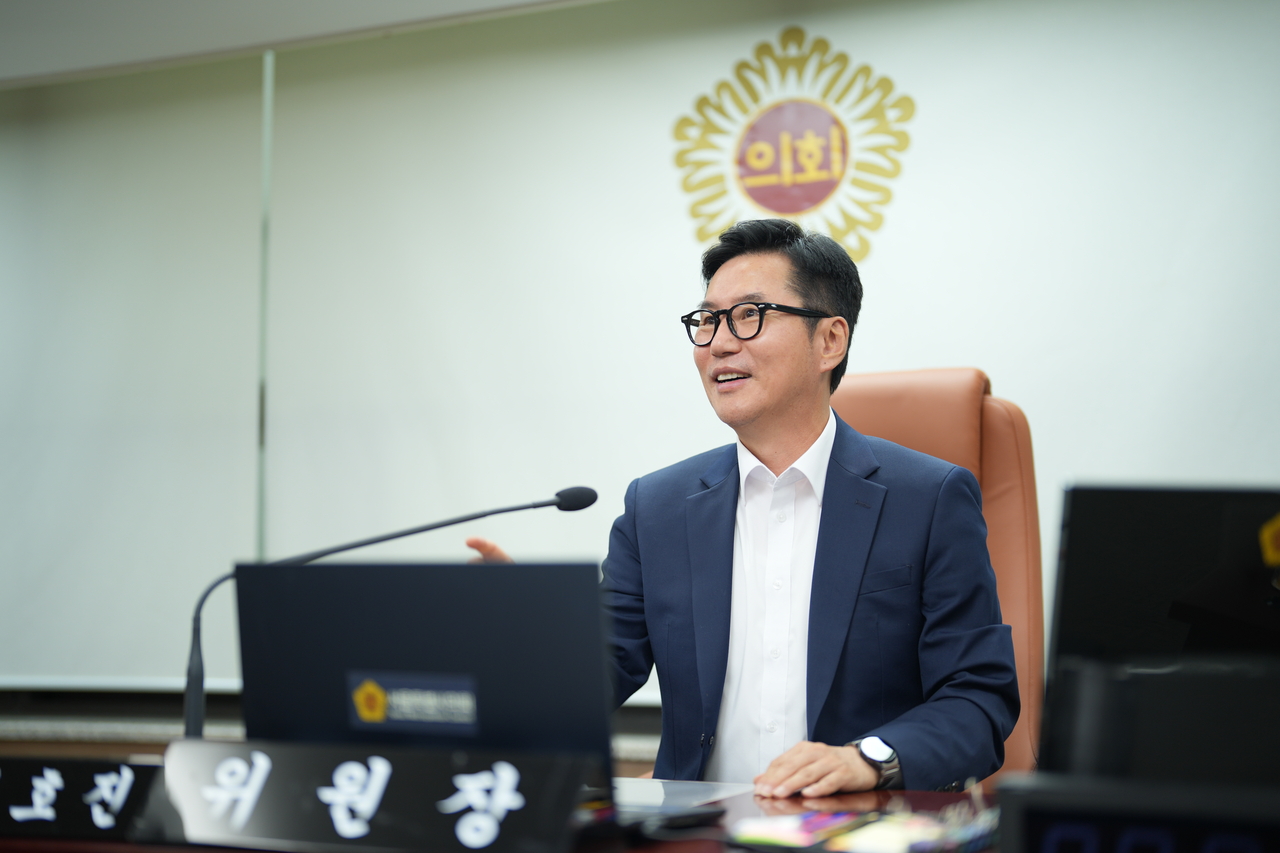
Character education as the starting point for tackling school violence and teacher-rights conflicts
Kim identified character education as the common thread running through school violence, infringements on teachers' rights and student-rights conflicts. Tightening punishments and regulations alone, he said, has its limits as a way to fundamentally resolve the increasingly complex conflicts inside schools.
Prevention matters at least as much as the response after an incident of school violence, he said. Because students who bully others often fail to grasp the depth of harm they cause, children must be taught from an early age to respect others and take responsibility for their own actions, he said. Students themselves, as the parties directly involved, should also have their voices actively reflected in the development of preventive measures, he added.
"I believe character education is the most important form of education," Kim said. "The foundation must be mutual respect — not only in how students treat adults and teachers, but also in how teachers treat students."
He said student mental health is another pressing issue. Early detection of warning signs, timely referrals to specialist institutions, and the option of remote counseling or AI-assisted tools for students who find face-to-face sessions difficult are all worth exploring, he said. Expanding the number of professional counselors at each school and lowering the threshold for the in-school counseling space known as Wee Class — so that any student can seek help without hesitation — are also tasks that need to be addressed.
He drew a line against viewing teachers' rights and student rights as opposing values. The goal, he said, is to find a balance that protects students' rights while also safeguarding teachers' legitimate educational activities.
He said the problem of repeated or excessive complaints from parents — which can discourage teachers from teaching and managing student behavior — also needs to be addressed. Rather than trying to resolve every conflict through law and regulation, he said, the priority should be fostering a culture in which students, teachers and parents understand one another's perspectives, and sharing practices that have proven effective in schools.
History education and civic education, he said, must not be skewed toward any particular ideological camp. While distortions or mockery of historical fact require a clear educational response, he said, the focus should be on cultivating a sound historical consciousness and respect for others — rather than immediately escalating students' behavior into political controversy.
Seodaemun Library to become a community education and culture hub where residents can linger
Kim also outlined his ambition to improve aging education and cultural infrastructure in his home district of Seodaemun-gu. The district has long been known as a traditional education hub, dense with universities and schools, but it also faces the challenges of a declining Sinchon university district and deteriorating public facilities.
Kim said one factor behind the loss of vitality in the Sinchon commercial district is that changing student lifestyles have reduced the time students spend around campus after class. Rather than one-off events or simple injections of funding, he said, the approach should focus on creating spaces where universities, residents and local businesses connect naturally and people are drawn to stay.
He identified the renovation of Seodaemun Library as the district's most pressing local issue. The library, built nearly 40 years ago, has aged considerably, but demand remains steady, and its proximity to Ansan and nearby schools gives it strong potential to grow into a community education and culture hub well beyond a simple reading space, he said.
Building an entirely new facility would require enormous funding and a separate site, making the most realistic option one that maximizes the strengths of the existing space, he said. His plan is to improve the facility and its accessibility, expand functions that both residents and students can use together, and develop Seodaemun Library into a landmark education and culture destination for the district.
During his term, Kim said he plans to focus his legislative work on addressing a range of pressing issues — AI and digital transformation, guaranteeing foundational academic skills, mental health, school violence prevention and teacher-rights protection — while rebuilding the fundamentals of public education.
Even amid rapidly changing technology and policy, people must ultimately remain at the center of education — that is Kim's conviction. His ultimate goal for Seoul's education policy is to look closely at the circumstances of each individual student, build schools where teachers and parents trust one another, and through that, restore citizens' faith in public education.

7toy7@heraldcorp.com



