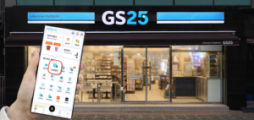
![Single-stock leverage ETFs tracking Samsung Electronics and SK Hynix were listed in May. The photo shows a mobile trading screen displaying the single-stock leverage ETFs on their listing day. [Newsis]](https://wimg.heraldcorp.com/news/cms/2026/08/07/news-p.v1.20260723.ef4179580e7f4e07a279726b61afddd5_P1.jpg)
Trading volume in single-stock leverage products has plunged below 1 trillion won ($705 million) since the minimum deposit requirement was raised, with their share of total Kospi trading shrinking from nearly 30% to around 3% — a sign that the regulatory tightening is taking effect.
According to Korea Exchange, combined trading volume for 16 single-stock leverage and inverse products tied to Samsung Electronics and SK Hynix came to 941.2 billion won on Thursday, down 92.4% from 12.45 trillion won on July 30, the day before the higher deposit requirement took effect.
On the first day the new requirement applied — Friday, July 31 — trading volume plunged to 3.15 trillion won. It continued to fall, reaching 1.39 trillion won on Monday, 1.33 trillion won on Tuesday and 924.7 billion won on Wednesday.
The products' share of total Kospi trading volume also contracted sharply. Their 29.07% share on July 30 fell to 3.56% on Thursday — meaning products that once accounted for roughly one-third of Kospi trading now represent about one-thirtieth.
The minimum deposit requirement for single-stock leverage products was raised from 10 million won to 30 million won on July 31. Under the previous rules, substitute securities such as shares, ETFs and bonds could count toward the deposit at up to 70% of their assessed value; the new measures exclude them from the calculation entirely.
Single-stock leverage ETFs, introduced May 27, had drawn criticism for concentrating capital in large-cap semiconductor stocks and amplifying index volatility. Financial regulators tightened the rules, including raising the deposit requirement, to stabilize the market.
Securities industry analysts say the higher deposit requirement has delivered results, as the drop in trading has been real. The sharp decline in single-stock leverage trading volume is seen as having eased excessive speculative demand and reduced the concentration of flows into specific stocks.
"The leverage regulation, combined with a broadening of sector gains during the market rebound, is reducing the influence of single-stock leverage products," said Han Ji-young, a researcher at Kiwoom Securities. "Even if leading semiconductor stocks stage a strong rally going forward, the extreme concentration and supply-demand distortions seen previously are unlikely to recur."
Lee Gyeong-su, a researcher at Hana Securities, said inflows into index-linked ETFs were outpacing those into single-stock semiconductor leverage ETFs, adding that "the cohesion of supply and demand is being restored."
In practice, KODEX 200 ranked first in ETF trading volume from July 31 through Thursday. Retail investors appear to have migrated toward index-linked leverage and inverse products as the barrier to single-stock leverage investing rose.
Market volatility, however, remains elevated. The Kospi 200 Volatility Index (VKOSPI) stood at 77.17 points on Thursday — about 20.4% below its recent peak of 96.94 points recorded on June 29, but still far above its historical average of around 20 points.
On the Kospi market, buy-side and sell-side circuit breakers have been triggered on alternating days, reflecting sharp swings. A buy-side sidecar was triggered Wednesday after the index surged, while a sell-side sidecar was triggered Thursday as the Kospi tumbled on weakness in US technology stocks.
"The market appears to be recovering from the shock of the sharp drop in the final week of last month, but daily volatility remains high," said Jo Byeong-hyeon, a researcher at Daol Investment & Securities. "Leading semiconductor stocks are still swinging sharply up and down each day rather than settling into a stable trend."
moon@heraldcorp.com