Five people who smuggled 200 endangered animals into South Korea — concealing them in underwear and other hiding spots — have been indicted following a prosecutorial investigation. The group operated as an organized network, trafficking wild animals from Thailand, Vietnam and Indonesia for domestic retail. In the process, they left animals in harsh conditions, and dozens died.
Kim Dong-won, a prosecutor in the second criminal division (environment unit) of the Seoul Eastern District Prosecutors Office, announced Thursday at a briefing held at the National Institute of Ecology in Seocheon-gun, South Chungcheong Province, that the office had "identified and indicted a professional smuggling and retail network specializing in internationally protected endangered species" on charges of violating the Customs Act and the Wildlife Protection Act. The ringleader, identified only as A, a person in their 20s, was indicted in detention. A had previously worked in the reptile trade.
The gang, made up of members in their 20s and 30s, smuggled 200 non-native species across 14 separate trips between around November 2023 and June 2024. Of those, 54 internationally protected endangered animals were transferred for profit on 19 occasions.
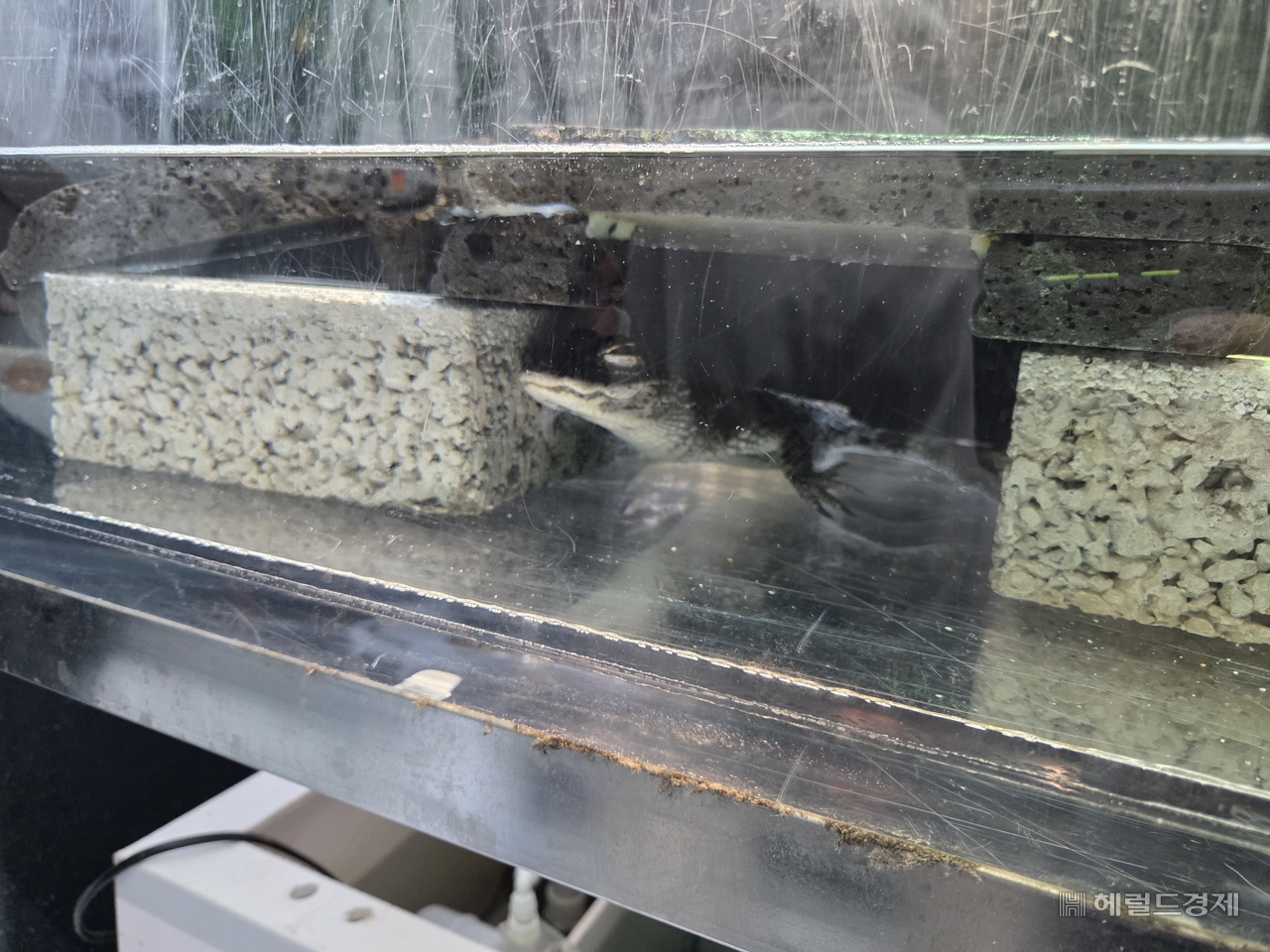
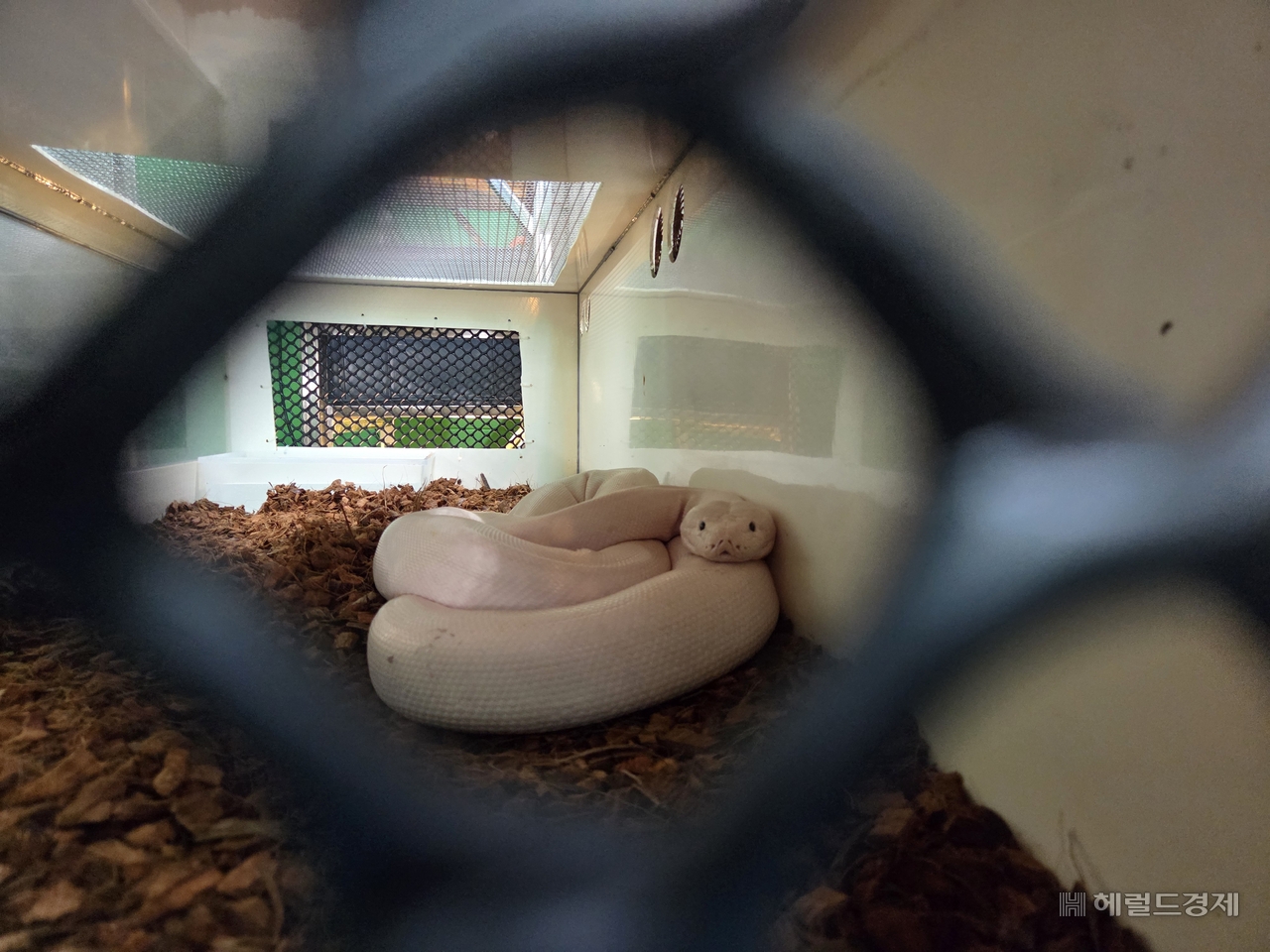
Among the smuggled animals, albino reticulated pythons — a rare species that can fetch several million won per individual — were particularly notable. The gang also smuggled Chinese alligators, classified as "Critically Endangered," the highest threat level under the International Union for Conservation of Nature (IUCN).
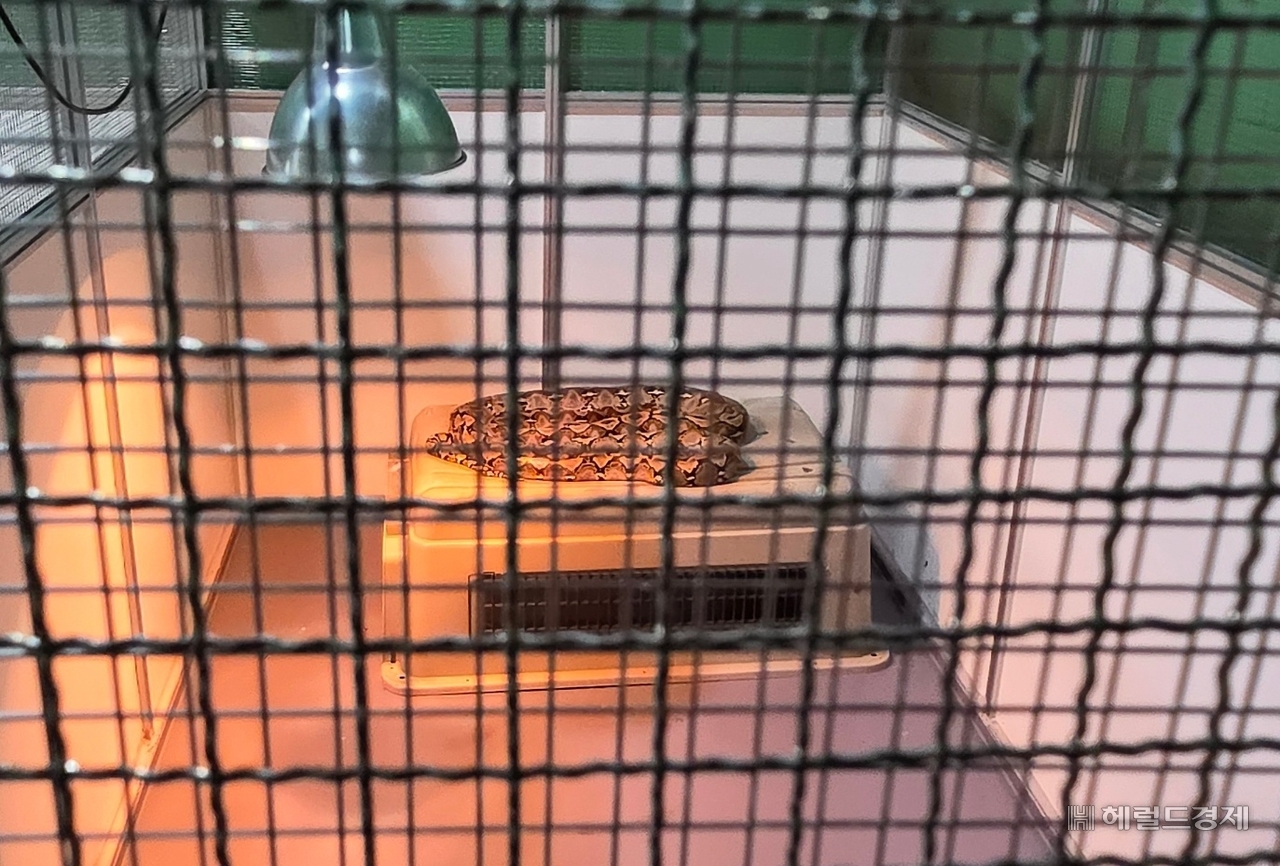
A total of 95 animals seized by prosecutors during the investigation are currently held at the National Institute of Ecology. They will either be repatriated to their countries of origin or transferred to domestic zoos based on a needs assessment. If neither option is feasible, the animals will remain at the institute indefinitely.
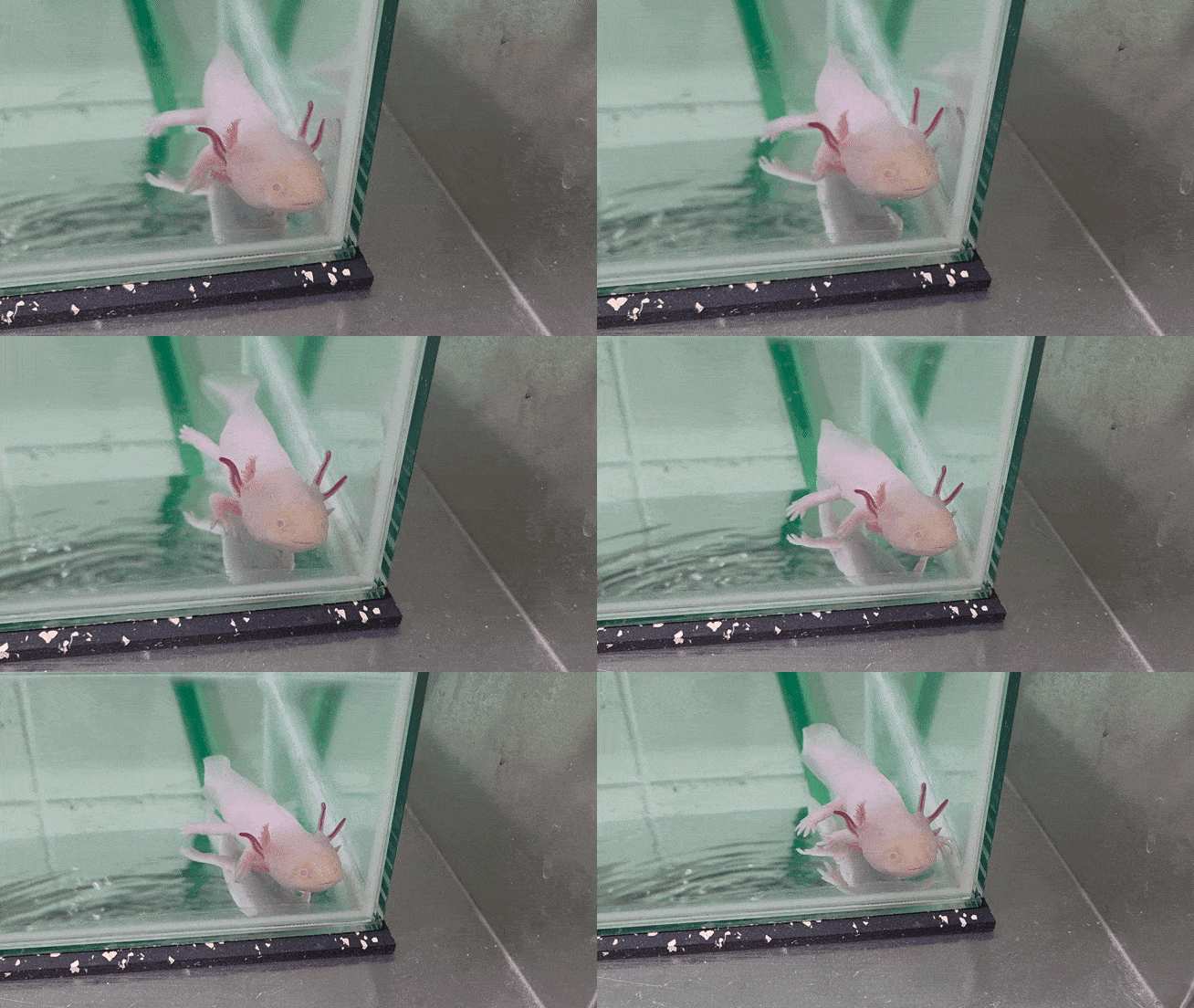
The group advertised rare animals on specialized reptile forums using code words such as "figures" and "dolls" to refer to smuggled goods — slang prosecutors said was intended to provide plausible deniability if caught.
Once a deal was struck online, the gang packaged live animals and shipped them to buyers across the country using intercity bus courier services.
An incident in May — when an approximately 10-meter python was found in the cargo hold of an intercity bus at the Seo-Daegu Express Bus Terminal in Daegu — was also traced back to the group.
Operating under ringleader A, the gang purchased wild animals from sellers in Indonesia, Vietnam and Thailand. Members coordinated with local suppliers through social media, made advance arrangements, visited in person to meet contacts, and maintained real-time communication with A to select animals for smuggling.
After A established the operation, members flew to the source countries to inspect animals directly before smuggling them back. They served as A's eyes and ears on the ground. Text message records released by prosecutors show one member abroad sending A photos along with messages such as "Black-throated monitor lizard — 575,000 won ($404)" and "Python — 150,000 won," listing animal names, prices and images.
A would then respond with "next," "pass" or "gg" — Korean shorthand for "go" — to select animals and direct purchases.
![A saltwater crocodile smuggled into South Korea with its mouth bound in tape. [Seoul Eastern District Prosecutors Office]](https://wimg.heraldcorp.com/news/cms/2026/08/06/news-p.v1.20260806.bbde3ff541fa45fbad0c47339c4cf18d_P1.jpg)
A also coached members on how to avoid detection at customs. While one member was packaging a crocodile for smuggling, A instructed them to "cover its eyes with kitchen paper and wrap them with tape."
When the member replied that "the crocodile is making noise," A said: "Put kitchen paper inside the tin. That'll muffle the sound. Put in the kitchen paper, put it in the carrier, stuff clothes around it and you won't hear a thing" — directing the member to subject the animal to further abuse.
![A pig-nosed turtle smuggled into South Korea by the gang and seized by prosecutors. [Seoul Eastern District Prosecutors Office]](https://wimg.heraldcorp.com/news/cms/2026/08/06/news-p.v1.20260806.1d6b39325c7a4d9387ffb2f7c95a78c5_P1.jpg)
The gang bound animals' mouths and, particularly with young specimens, compressed them into packaging before placing them in metal tins or plastic boxes for cargo transport. Animals sensitive to external conditions — such as pig-nosed turtles — were stuffed into underwear and carried onto aircraft as cabin baggage. Forty-eight animals died from extreme stress during the process.
The gang's organized operations came to light through a supplementary investigation by prosecutors. In around July 2025, the Han River Basin Environmental Office referred a member identified as B — caught at Incheon International Airport customs — to prosecutors on charges of wildlife smuggling.
Prosecutors who took over the case grew suspicious that B's operation was too sophisticated to be the work of a first-time solo traveler. Believing B had accomplices, they launched a supplementary investigation.
Prosecutors first examined records of who had paid for B's airline ticket. After confirming that a person identified as C — who had a prior record for similar offenses — had covered the cost, they searched C's residence, securing evidence of other members' joint travel to source countries and their involvement in the conspiracy.
A required members to address him as "master" or "boss," enforcing a strict hierarchy within the group. When members returned from abroad with smuggled animals, A waited at the airport. To enable a quick escape if a member was caught, A demanded real-time status updates — instructing one member to "send 1 when you've got the bags, send 2 if you're caught."
A also held members financially liable for animals that died due to negligent care, and extorted money from them under various pretexts, including payments purportedly to suppress investigations into arrested members.
A prosecutors office official said the office "will continue to work closely with the Ministry of Environment, the National Institute of Ecology and other relevant agencies to strictly crack down on the smuggling, illegal retail and keeping of internationally protected endangered species and wildlife that pose a threat to ecosystems."
20ki@heraldcorp.com