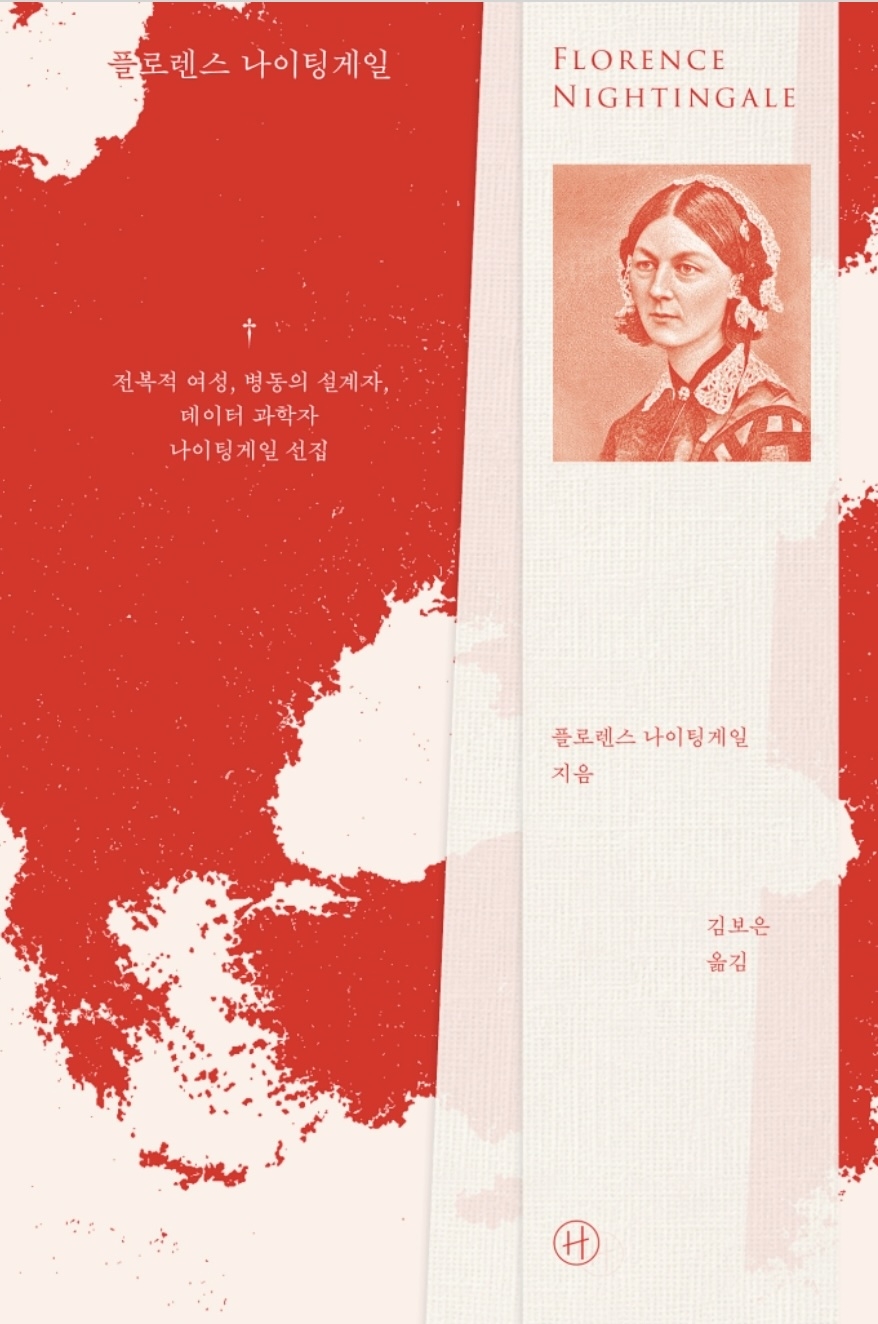
"Florence Nightingale" (written by Florence Nightingale, translated by Kim Bo-eun, Humanist) — She broke into a military warehouse with a hammer to seize medical supplies a commanding officer had withheld. She overhauled the army's medical system through sweeping data analysis and became the first female member of the Royal Statistical Society. These are the lesser-known faces of Florence Nightingale, a figure the world has long remembered simply as the "Lady with the Lamp." This new volume gathers three texts that run through the arc of her life: "Cassandra," a critical essay on the social constraints imposed on 19th-century women; "Notes on Nursing," the first nursing textbook in history; and "Florence Nightingale's Words to Nurses," a work of practical insight into the nature and mission of nursing and the generations to come. Particularly notable is "Cassandra," Nightingale's feminist essay, which appears here in Korean translation for the first time. Its rallying cry — "Women, awake … the time has come for women to do something besides tend babies, decorate their homes prettily, and prepare fine dinners" — reads like a prophecy dispatched from the 19th century.
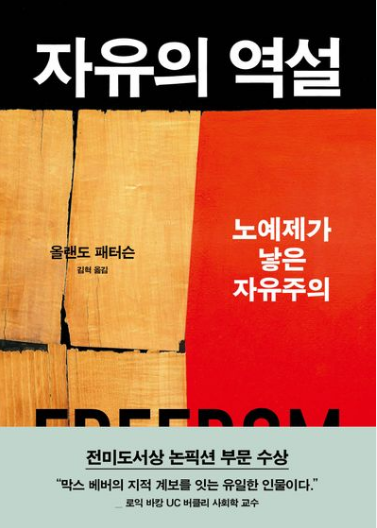
"Freedom in the Making of Western Culture" (written by Orlando Patterson, translated by Kim Hyeok, Geulhangari) — The concept of freedom is commonly attributed to modern Enlightenment thinkers, but cultural sociologist Orlando Patterson makes the provocative argument that it actually originated in ancient slavery. Freedom, he contends, was born out of the negation of what slavery looked like in everyday life. The reason freedom was valued far more intensely in Europe than in Asia or Africa, he argues, is that slavery operated there from antiquity, producing large numbers of people who longed to be liberated from the system. Patterson advances what he calls a "triad of freedom" — personal freedom, civic freedom and sovereign freedom. He also argues that the sensibility of freedom took on a feminine character precisely because the majority of slaves were women, a paradox embedded in the institution itself. He is particularly insistent that early Christianity flourished by drawing on the experience of slavery and freedom as a metaphor for its highest religious ideal: spiritual liberation. Freedom, in his telling, is not a concept that appeared suddenly in the modern era but one that began in antiquity, reached its conceptual completion by the late Middle Ages, and was merely annotated at length by modernity.
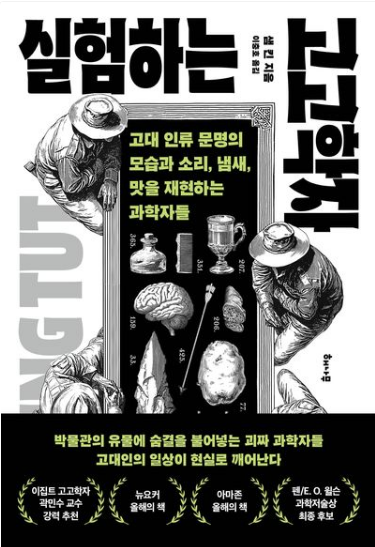
"The Archaeologist's Experiment" (written by Sam Kean, translated by Lee Chung-ho, Haenaemu) — Experimental archaeology is one of the newer branches of the field, exploring the daily lives of ancient peoples by directly recreating what they ate, wore and made. Science communicator Sam Kean travels the world to find specialists — microbiologists, chemists, chefs, hairdressers, tattoo artists and more — who are working to revive ancient and medieval technology, joins their experiments firsthand, and brings the results to life through short, vivid fictional vignettes. He knaps flint tools and uses them to cut raw meat, gets his first tattoo using an ancient method, and, for a variety of reasons, finds himself doused in animal urine, blood and the fat of marine creatures. Through the methods and sensibilities of experimental archaeologists, Kean summons vanished eras into the present. Readers encounter a female hunter in the Peruvian Andes some 9,000 years ago, eavesdrop on laborers conscripted to build the Egyptian pyramids, and feel the grief of a Chinese eunuch.
balme@heraldcorp.com