

Seoul's Nowon-gu district activated its emergency response system immediately after a power outage struck an apartment complex during a record heatwave, mobilizing officials to secure resident safety and minimize damage.
Through swift coordination with relevant agencies, the district restored electricity roughly two hours ahead of schedule.
The outage hit five buildings — 602 households — at an apartment complex in Hagye-dong at 9:46 p.m. Monday. Officials confirmed that a sustained surge in electricity consumption during the heatwave caused the complex's own transformer to overload. The complex had been operating with a per-household transformer design capacity below the 2-kilowatt threshold that Korea Electric Power Corporation recommends as a blackout-prevention standard.
The district immediately dispatched teams from its Safe City Division, Carbon Neutrality City Division, Welfare Policy Division and the Hagye 2-dong community center to the scene and activated its emergency response system. Officials quickly secured an emergency repair contractor and began restoration work using a spare transformer. As a precautionary measure, elevator service was suspended immediately to prevent passengers from becoming trapped.
Anticipating a potentially prolonged outage, the district designated the Hagye 2-dong community center and a senior citizens' center as temporary evacuation shelters, and arranged three temporary accommodation rooms for households with elderly residents and infants.
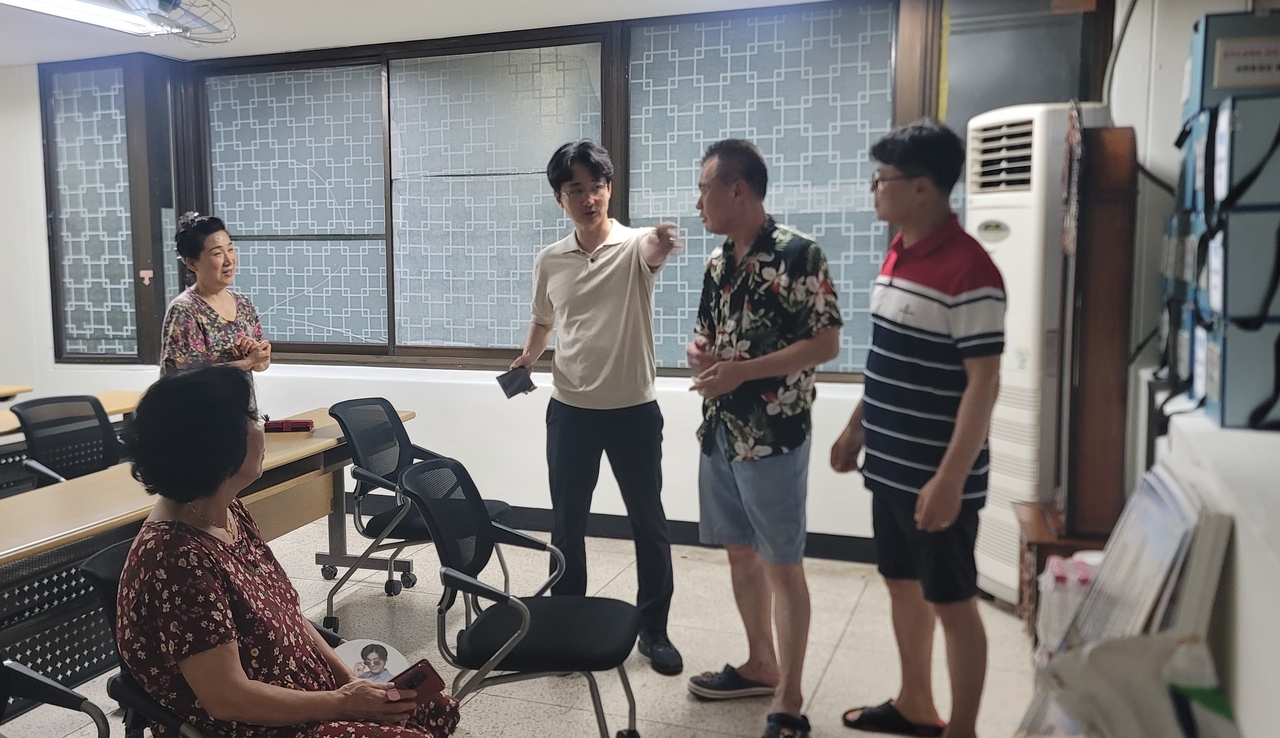
District Mayor Seo Jun-o went to the scene in person to check on restoration progress, brief residents on the response plan and direct on-site operations.
Restoration work that had been expected to run until 5 a.m. Tuesday was completed at around 3:17 a.m. through close cooperation among the district, relevant agencies and the repair contractor — restoring power roughly two hours ahead of schedule. The complex is set to undergo safety inspections of its elevators and electrical facilities.
The district has been advising apartment management offices on preventive measures, recognizing that the risk of transformer failures in aging residential complexes rises during summer months when electricity demand spikes due to the heat.
Using the incident as an impetus, Seo directed officials to actively promote a transformer-replacement support program targeting 40 apartment complexes whose per-household transformer design capacity falls below 2 kilowatts, and to strengthen oversight and assistance so that aging transformers can be replaced as quickly as possible.
For complexes where transformer replacement is not feasible in the short term, he also directed that management offices immediately implement their own preventive measures — including broadcasting energy-saving announcements whenever electricity consumption rises above a set threshold.
Seo also called for stronger public outreach on energy conservation, a review of management offices' emergency response systems, and the maintenance of rapid restoration coordination with relevant agencies — all as part of broader efforts to prevent heatwave-related blackouts and limit their impact.
"A power outage during a heatwave and tropical night is not merely an inconvenience — it is a disaster that threatens residents' safety," Seo said. "We will further strengthen both our prevention efforts and our rapid response systems, and make resident safety our top priority through close communication with relevant agencies and the community."
seouldream01@heraldcorp.com




