
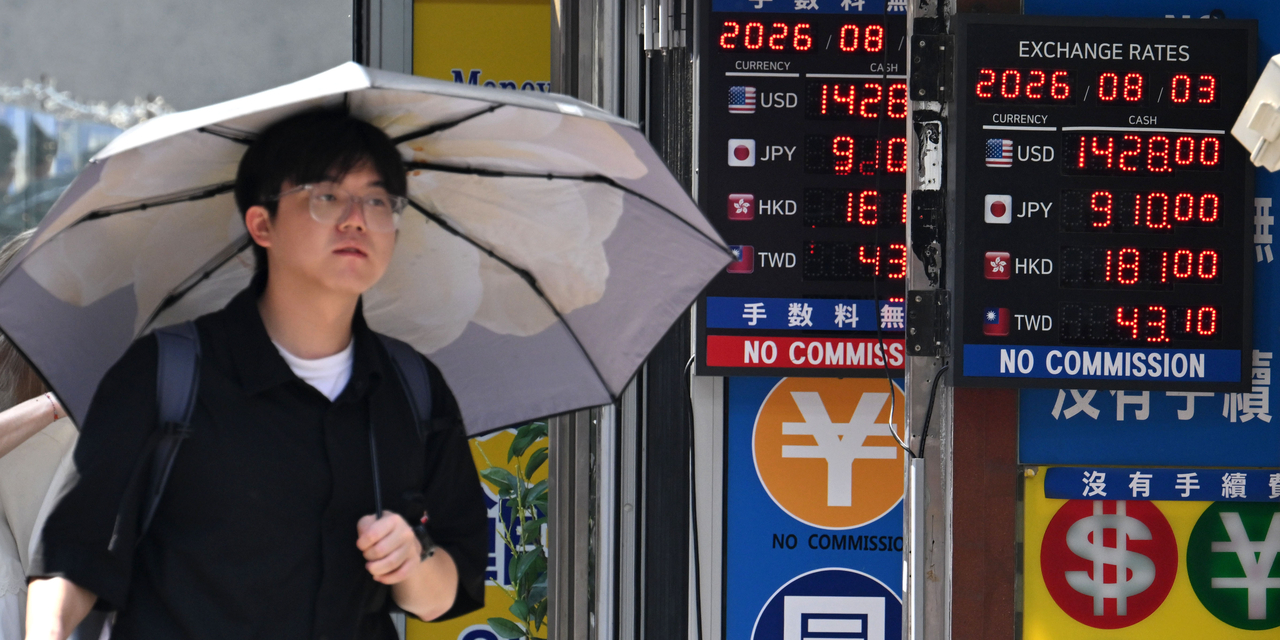
About a third of the total rise in the won-dollar exchange rate last March was driven by net buying of non-deliverable forwards, the Bank of Korea said Tuesday, adding that "won internationalization" efforts could reduce the currency's vulnerability to such offshore trades.
In a blog post published Tuesday, the central bank said NDF net buying contributed roughly 26 won of the exchange rate's rise that month — accounting for about 33 percent of the total 79-won increase.
An NDF is a type of forward contract in which parties agree to buy or sell a currency at a set rate on a future date, settling only the difference between the contracted rate and the spot rate at maturity rather than exchanging the underlying currencies. Because physical won or dollar cash is not required, NDFs can be traded offshore around the clock, making them a popular hedging tool for foreign investors. Some market participants also use them for speculative purposes.
In May, NDF net buying pushed the exchange rate up by about 7 won, accounting for roughly 26 percent of that month's 27-won rise. Looking at the full period since 2024, offshore NDF net buying is estimated to have contributed an average of about 2 won per month to exchange rate gains — with every $100 million in net buying adding roughly 0.1 won. "These findings show that NDF trading can serve as one channel amplifying upward pressure on the exchange rate during certain periods," the Bank of Korea said.
Bank of Korea Gov. Shin Hyun-song had earlier cited NDF trading as a key factor behind the sharp exchange rate volatility in March, saying it appeared that "off-balance-sheet derivative transactions had grown so large that the tail was wagging the dog."
The reason offshore NDF trading affects the onshore spot rate is that financial institutions selling NDFs buy dollars in the domestic market to hedge their currency exposure. When overseas investors anticipate a rise in the won-dollar rate and buy large volumes of NDFs, the foreign financial institutions that sold those contracts turn to domestic foreign exchange banks to purchase NDFs of their own to offset the currency risk. Those domestic banks then buy actual dollars in the onshore forex market to neutralize their own exposure, generating upward pressure on the exchange rate in the process.
Breaking down the impact by time of day, NDF net buying had a larger effect on the exchange rate during overnight hours than during Seoul trading hours. Among the 10 months since 2024 with the highest NDF net buying volumes, the overnight contribution to exchange rate gains averaged about 12 won per month, while the daytime contribution was limited to an average of about 3 won.
"During overnight hours, NDF trading accounts for a larger share of total forex activity, and overall trading volume is relatively thin, which can amplify the impact of NDF transactions," the Bank of Korea said.
Foreign investors' NDF net buying has surged alongside rising won-dollar volatility in recent months. Their total NDF net purchases in the first half of this year reached $53.9 billion, a record high for any half-year period.
The Bank of Korea said that if overseas investors' demand for NDF trading were absorbed into the domestic forex market — through 24-hour domestic trading and, eventually, a won-based international settlement network — the influence of NDFs on the exchange rate could diminish.
"Round-the-clock trading has created conditions in which global news can be reflected in real time in our foreign exchange market," the bank said. "We expect the impact of NDF trading on the won-dollar exchange rate to decrease as that activity is absorbed into the domestic forex market."
kimstar@heraldcorp.com



