
![An aerial view of the Gangnam area, including apartment complexes slated for reconstruction. [Yonhap]](https://wimg.heraldcorp.com/news/cms/2026/08/04/rcv.YNA.20260713.PYH2026071308960001300_P1.jpg)
South Korea's financial regulators are moving quickly to ease real estate lending restrictions and boost housing supply, acting on instructions from President Lee Jae Myung. The authorities plan to partially exempt balance loans from aggregate household lending caps for prospective move-in residents, while also preparing measures to revive project financing, including expanding public guarantees.
Financial industry sources said Tuesday that regulators are drawing up a real estate package centered on easing loan restrictions for end-users and stimulating housing supply. The effort follows a national public forum on real estate policy that President Lee chaired on July 23 and a follow-up forum led by Prime Minister Han Seong-sook on July 27. On Monday, Lee chaired a seven-hour marathon meeting and directed the Financial Services Commission and related ministries to develop concrete housing supply measures.
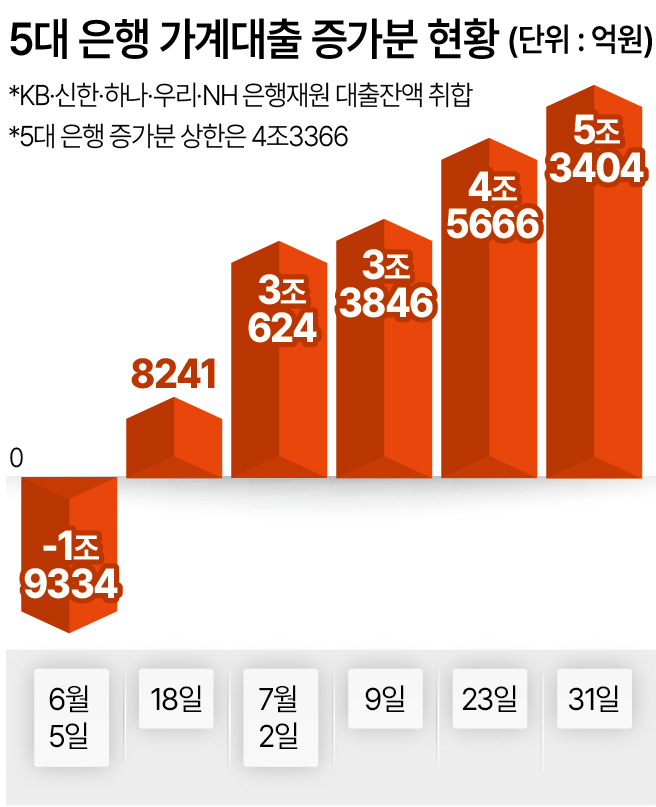
To ease the burden on residents scheduled to move in this year, regulators plan to partially exempt balance loans from the aggregate household lending caps imposed on banks. Because balance loans are classified as standard mortgage loans and carry a risk of sharp credit expansion, authorities are considering setting aside a fixed portion of last year's loan growth as a separate quota dedicated to balance loans, according to sources.
Another option under discussion would allow balance loans extended this year to be partially counted against next year's household lending quota. Regulators are currently surveying banks to determine the total volume of balance loans expected to be processed this year.
The easing of balance loan restrictions is expected to apply only to prospective residents who subscribed for apartments before the June 27 regulation took effect last year. Extending relief to buyers who purchased units after the regulation was announced would raise fairness concerns, officials said.
The balance loan issue came to the fore at the forum President Lee chaired, when a prospective resident of the Pallusid complex near Maegyo Station in Suwon said she had been unable to move in because banks' aggregate lending caps prevented her from securing a balance loan. Lee called the situation "a problem." Following an emergency meeting with regulators, the five major banks each allocated 100 billion won ($69.9 million) in balance loan quotas for the Pallusid development.
Regulators are also reviewing additional easing measures for young adults and newlyweds. Sweeping steps such as loosening the loan-to-value ratio for first-time homebuyers are unlikely to be included, however, given concerns that such moves could stoke real estate market sentiment.
With President Lee calling for aggressive housing supply, the FSC is also preparing measures to revive project financing. At the July 27 real estate forum, FSC Chairman Lee Eok-won responded to a panelist's request to ease PF regulations by saying the commission "should play a role in promoting supplier financing to help new housing reach the market" and would consult with the Ministry of Land, Infrastructure and Transport.
Regulators have already been running tailored support programs to ensure funding continues to flow to viable PF projects. A temporary financial regulatory relief package for the banking sector, originally set to expire at the end of June, was extended through year-end. The package allows executives and staff to be indemnified when supplying funds to PF projects or carrying out restructuring, and separately classifies asset-soundness items when new funds are extended, reducing the associated burden.
The most likely near-term step is expanding public guarantees, limited to non-apartment housing — a direction regulators have previously signaled. The aim is to reduce the financing burden on housing supply developers.
Because the construction industry and financial sector have also raised the issue of easing risk weights, regulators plan to review the overall regulatory environment, including whether partial adjustments are possible to support supply expansion. The FSC currently sets the PF risk weight for banks at a maximum of 150 percent. Under a financial soundness improvement plan announced last year, it said it would introduce an incentive allowing banks that meet capital adequacy requirements to lower that weight to 120 percent.
Many observers warn, however, that reviving PF alone will not resolve the supply problem, given that the construction slump stems from a range of external factors, including rising material costs driven by global supply chain disruptions. Regulators are also wary that loosening PF rules could weaken financial soundness or inflame real estate sentiment, and say they intend to proceed with maximum caution. "We will look at whether there are regulatory improvements to be made within the bounds of not harming financial soundness," a senior regulatory official said.
Separately, activating the existing PF creditor consortium — a coordinating body currently in operation — is also being discussed as a way to accelerate the restructuring of troubled PF projects.
Regulators plan to finalize the package through working-level consultations with the industry early this month, with an announcement expected as soon as mid-August.
hyuk@heraldcorp.com



