
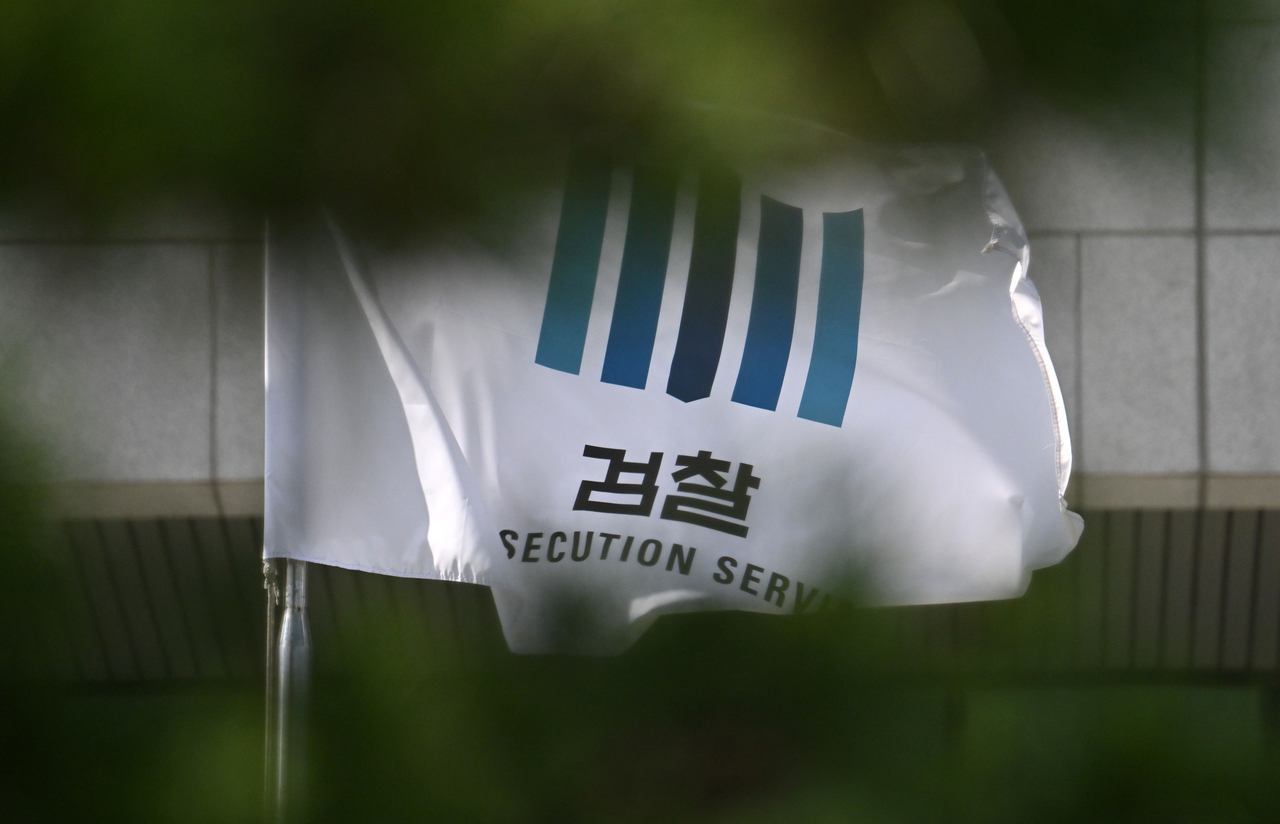
An amendment to the Criminal Procedure Act that abolishes prosecutors' supplementary investigative authority has passed the National Assembly floor vote, effectively ending prosecutors' power to conduct investigations. With the Prosecutors' Office set to be dissolved in October and replaced by a new Serious Crimes Investigation Agency and a Public Prosecution Office — completing a sweeping overhaul of the criminal justice system and cementing a police-led investigative structure — critics say the abolition of supplementary probe powers has eliminated the "last safety net" against shoddy police investigations. The amendment has also drawn constitutionality challenges, as it bars prosecutors from directly requesting warrants and instead requires judicial police officers to apply before a warrant request can be filed with a court — even though the Constitution grants prosecutors the right to request warrants.
According to political and legal circles Monday, the amended Criminal Procedure Act, which passed the National Assembly floor vote Friday, now awaits only Cabinet deliberation, approval and promulgation. The Democratic Party of Korea pushed the bill through the floor vote, and Cheong Wa Dae immediately said it would "respect the legislative process and the Assembly's final judgment," signaling that promulgation is in effect a foregone conclusion. Once promulgated, the revised act will in principle take effect Oct. 2, with some provisions excepted.
▶ The core of the amendment is the abolition of prosecutors' supplementary investigative authority. The revision deletes Article 196 of the existing Criminal Procedure Act, which allowed prosecutors to investigate cases referred by judicial police officers within the scope of the original case. The legal basis for prosecutors to conduct supplementary investigations on cases forwarded by primary investigative agencies has been removed entirely.
Legal practitioners and legal scholars have been most vocal in criticizing this provision, saying it in effect eliminates any check on inadequate police investigations. Crime victims have also voiced concern throughout the ruling party's push to pass the amendment. The so-called "Jang Yun-gi case," which drew controversy recently, also saw allegations of police cover-up and minimization surface belatedly.
At the same time, critics say it will become far more difficult for wrongly accused people to clear their names. Establishing that charges are not in fact warranted in cases referred by police has become considerably harder.
▶ The ruling party has emphasized that it included provisions to ensure the effectiveness of the "supplementary investigation request" mechanism as a safeguard against the drawbacks of abolishing direct supplementary probe powers, but legal practitioners and scholars say the measures fall far short.
The amended bill requires judicial police officers to comply with a supplementary investigation request within a maximum of two months, and allows the Public Prosecution Office to demand disciplinary action against an investigator who fails to comply without justification. However, 62 criminal law scholars from across the country issued a statement Wednesday saying "the supplementary investigation request power alone cannot effectively control police investigations."
The "interview" mechanism floated as an alternative has also been criticized as lacking real teeth. Under the amendment, prosecutors may verify facts by hearing opinions from suspects, case-related parties, experts or judicial police officers — or by receiving written opinions and related materials — when deciding whether to indict, whether to request a reinvestigation, or when needed to maintain a prosecution. Complainants and others may also request an interview with a prosecutor to make a statement.
The provision was added after critics pointed out that case files alone would make it difficult to grasp the substance of a case and sustain a prosecution. The problem, however, is that statements obtained through this process carry no evidentiary weight in court. Yang Hong-seok, an attorney at law firm Igong, said the arrangement "treats an investigation as if it were not an investigation, and bars the results from being used as evidence precisely to ensure it does not count as one."
▶ The ruling party has also cited the introduction of a full-referral system for seven categories of crime — child abuse, domestic violence, sex crimes, child sex crimes, stalking, abuse of people with disabilities and elder abuse — as another safeguard. Critics argue, however, that the measure lacks practical effect because real cases rarely involve a single, neatly categorized offense.
A former senior prosecutor turned attorney said: "Take a student caught up in a crime — there may be extortion, but there could also be document forgery, such as being made to open a phone account. The ruling party seems to be looking at cases in an extremely simplified way. Efficiency in handling cases will decline. Whether this amounts to 'protecting human rights' is questionable."
▶ The amendment's effective restriction on prosecutors' warrant request authority has also sparked a constitutionality debate. The revised act stipulates that prosecutors may request arrest, detention and search-and-seizure warrants from a court only after a judicial police officer has applied for one first.
Also drawing controversy is the expansion of grounds for dismissal of prosecution to include cases where charges were brought on the basis of a serious illegal investigation, and cases where charges were filed in a clear abuse of prosecutorial discretion. The opposition party has argued the changes are connected to President Lee Jae Myung's ongoing criminal trial.
bell@heraldcorp.com



