A forum aimed at shaping regional tourism strategies through data analysis is set to take place later this month.
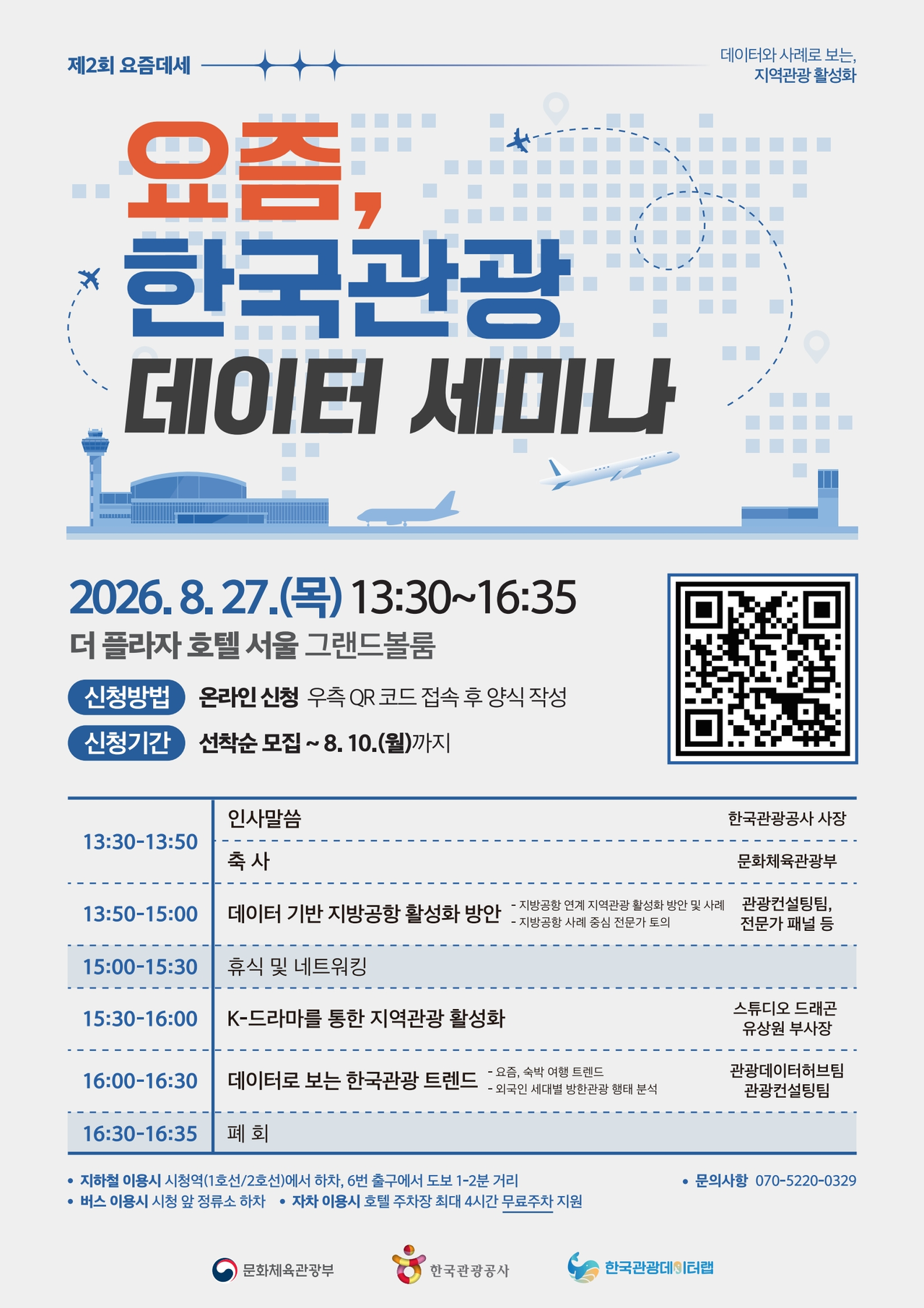
The Korea Tourism Organization is accepting registrations for its second "Yozeum, Korean Tourism Data Seminar" through Monday, Aug. 10.
The seminar will be held Aug. 27 at The Plaza hotel in Seoul, centering on the second edition of the organization's "Yozeum, Korean Tourism" research note. The event will bring together government officials, local authorities, industry players and academics to examine major shifts in the tourism sector through data — covering regional travel patterns anchored at provincial airports and accommodation trends — and to discuss future growth strategies and areas for collaboration.
The first session will unveil big data analyzing the movement routes and spending patterns of foreign visitors who entered the country through regional airports. Building on those findings, the session will introduce strategies to boost regional tourism and highlight collaborative marketing efforts among the organization's overseas offices, regional airports and local governments. Airline, airport and related agency experts will then discuss sustainable ways to revitalize regional airports.
A subsequent session will present new accommodation travel trends drawn from booking and payment data collected by major travel platforms. The session will also examine generational differences in travel behavior among visitors from established source markets such as China, Japan and Taiwan, as well as emerging ones including Saudi Arabia, Vietnam and France, to map shifts in the tourism market and consumer preferences.
A special session will focus on the intersection of K-content and tourism. Studio Dragon will present case studies on linking content intellectual property with tourism destinations under the theme of "Boosting regional tourism through K-dramas." The session will share examples of how the popularity of K-content has translated into tourism demand and draw lessons for public-private cooperation.
Kim Yeong-mi, head of the Korea Tourism Organization's Tourism AI Innovation Division, said connecting regional strengths — such as provincial airports and cultural content — with data to generate new tourism demand is essential for enhancing the competitiveness of regional tourism. She added that the organization had significantly expanded the event's capacity following strong interest in the first seminar held in May. "Going forward, we will continue to support the revitalization of regional tourism and the sustainable growth of the tourism industry through data analysis, and work with the industry to find practical solutions," she said.
Registration is open to anyone with an interest in tourism data, with spots available on a first-come, first-served basis for up to 300 attendees. Further details are available on the Korea Tourism Data Lab website.
terry@heraldcorp.com