Wonju's current name was given by Goryeo founder Wang Geon in the 10th century, derived from the character "won" in the city's earlier name as a Goguryeo plain. The names Goguryeo and Goryeo share the same meaning.
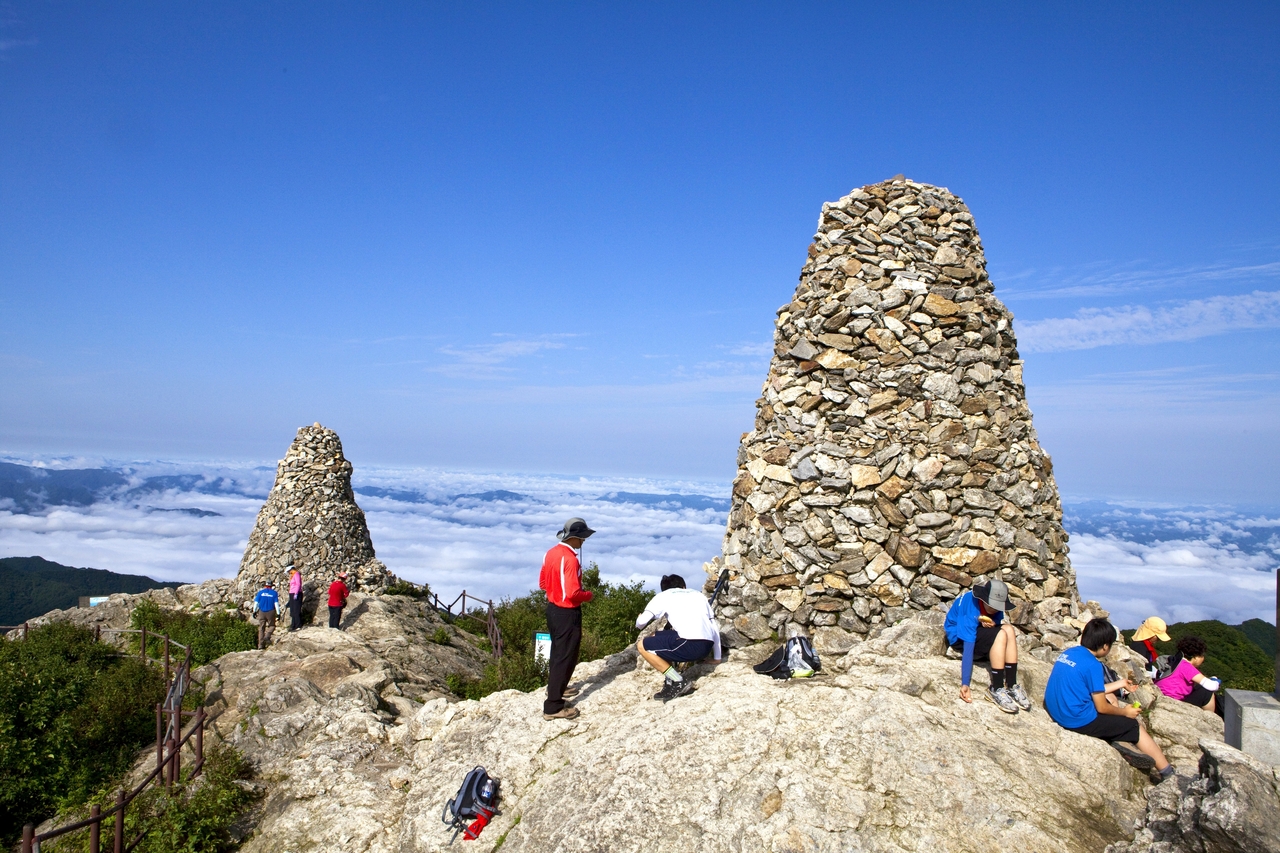
No one knows exactly when Chiaksan received its name, but the mountain was once called Jeokaksan before the name changed — which lends a certain credibility to the legend behind the switch.
Jeokaksan, named for its clear water, clean air and brilliant autumn foliage, was the setting for a tale from long ago: a seonbi (Confucian scholar) on a spiritual retreat rescued a pheasant that was about to be devoured by a serpent.
Nursing a grudge, the serpent transformed itself that night into a woman living in a mountain hut and waited for the scholar, who was searching for a place to sleep.
At the deepest hour of the night — the third watch — the serpent moved to kill him. Rather than strike at once, it proposed a wager. In Greek mythology and other traditions, monsters often delay the kill to pose a riddle or lay a bet.
The chance of a temple bell ringing in the dead of night was slimmer than a flower blooming in midwinter, yet the serpent declared: "If the temple bell rings three times before sunrise, I will spare your life." The wager was, in essence, a taunt — a way of saying, "You who foiled my hunt, I want you to die in anguish."
Yet somehow, at the stroke of midnight, the bell shattered the silence — dong, dong, dong — ringing out three clear, resonant times.
The pheasant the scholar had saved that day had flown at full speed toward the bell and hurled its own head against it with all its might, producing those great peals of sound, then fell lifeless to the ground.
As the story spread, Jeokaksan was renamed Chiaksan — "chiak" written with the character for pheasant. The tale of "the grateful pheasant" has since become a fixture in drama series dealing with mysterious folklore, such as "Jeonseol-ui Gohyang," and in educational books for children.
Above all, it has taken root as a symbol of loyalty and unity among Wonju residents, given physical form in the city's iconic Chiakjonggak bell pavilion.
Now the three pheasants whose sacrifice rang the bell three times on that dark night have found a new home at Wonju City Hall.
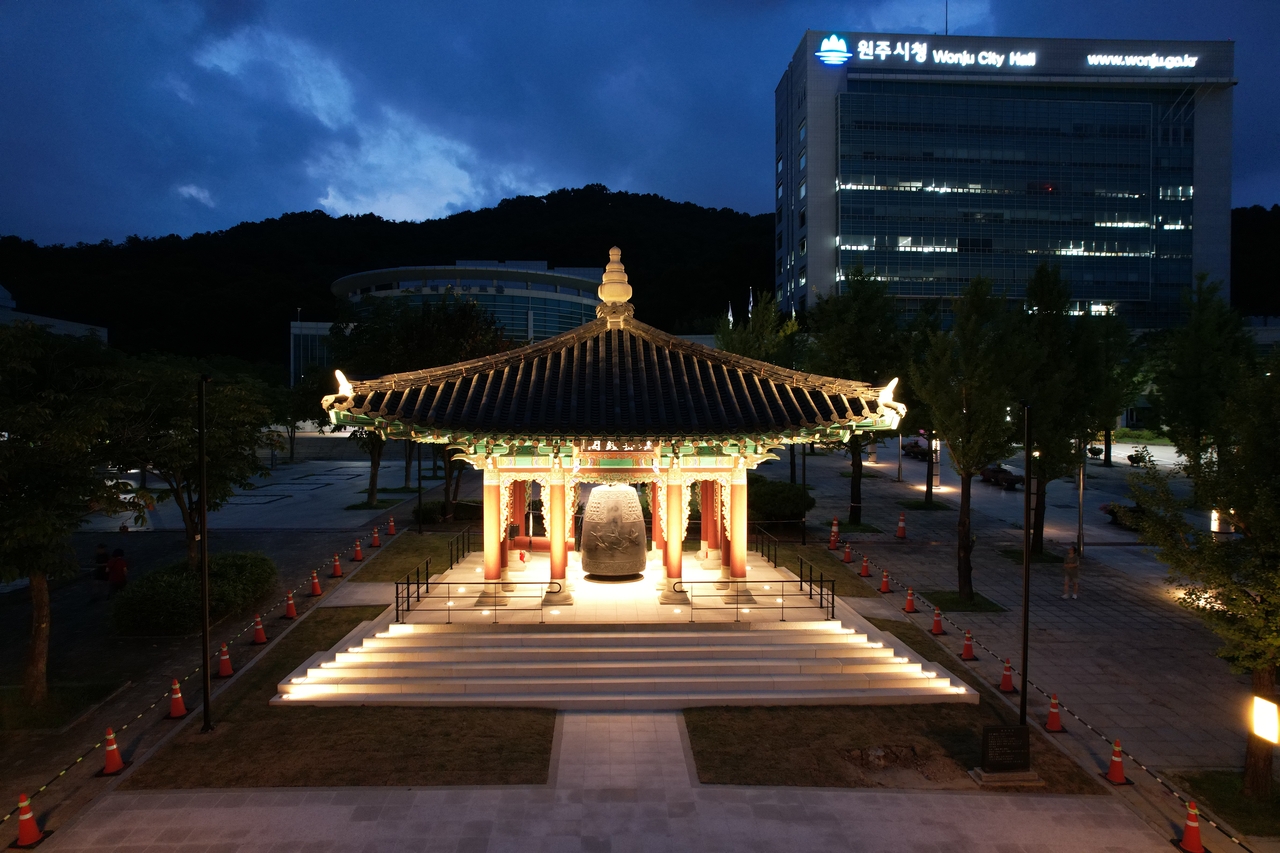
According to Wonju city officials Sunday, the Chiakjonggak bell pavilion, which had stood on a hillside next to the Chiak Gymnasium in Myeongnyun-dong, has been relocated to the park in front of Wonju City Hall.
The pavilion was built around Liberation Day in August 1994, after the late Chung Ju-yung, honorary chairman of Hyundai Group, donated 100 million won ($69,400) during a visit to Wonju in response to a local appeal for a landmark that would embody the "Chiaksan legend of gratitude."
The pavilion is particularly notable as a work that brought together the finest craftsmen of the era. The bronze bell was cast by Seongjongsa, led by Won Gwang-sik, a master iron caster designated as a national intangible heritage holder, while the pavilion structure was built by the late Jeon Heung-su, a grand master of traditional Korean architecture.
The signboard bears the personal calligraphy of the late Choi Kyu-hah, a Wonju native who served as South Korea's 10th president, giving the pavilion exceptional value as a heritage asset for future generations.
For years, however, the Chiakjonggak's steep hilltop location made it difficult for elderly residents and children to attend major ceremonies — including March 1 Independence Movement Day, Liberation Day and New Year's Eve bell-ringing events — and concerns about the risk of winter falls were repeatedly raised.
In response, Wonju city gathered opinions from related organizations including the Korean Liberation Association, the Wonju Cultural Center and the Wonju Arts Council, and sought advice from a cultural heritage committee member of Gangwon Province before relocating the pavilion to the park in front of City Hall to improve public safety and increase use of the facility.
Wonju city said it hopes the Chiakjonggak, now relocated to the more accessible City Hall grounds, will become a symbolic space where residents gather to wish for community well-being and regional development, and to foster civic unity.
abc@heraldcorp.com