The Incheon Metropolitan Council has launched a policy research initiative aimed at addressing structural problems in the city's aging planned housing districts.
The effort seeks to move beyond conventional redevelopment approaches centered on reconstruction and floor-area ratio increases, exploring new models that redesign urban functions and spaces from the ground up.
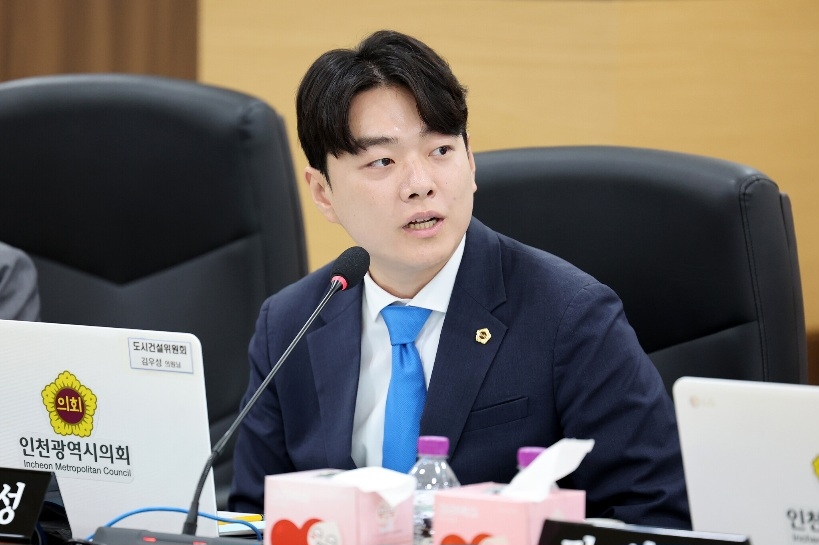
Kim Woo-sung, a Democratic Party of Korea lawmaker representing Yeonsu-gu 2 on the council's Urban Construction Committee, announced Friday the official launch of a legislative research group dedicated to reimagining spatial development in Incheon's planned housing districts.
The group cleared a review by the council's legislative research committee on Thursday and has begun formal operations.
The group plans to examine common challenges — including aging infrastructure and the deterioration of residential amenities — across planned housing districts in five zones of Incheon, and to study ways to create multi-dimensional urban spaces that integrate below-ground, above-ground and aerial areas.
Kim explained the rationale for forming the group. "Aging planned housing districts face complex problems — population aging, declining residential functions and deteriorating infrastructure — that cannot be solved simply through reconstruction or relaxing floor-area ratios," he said. "What is needed is a new approach to urban planning that innovates both function and space, not just rebuilding."
"We will focus the group's efforts on shifting the policy paradigm away from housing supply-driven development and toward strengthening urban functions, and on presenting a future-oriented urban model that incorporates smart technology and eco-friendly elements," he added.
Going forward, the group plans to survey conditions in aging planned districts across each zone and examine domestic and international best practices, while prioritizing the use of underground space, the development of aerial space and the restructuring of idle or underused public land — all with the goal of producing an Incheon-specific spatial reimagination model.
To that end, the group intends to hold expert consultations, policy forums, field investigations and commissioned policy research in sequence, with the aim of producing recommendations for regulatory reform and policy alternatives.
The group is led by Kim and also includes lawmakers Yun Hui-jeong, Jang Su-jin, Lee Mi-ok and Bang Ji-hyeon, who are expected to pursue cross-party policy research together.
gilbert@heraldcorp.com