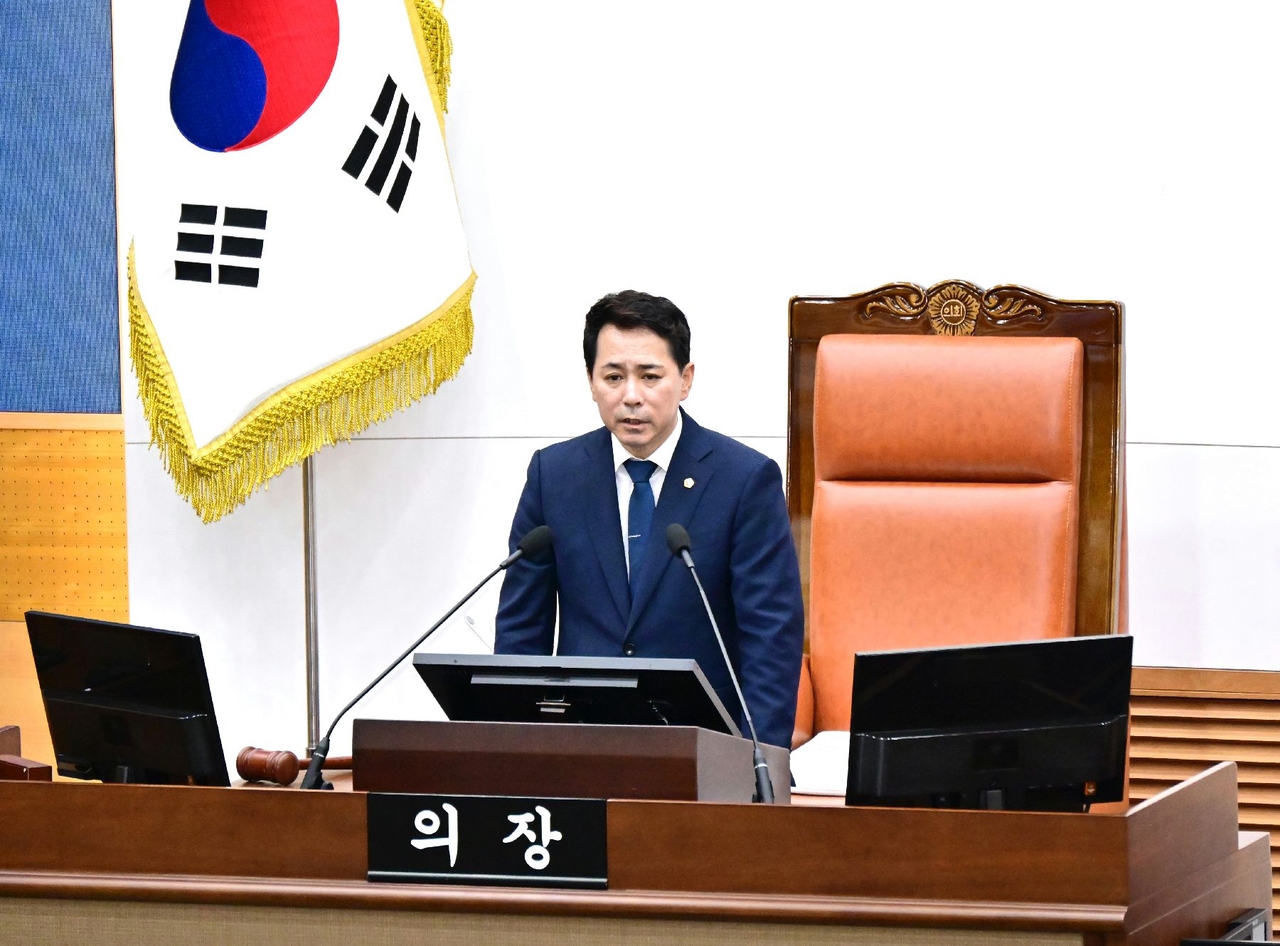
Im Man-gyun, who became the youngest speaker in the history of the Seoul Metropolitan Council, has wasted no time turning his attention to pressing issues in his home district of Gwanak-gu since taking office.
A three-term council member from Gwanak-gu, Im defied expectations by finishing first in the Democratic Party of Korea's internal speaker primary election before going on to win election as speaker of the 12th Seoul Metropolitan Council for the first half of its term.
Political observers say his victory was not simply an upset but the result of the trust and personal relationships he had built over time.
Inside and outside the council, analysts point to his consistently humble approach to colleagues at all levels of seniority and his reputation for maintaining good relations across factional lines as the qualities that gave him the decisive edge.
Since taking office, Im has moved quickly through a series of long-standing local priorities, pushing to accelerate development in Gwanak-gu.
Im urges smooth progress on Gwanak Culture Plaza project on Tuesday
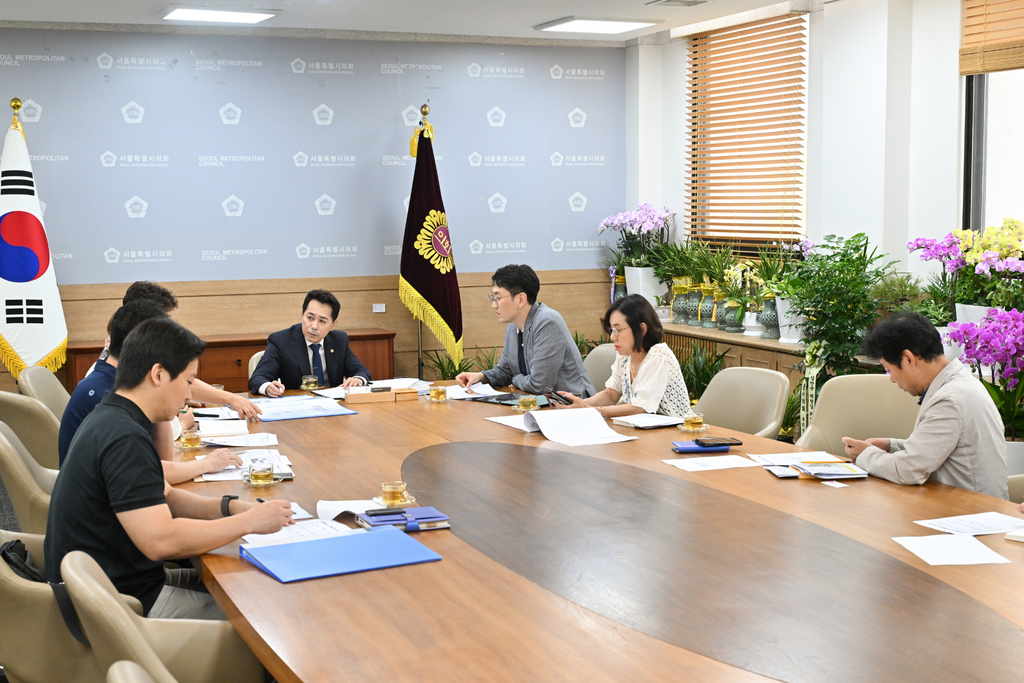
On Tuesday afternoon, Im visited the Gwanak Culture Plaza complex development site in the Sillim-dong 544 area of Gwanak-gu — the former site of the Geumcheon Police Station — to review progress and urge that the project proceed without delay.
He met with officials from the Seoul Metropolitan Government's public housing division, cultural facilities division and the Seoul Housing & Communities Corporation, carefully reviewing plans for roughly 270 public housing units, a city-run library and a publicly accessible parking facility.
Construction on the Gwanak Culture Plaza began last month, with completion targeted for 2029.
"Seven years after Seoul announced its plan to build district-level city libraries in 2019, the library project on the former Geumcheon Police Station site has finally broken ground," Im said. "Please pick up the pace so that residents who have waited so long can start using this cultural complex as soon as possible."
Im had long pressed for faster action on the Gwanak Culture Plaza, arguing that the project was essential to closing the cultural infrastructure gap between districts and achieving balanced development in the information and culture sectors.
"Once the Gwanak Culture Plaza opens, it will breathe new life into an area that has stagnated since the Geumcheon Police Station relocated, and give Gwanak-gu the chance to emerge as a hub of education and culture," he said.
He added that opening part of the parking facility to the public was expected to significantly ease the severe parking shortage in nearby residential neighborhoods, and called on officials to manage the project carefully through to completion.
Im requests faster progress on Nangok and Seobu urban rail projects

Earlier, on July 23, Im met with Yeo Jang-gwon, head of the Seoul Metropolitan Government's transportation bureau, to request that the city move faster on urban rail projects including the Nangok and Seobu lines.
After receiving a briefing on the status of each rail project, Im said light rail is "not an option but essential infrastructure" for residents in transit-underserved areas who must walk or take a village bus for 20 to 30 minutes just to reach the nearest subway station.
He particularly stressed that the Nangok Line, currently undergoing a preliminary feasibility study, "is a project Gwanak-gu residents have longed for over more than 20 years," and urged the city to take an active role in ensuring the line passes the feasibility review.
Among the urban rail projects currently under way in Seoul, the Myenmok and Wirye-Sinsa lines are in the basic planning stage, while the Nangok Line is undergoing a preliminary feasibility study.
The Seobu Line is being reviewed both for a private investment model — with preparations under way to recruit a preferred negotiating partner — and for a possible conversion to a publicly funded project.
The Gangbuk Crossing and Seonam lines are being advanced as part of Seoul's third urban rail network development plan.
Im said the council would actively cooperate in forming a special committee on urban rail and in securing approval of the third urban rail network plan — submitted to the Metropolitan Area Transportation Commission — in the second half of this year.
Seoul announced its third urban rail network development plan on July 10, setting a goal of building a rail network within 10 minutes of every front door across the city and pledging a major overhaul of its transportation system.
"Urban rail is the core of balanced development in Seoul," Im said. "These are essential facilities that guarantee citizens' right to mobility and improve their quality of life, beyond political interests — please manage the ongoing lines closely so they can get on track as soon as possible."
Im's early and active push to resolve long-standing local issues — including the Gwanak Culture Plaza, the Nangok Line and the Seobu Line — has raised residents' expectations for development in Gwanak-gu.
His efforts are seen as bolstering his political standing as council speaker while also building a strong political asset should he choose to run for Gwanak-gu district mayor in the future.
seouldream01@heraldcorp.com