![A bus charges at a hydrogen fueling station. This image is not directly related to the article. [SK Innovation E&S]](https://wimg.heraldcorp.com/news/cms/2026/07/30/news-p.v1.20260730.3af470cc2d4d4ba79a18d0848860c59f_P1.jpg)
As South Korea approaches a renewable energy generation capacity of 100 GW, hydrogen has been identified as an essential strategic asset for grid stability and energy security. Analysts also said the criteria for evaluating hydrogen should be broadened beyond generation costs alone to encompass system-wide benefits, including savings on transmission grid investment and the potential for large-scale, long-term storage.
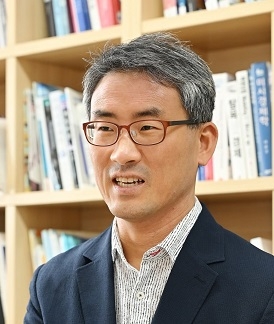
Yoo Jong-min, a professor in the economics department at Hongik University, delivered the keynote address Thursday at a hydrogen sector-coupling policy forum for renewable energy advancement, co-hosted by the Korean Environmental Economics Association and the National Academy of Engineering of Korea at the Korea Chamber of Commerce and Industry in Jung-gu, Seoul. "In the era of 100 GW renewable energy, hydrogen is no longer an optional complement but a strategic asset we must have," Yoo said. He outlined four roles for hydrogen: energy security, power grid stability, system-level economic viability and policy integration.
'Hydrogen's long-term storage and transport capacity can reduce renewable energy volatility'
Even as the share of renewable energy expands, growing volatility in power generation is creating mounting pressure on grid operations. In practice, surplus electricity generated during daytime hours cannot easily be routed to semiconductor factories or AI data centers in the greater Seoul area due to insufficient transmission infrastructure, making output curtailment unavoidable. Battery-based energy storage systems (ESS) also struggle to store seasonal surplus power for months at a time.
Yoo identified hydrogen as the key solution to these bottlenecks. Hydrogen produced from surplus electricity can be compressed, liquefied or converted into ammonia for long-term storage or transport to other regions. While batteries handle short-term supply and demand fluctuations, hydrogen can take on large-scale, long-term storage and distribution. For this reason, he said, the economic case for hydrogen should be assessed not by production costs or generation prices alone, but by how much it reduces overall system costs.
From an energy security perspective, Yoo said producing hydrogen from domestic renewable sources could reduce dependence on fossil fuel imports, and that even importing clean hydrogen from abroad would allow South Korea to diversify procurement countries and transport methods to guard against supply chain disruptions.
Yoo particularly stressed the need to accelerate the rollout of hydrogen vehicles for commercial use — buses and heavy trucks — which account for half of transport-sector emissions. Converting all passenger cars to electric vehicles, he argued, would place excessive strain on charging infrastructure and the power grid. Commercial vehicles travel long distances on fixed routes, making demand forecasting and hub-based charging station operations more manageable. He called for a medium-to-long-term roadmap linking vehicle deployment with charging infrastructure, with a target of mandating hydrogen vehicles for at least 50 percent of buses and heavy trucks.
"Elon Musk's dismissal of hydrogen vehicles is premised on the United States' ample grid capacity — it does not apply to South Korea, where grid constraints are far more severe," he said.
'A realistic option for large-scale power needs' … 'A core task for transport transition'
The panel discussion that followed saw broad consensus on the need to expand energy transition through hydrogen. Moon Il, a professor at Yonsei University, said hydrogen fuel cell power generation — which has a relatively short construction period and can use a variety of feedstocks — could serve as a realistic alternative for mega-projects with large-scale electricity demands. Park Sam-beom, an official at the Ministry of Land, Infrastructure and Transport's transport service policy division, said expanding hydrogen mobility centered on commercial vehicles such as buses was a core task for transforming the transport and industrial system.
Kang Byeong-uk, head of the hydrogen economy research division at the Korea Energy Economics Institute, said hydrogen vehicles had long been seen as less efficient than electric vehicles, but that their policy viability could rise significantly once savings on grid investment and the effect of dispersing charging demand were factored in.
Seok Gwang-hun, a specialist committee member at the Energy Transition Forum, pointed to the environmental limitations and low efficiency of by-product and reformed hydrogen, while saying the development of green hydrogen production technology and its potential to ease transmission grid burdens deserved positive consideration. Jin Seung-woo, director of the carbon neutrality policy division at the Ministry of Planning and Budget; Kim Nok-yeong, head of the carbon reduction certification center at the Korea Chamber of Commerce and Industry; and Lee Yong-bae, director of the new and renewable energy division at Incheon City, also agreed that expanding hydrogen mobility centered on commercial vehicles was necessary given national greenhouse gas reduction targets and the shortage of transmission and distribution infrastructure.
Democratic Party of Korea lawmaker Park Ji-hye, who represents Uijeongbu-gap in Gyeonggi Province, said in a congratulatory address that "how flexibly we operate the grid and how efficiently we use surplus power is the core of strengthening national competitiveness," adding that "linking hydrogen and renewable energy is an important solution that will simultaneously enhance energy security and industrial competitiveness."
keg@heraldcorp.com