![BIGBANG's world tour concert in Goyang drew a queue of 210,000 people for general ticket sales, selling out all three shows. [Galaxy Corporation]](https://wimg.heraldcorp.com/news/cms/2026/07/30/news-p.v1.20260730.c6c2b12ba5544f2aa69425ef4619d9e6_P1.jpg)
The so-called "7-year curse" is over. What once seemed like an inevitable expiration date for K-pop groups has faded. Teenage fans have grown into big spenders with real purchasing power — money they earned themselves — while a new generation is consuming their idols as "K-pop classics."
Second-generation idol group BIGBANG, marking its 20th debut anniversary, and I.O.I, reuniting for its 10th, are proving they remain powerful K-pop intellectual properties, industry sources said Thursday.
Music industry insiders agree that the comebacks of BIGBANG and I.O.I cannot be dismissed as mere nostalgia. "K-pop used to be a generational-turnover industry," one said, "but this is a signal that it is entering a long-tail IP industry."
K-pop legends' return crashes ticket sites, draws queue of 210,000
K-pop legends BIGBANG are coming back. Ever since G-Dragon's solo comeback last year — when the group hinted at a full reunion — fans have been counting down. Marking their 20th debut anniversary, BIGBANG will launch their first world tour in nine years on Aug. 19, their debut anniversary date.
According to YG Entertainment, general ticket sales for BIGBANG's world tour concerts in Goyang drew a queue of 210,000 people, crashing the ticketing site. The three shows — running from Aug. 21 to Aug. 23 — sold out in 22 minutes. Even additional tickets hastily added at fans' request sold out the moment general sales opened. Tickets for a fan event on their debut anniversary at the Mulbit Stage in Yeouido Han River Park also sold out in six minutes.
The return of girl group I.O.I — the act that launched the era of the so-called "national producer" — is another moment that has reaffirmed the power of a legendary IP.
Formed through Mnet's talent show "Produce 101" in 2016, I.O.I reunited as a complete lineup for the first time in about nine years, releasing their third mini-album "I.O.I : LOOP" to mark their 10th debut anniversary. The comeback — after members had pursued careers in acting, solo music and other fields — was a chance to look back on a decade of growth.
![I.O.I [Swing Entertainment]](https://wimg.heraldcorp.com/news/cms/2026/07/30/news-p.v1.20260507.659e5942d7724060a16c13510b93b61f_P1.jpg)
The music matched the hype. Their title track "Gapjagi" shot straight to No. 1 on the Melon Hot 100 streaming chart upon release and held the top spot for an extended run.
The dominance carried over to broader charts. "Gapjagi" also topped the Circle Chart's June overall digital ranking, compiled by the Korea Music Content Industry Association. Kim Jin-woo, a data columnist at Circle Chart, said the No. 1 finish was "a case where musical consumption merged with the nostalgia of a public that shared an era with I.O.I, combined with the narrative of watching them grow from their debut — and that combination showed explosive force on the streaming charts."
The song even conquered noraebang. According to Kumyoung, "Gapjagi" topped the female idol chart for five consecutive weeks and broke into the overall top 100 of its accompaniment machine popularity chart.
A music agency official said the song's retro synth-pop and disco beat, combined with the shared memories of fans who experienced I.O.I's era — or first encountered them through the talent show — transported listeners back to the time when I.O.I sang "Pick Me."
The trend extends beyond I.O.I. B1A4 returned to mark their 15th debut anniversary, and Highlight has consistently kept up festival appearances and individual activities. Full-group, unit and solo activities by 2PM, Super Junior and SHINee continue to generate wide reach. Earlier, more than 400,000 people logged on simultaneously to watch 2NE1's performance at Olympic Hall in Seoul Olympic Park — the opening show of their 15th-anniversary global tour.
Fans grown into big spenders, K-pop classics capturing Generation Z
The "curse of seven years" was broken long ago. Unlike the past, when groups routinely disbanded or scattered after the seven-year exclusive contract period stipulated in standard agreements, K-pop groups today have far longer lifespans. The emergence of acts lasting 20 to 25 years or more is no accident.
The biggest factor is fandom growth. Fans who spent their teens and twenties as students during the peak years of second- and third-generation K-pop stars — roughly the late 2000s to the mid-2010s — are now in their late twenties to early forties. That age group sits squarely in the economically active population with real spending power, and they are not holding back when their favorite stars return.
"Fans who once struggled to buy a single CD as students are now actively spending on stadium concert tickets, premium merchandise, vinyl records and memberships," said an official at a major entertainment agency.
![BIGBANG performing at Coachella [respective agencies]](https://wimg.heraldcorp.com/news/cms/2026/07/30/news-p.v1.20260422.1205068e72c54d1a81880e1e13d7afdb_P1.jpg)
In practice, concerts by Girls' Generation, G-Dragon, Taeyang, BTS and Highlight draw plenty of fans who have grown up alongside the artists. Many say they dreamed of attending a show with money they earned themselves — and have finally made it happen. If student-era fandom was about cheering, today's fandom is a genuine economic force that moves the industry.
New fans are joining beyond the existing fandom. TikTok and Instagram are where enthusiasm for the return of legendary IPs runs hottest. Industry insiders agree that the spread of short-form platforms has made it far easier for Generation Z — fans in their teens and early twenties — to discover past hits and artists. For longtime fans, those songs are nostalgia; for the current generation, they are fresh tracks that feel entirely distinct from today's K-pop. Yesterday's K-pop has become Generation Z's classics.
"These days it's quite common to see old music-show clips go viral after being picked up by an algorithm," one music agency official said. I.O.I's "Gapjagi" spread the same way — through short-form content and memes — reaching audiences across generations.
"That is also why, when you go to a second- or third-generation K-pop concert these days, you see fans in their teens and twenties alongside fans in their thirties and forties, with generational integration happening naturally," the official added.
The coexistence of fandoms shows up on the streaming charts as well. I.O.I's long reign at the top sits alongside entries from Cortis, aespa, ILLIT, RESCENE, Han Roro and Hearts2Hearts. On Circle Chart's June tally, tracks released within the previous three months accounted for just 19.3 percent of total streaming volume — a sign that new releases and proven IPs are sharing the space, preventing any single song or artist from dominating the charts.
Why now? The obstacles that held groups back have cleared
The enduring popularity of second- and third-generation groups is no coincidence. Military service, contract renewals and other factors have long shaped how long idol groups last. For K-pop groups now more than a decade old, those obstacles have largely been cleared.
Members of boy groups such as BIGBANG and SHINee have completed their mandatory military service and resumed activities. They have also secured the flexibility to maintain their group brand after contracts expire, working both together and separately.
Some groups have also resolved trademark disputes or established independent labels. Highlight reclaimed the "Beast" trademark, while B1A4 built an independent label as their operational base.
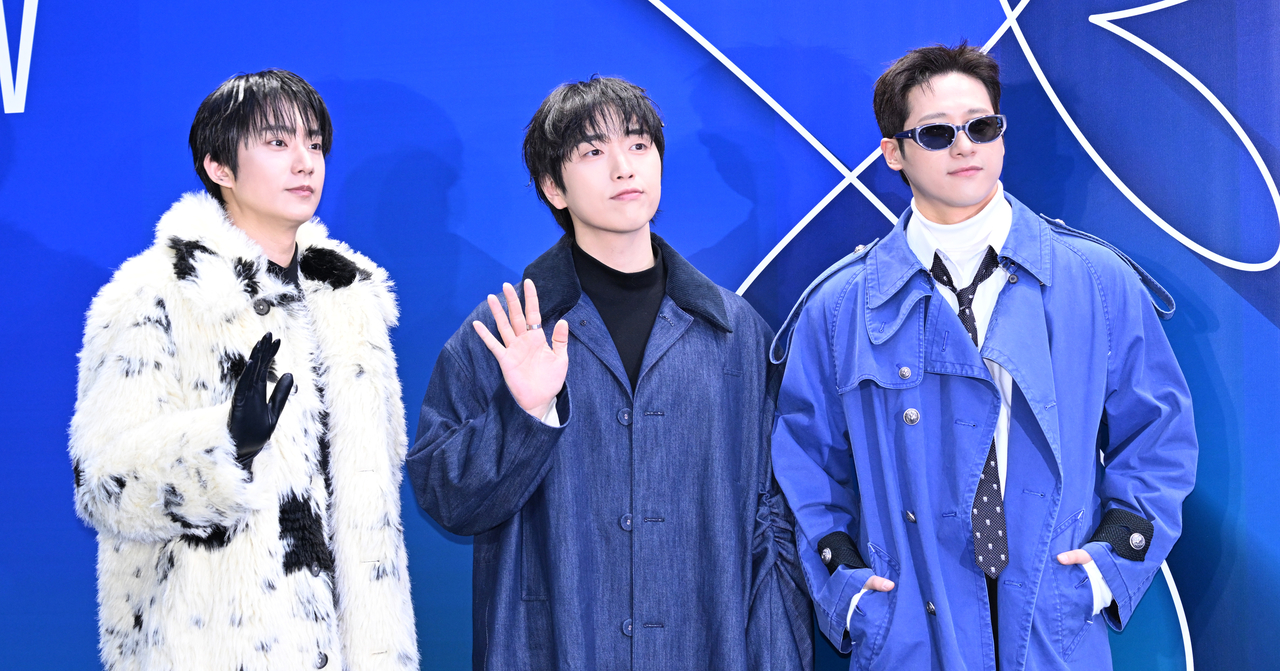
"These groups have stepped outside the traditional agency structure to take direct control of their musical and professional direction, spreading their wings as senior artists," one industry official said.
Going independent is not without its difficulties, however. Beyond releasing music, groups must navigate distribution agreements with global streaming platforms and direct-distribution companies, compete for bookings at major venues worldwide, coordinate complex local promotional campaigns, and build multinational logistics networks for merchandise — all while contending with customs procedures and tariff barriers.
An official at Dreamus, which operates the streaming platform FLO, said that even when individual artists establish their own label or one-person agency and take the reins, clearing alone the walls of financial resources, production infrastructure and global distribution networks that major agencies have built up over decades is no easy task.
Against that backdrop, the growing sophistication of platforms supporting artists and their fandoms has become another engine of activity. Fan platforms, concert infrastructure and global distribution systems are all more accessible than before, and new business models are emerging that can handle fan community management, merchandise sales, global distribution and concert production — tasks that once required a major agency. B1A4, for instance, works with the streaming platform FLO on music distribution, concert planning, fandom business and merchandise development.
K-pop, long a market built on rookie groups and constant generational turnover, is changing its timeline. Rookie groups are building new fandoms, while legendary artists are creating their own markets on the strength of accumulated brand equity and narrative.
"The current shift is the result of artists' ways of working and the industry's infrastructure evolving together," one industry official said. "K-pop is moving toward an industry where accumulated IP creates value repeatedly, across generations."
shee@heraldcorp.com