
"Wasn't using a tumbler supposed to be enough?"
In the sweltering heat of midsummer, an iced café drink feels less like a luxury and more like a survival essential.
With so many people stopping by cafés nearly every day, a growing number have taken to carrying reusable tumblers to cut down on disposable waste.
But even those eco-conscious customers may be overlooking something important: sometimes, the drink you choose can have a greater impact on the environment than whether you use a tumbler at all.

In fact, among popular summer café drinks, carbon emissions can vary by as much as fivefold depending on whether a particular ingredient is included.
Some analyses suggest that choosing certain drinks can be worse for the environment than using a single-use plastic cup.
The Herald Business commissioned climate-tech firm Ohu Dusi Lab to measure the carbon emissions of popular summer café beverages and found that emissions can differ by as much as 5.5 times between drinks of the same volume.

The drinks analyzed covered six categories — coffee (Americano), lattes (latte and vanilla latte), teas (green tea and peach iced tea), juices (watermelon and mango juice), ades (lemon and grapefruit ade), and smoothies (mango and strawberry-banana smoothie) — with carbon emissions measured across raw material production and the manufacturing process.
Certain ingredients stood out as the biggest contributors to carbon emissions. The single largest was milk. Among the 10 drinks measured, the highest-emitting were the iced vanilla latte (440g) and the iced latte (426g), both of which contain milk.

The mango smoothie, which ranked third at 421g, also contained milk and plain yogurt — made from milk — in its standard recipe. The combined carbon emissions from milk-based ingredients totaled 310g, outweighing even the main ingredient, mango, which accounted for 87g.
A standard-size single-use plastic cup commonly used at cafés generates about 66g of carbon emissions across its production and disposal. That means making just one milk-based drink like a latte produces the carbon equivalent of five plastic cups.

More specifically, a single iced latte generates 426g of carbon emissions, significantly more than an iced Americano at 236g. Both drinks share the same base of espresso, water and ice — the difference comes down to milk. In other words, one iced latte produces roughly 190g more carbon than an iced Americano.
Other studies have found an even wider gap. A life-cycle assessment of café beverages in Macao, published in the journal Environmental Impact Assessment Review in 2024, measured the carbon footprint of an iced latte at 860g — roughly three times that of an iced Americano at 290g.

The reason milk carries such a high carbon footprint is straightforward: methane produced when dairy cows digest feed. Ruminants like cattle ferment grass and feed using microbes in their stomachs, and the methane generated in that process is released into the atmosphere through belching and other means.
Methane does not linger in the atmosphere as long as carbon dioxide, but it is far more potent at warming the planet in the short term. According to the Intergovernmental Panel on Climate Change's Sixth Assessment Report, methane has a 100-year global warming potential of 27. That means emitting the same amount of methane causes roughly 27 times more warming over a century than carbon dioxide.
Plant-based milk appears to offer a way to reduce that impact. Almond milk, for instance, generates roughly half the carbon emissions of regular milk. Substituting almond milk for regular milk in an iced latte cuts emissions from 426g per cup to 257g — a sharp drop.
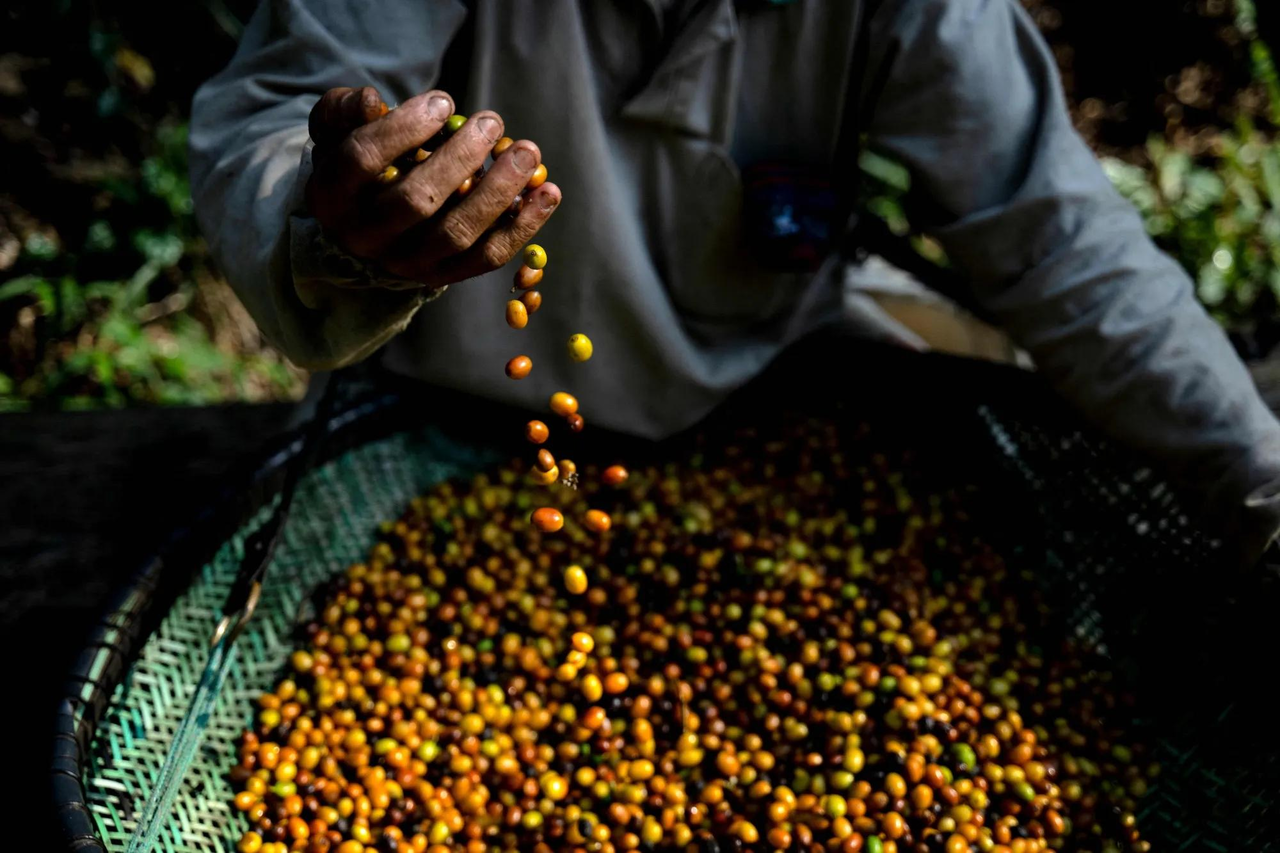
Meanwhile, coffee itself also ranks as a high-emission ingredient. Producing the espresso — typically two shots — that goes into a standard Americano or latte generates about 151g of carbon, the equivalent of two single-use plastic cups.

Because coffee can only be grown in a narrow band of regions known as the "coffee belt," long-distance transportation is unavoidable. The crop also requires significantly more water than most others, which is why it is widely classified as a high-carbon food.
According to Our World in Data, producing, processing and transporting 1 kilogram of coffee releases an average of 17 kilograms of greenhouse gases — ranking it fifth among all food categories, behind beef, lamb, cheese and chocolate.

Given that South Koreans drink an average of 405 cups of coffee a year, a single person's annual coffee consumption alone generates 121 kilograms of carbon — the equivalent of what about 18 pine trees absorb in a year.
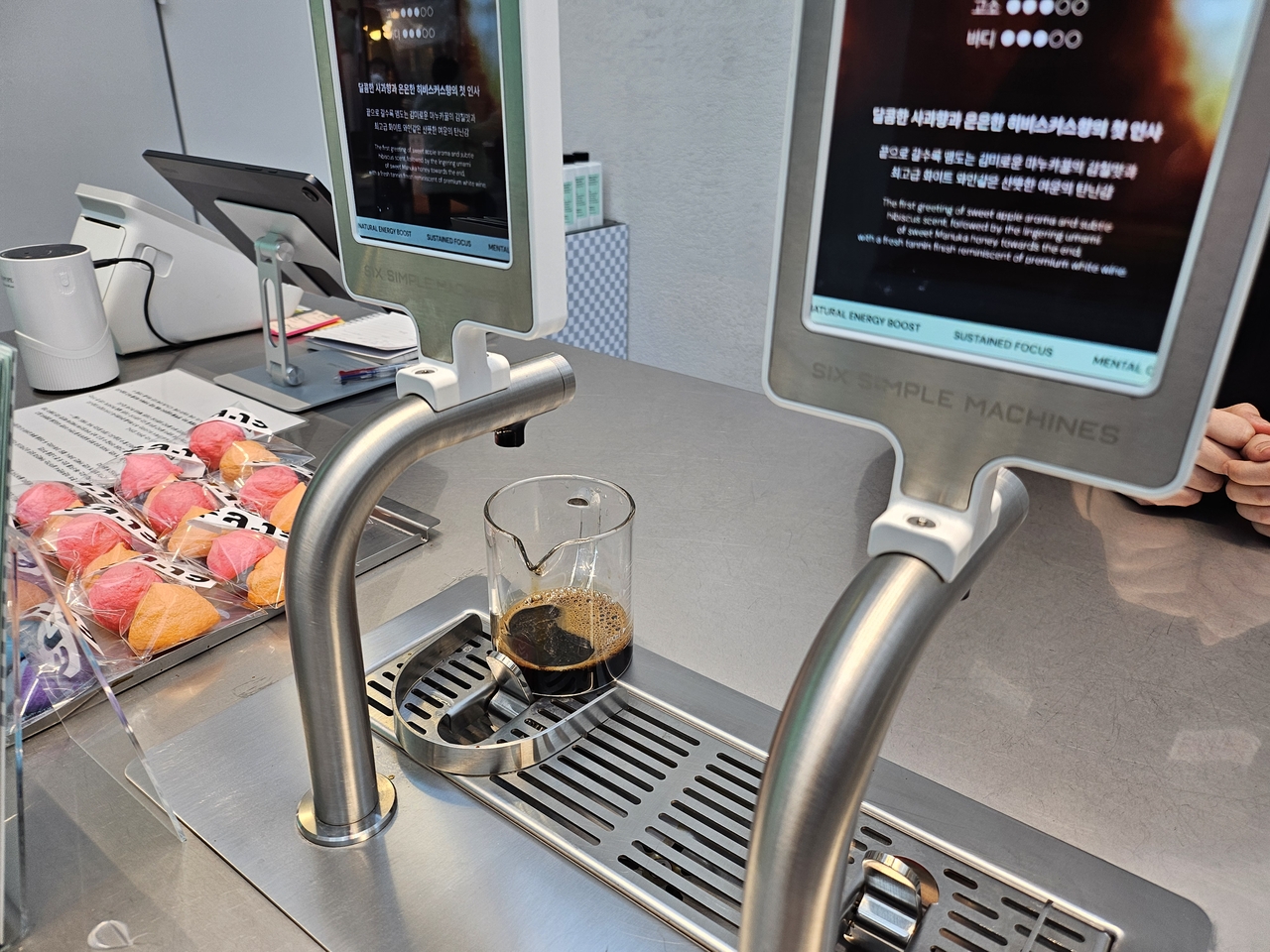
Against that backdrop, efforts to build a more sustainable café culture are gaining momentum. The market for coffee alternatives — products that replicate the taste and aroma of coffee using plant roots and other ingredients instead of coffee beans, while reducing carbon emissions and other drawbacks — is growing rapidly.
Ordering an iced latte does not make an individual responsible for the climate crisis. But consumer choices send signals that shape how companies produce their goods. Going one step further than switching to a reusable tumbler — by cutting back on milk, opting for plant-based drinks, or simply ordering only what you will finish — could gradually help build a more environmentally friendly café culture.
"With summer being the peak season for beverage consumption, it is worth thinking about how menu choices can help reduce carbon emissions, even if only slightly," an official at Ohu Dusi Lab said. "When enough people make even some eco-friendly choices, production practices will follow, and that can help slow the pace of climate change."

woo@heraldcorp.com