![Congestion on the Sinwol-Yeouido Underpass and the Gukhoedaero construction site. [Yonhap]](https://wimg.heraldcorp.com/news/cms/2026/07/29/news-p.v1.20260729.7a90afe0440b4caba98e1142acbe7d4b_P1.jpg)
Traffic conditions on the route from Incheon to Seoul's Yeouido district will be worse after the Seoul Metropolitan Government's Gukhoedaero undergrounding and surface-park project is completed than they were before construction began, according to an analysis of city data.
Concerns are growing that Incheon residents, who have endured years of construction-related traffic disruption, will still be stuck in congestion even after the project wraps up.
According to a comprehensive report on the Gukhoedaero road construction and its traffic impact — submitted to Democratic Party of Korea lawmaker Heo Jong-sik (Incheon Dong-gu and Michuhol-gu Gap) by the Seoul Metropolitan Government — traffic flow between Incheon and Yeouido is not expected to improve even after 2030, when the 561.2 billion won ($383 million) underpass and surface-park project is scheduled for completion.
The most striking finding concerns above-ground traffic speeds. Seoul's analysis projects that the average speed on the above-ground section of Gukhoedaero heading from Incheon toward Yeouido will fall from the current 34.8 kilometers per hour to 27.5 km/h once the project is finished.
That represents a drop of 7.3 km/h from pre-construction levels, suggesting that morning rush-hour congestion could be significantly worse than it is today.
In practice, the stretch maintained speeds of 48.9 km/h and 49.3 km/h in 2014 and 2015, respectively, before construction began.
Average speeds fell to around 35 km/h after work on the Sinwol-Yeouido Underpass started in 2015 and Gukhoedaero construction followed in 2018.
Seoul plans to build a free underpass to absorb traffic displaced by the reduction in above-ground lanes, but that too is unlikely to resolve congestion at its root, the analysis found.
According to Seoul's data, the volume-to-capacity ratio on the new underpass in the Yeouido-bound direction is projected at 0.98.
That means vehicles would fill 98 percent of the road's capacity — a "constant saturation" level rated E — suggesting that chronic gridlock would in effect set in the moment the underpass opens.
Observers note that drivers commuting from Incheon to Seoul may increasingly turn to the privately operated Sinwol-Yeouido Underpass, which charges a 2,700-won toll, to avoid both the congested above-ground road and the near-saturated free underpass.
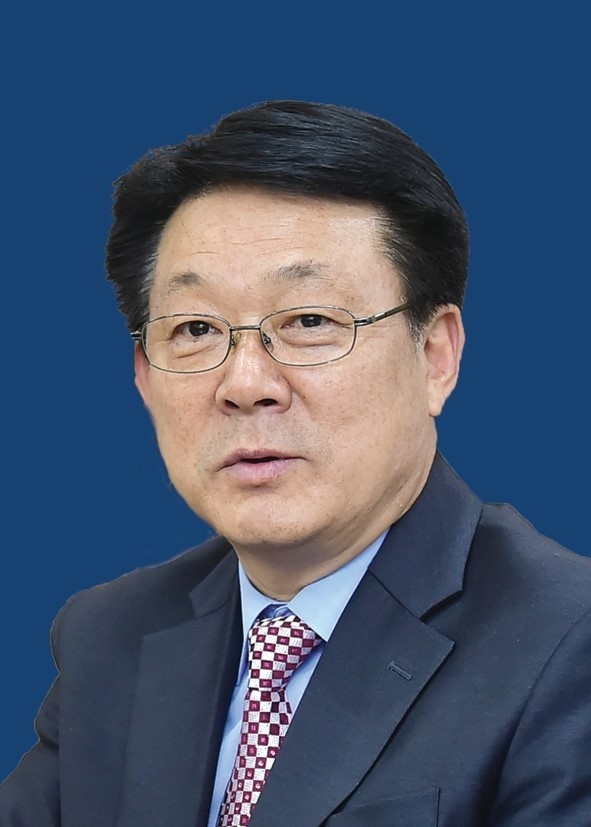
"Incheon residents have endured nearly a decade of traffic jams and enormous social costs — time lost, fuel wasted — because of this construction," Heo said. "It is hard to accept that after pouring in a massive budget, the above-ground road will be even more congested and the free underpass is already projected to be constantly saturated."
Heo urged Seoul Mayor Oh Se-hoon to address the bottleneck at the Gukhoedaero entrance to Yeouido. "Seoul's current road policy does not adequately reflect the reality of residents commuting from Incheon to Seoul," he said. "Mayor Oh must draw up measures that fundamentally improve the bottleneck at the Yeouido entry point on Gukhoedaero and guarantee Incheon residents' right to travel."
The findings could fuel calls for a full review of the Gukhoedaero project's traffic plan, particularly given the Seoul Metropolitan Government's decision last year to scrap a plan to reduce above-ground lanes on the Seobu Expressway after it triggered severe congestion and public backlash.
While the Gukhoedaero project aims to improve the urban environment and create a surface park, controversy over its effectiveness is likely to grow if traffic conditions on the Incheon-to-Yeouido corridor — a key commuter artery for the western Greater Seoul area — deteriorate further once it is complete.
gilbert@heraldcorp.com