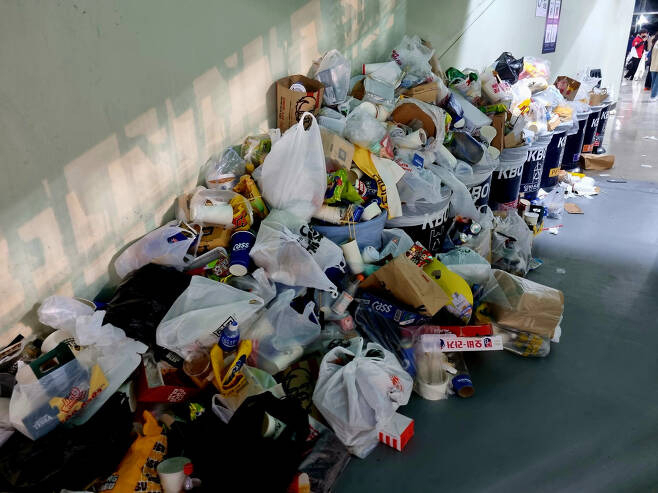
"Every time I leave after a game, I feel guilty."
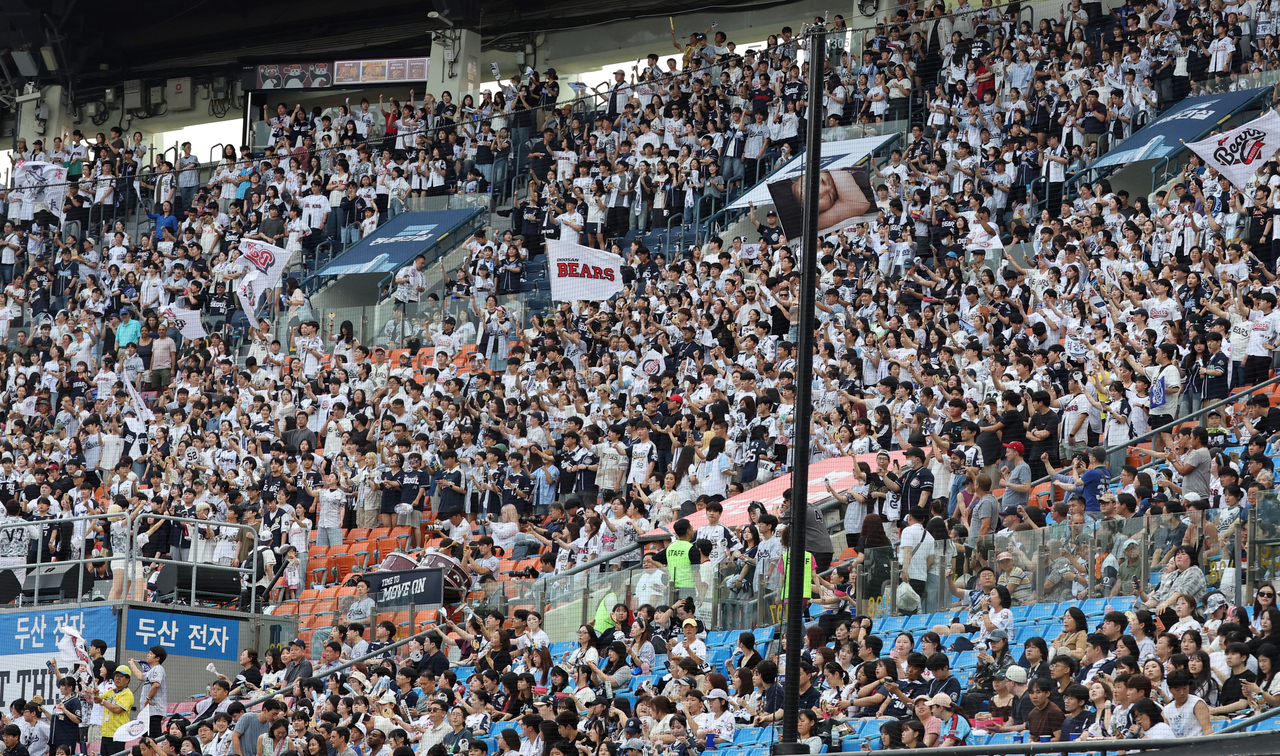
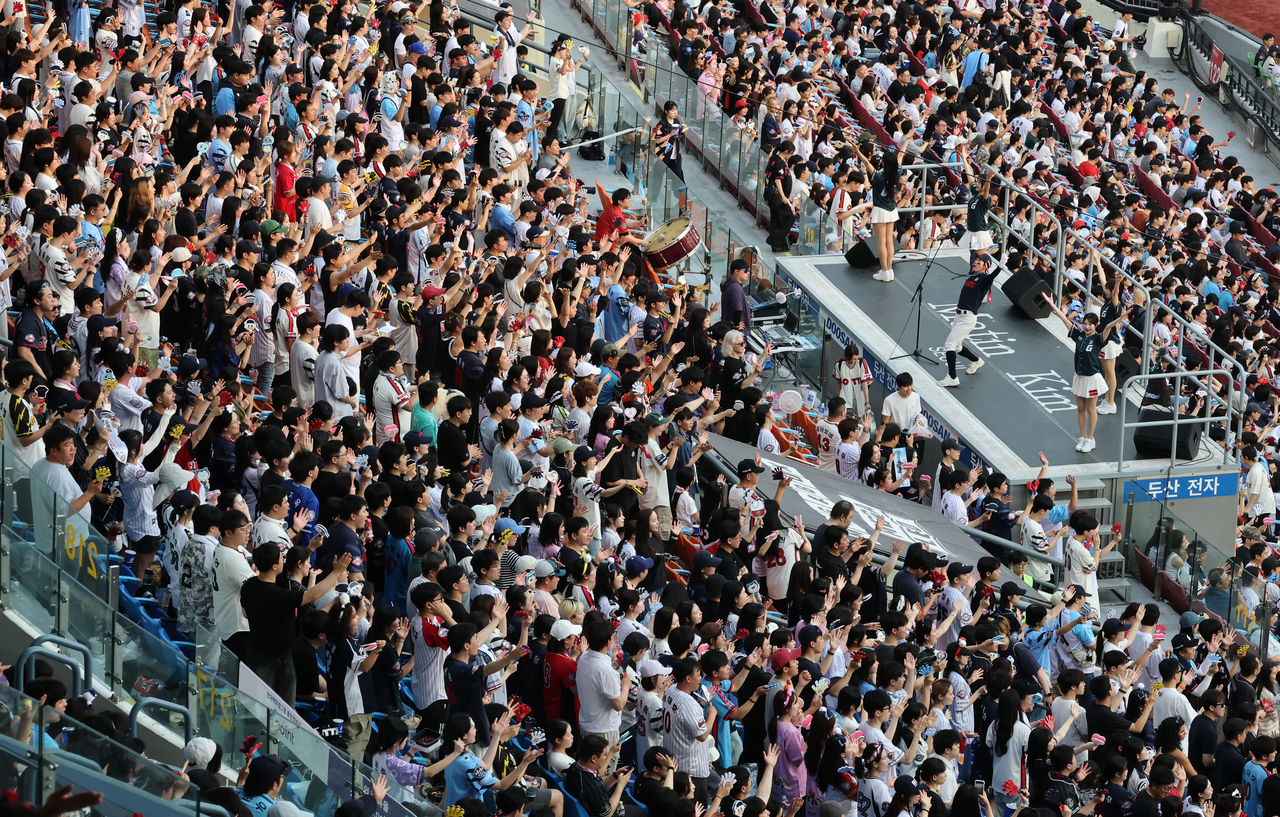
Baseball draws about 12 million fans a year, making it South Korea's most-attended spectator sport. But when the cheering stops and crowds file out, an uncomfortable scene reliably unfolds.
At recycling bins, mountains of single-use waste pile up — disposable cups smeared with tteokbokki sauce, half-eaten chicken, beer cups and other food-soiled containers all mixed together.
At some point the trash accumulates so thoroughly that it becomes impossible to tell recyclables from general waste. Fans who want to sort their garbage simply give up.
People leaving trash behind is, in one sense, inevitable. The deeper problem is that the waste is particularly harmful — and that it is not being properly managed.
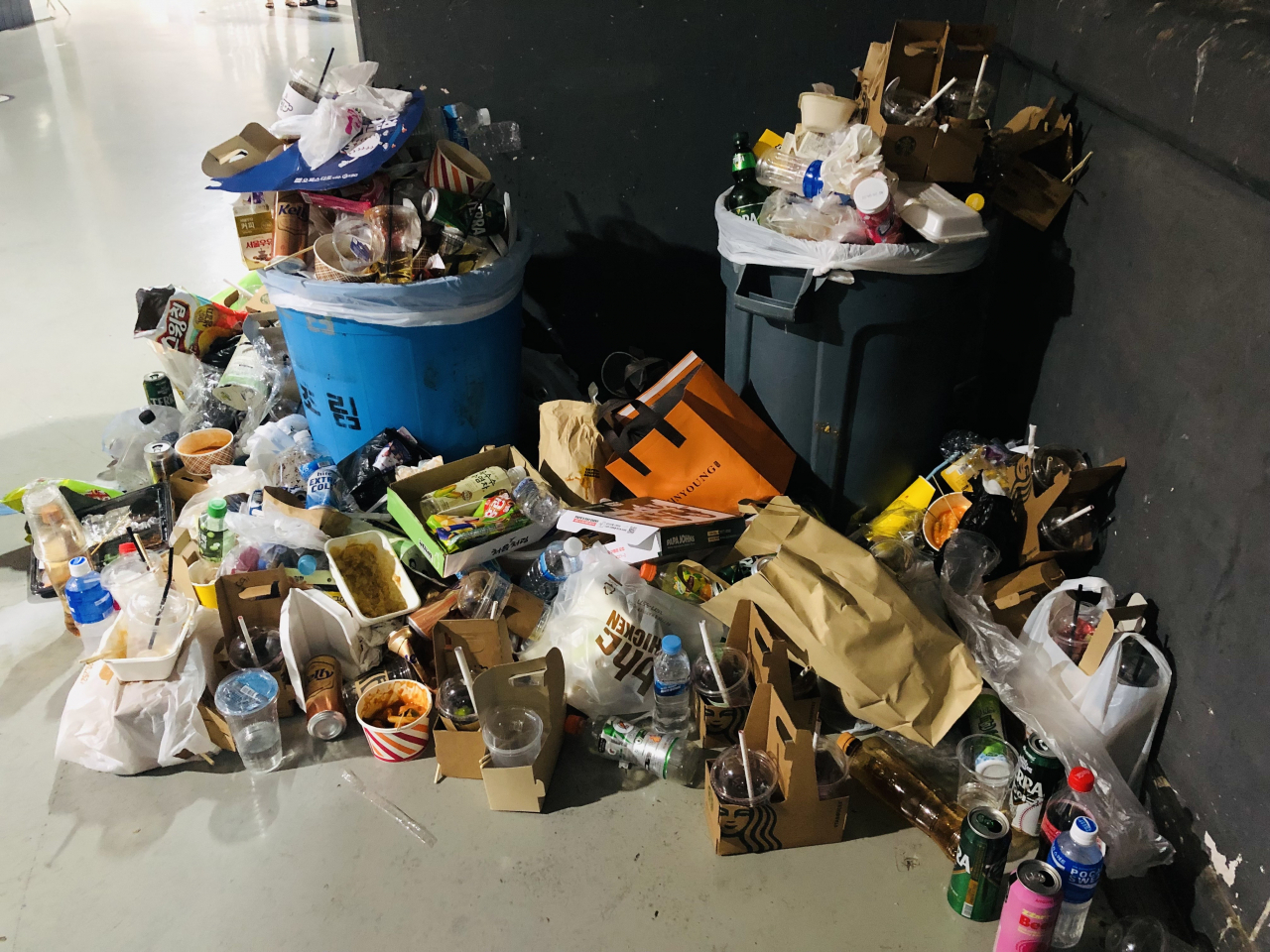
Seoul Environment Federation, an environmental advocacy group, has been monitoring single-use and reusable container practices at nine stadiums across all 10 Korea Baseball Organization (KBO) league clubs since May. Its findings show that of 351 food and beverage outlets surveyed, only two did not use disposable items.
That means 99.4 percent of all outlets rely on single-use products. More strikingly, 72.9 percent of all outlets use disposable items exclusively, while 26.5 percent use a mix of disposable and reusable containers. Just one outlet had eliminated single-use products entirely.
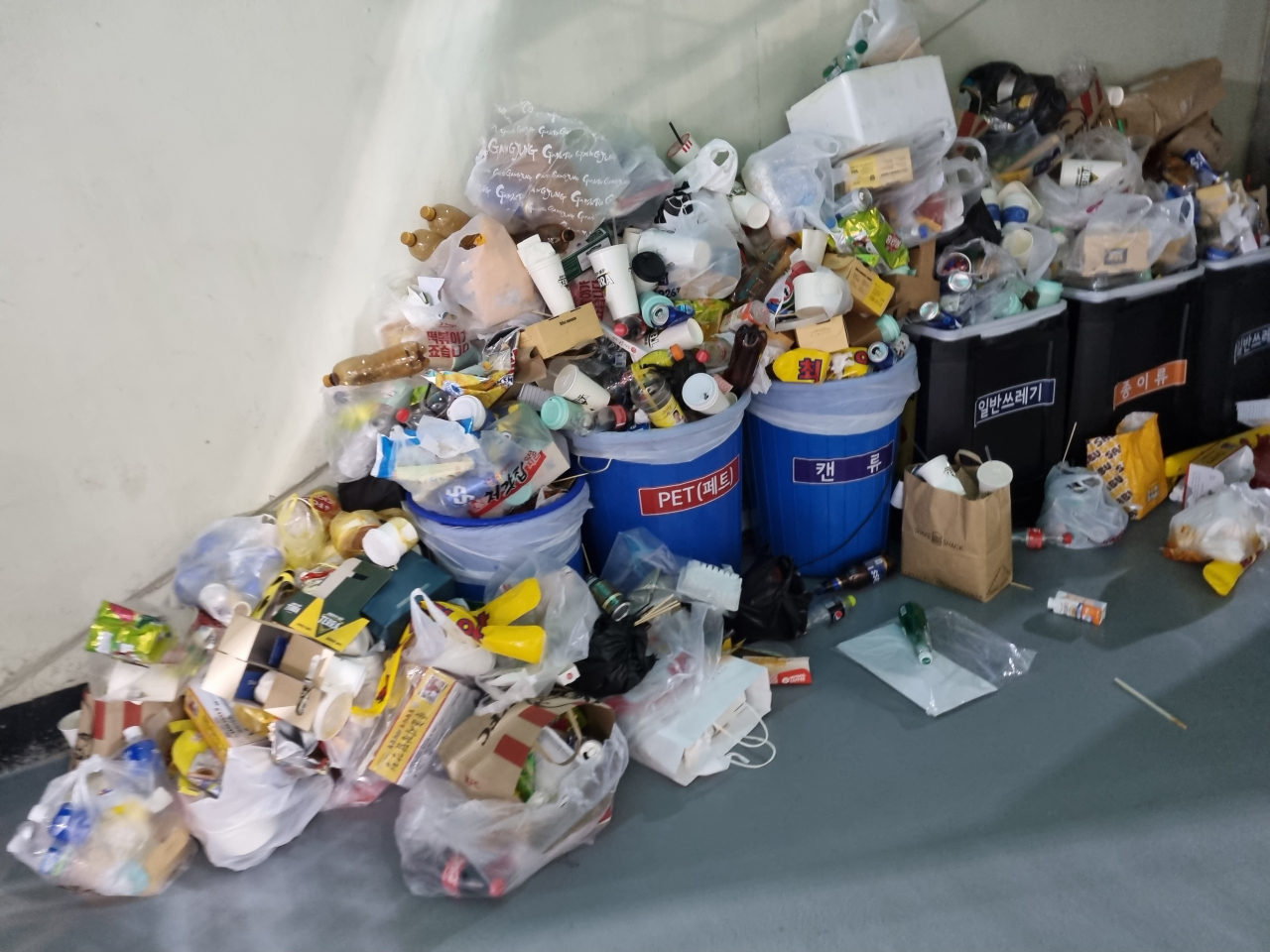
Disposable products were used at every stage of eating — drink cups, food containers, sauce packets, spoons, chopsticks and forks. Even outlets that had introduced reusable containers still offered disposable alternatives alongside them. Reusables were an option, but single-use items had not disappeared.
Even drinking water required purchasing single-use bottled water. Not a single water refill station was found at any of the stadiums surveyed, meaning fans who brought their own tumblers had no way to fill them.
The share of outlets using reusable containers varied sharply by stadium. SSG Landers led all clubs, with 50 percent of its outlets having adopted reusables. At the other end, Samsung Lions had the lowest adoption rate, at just 2.4 percent.
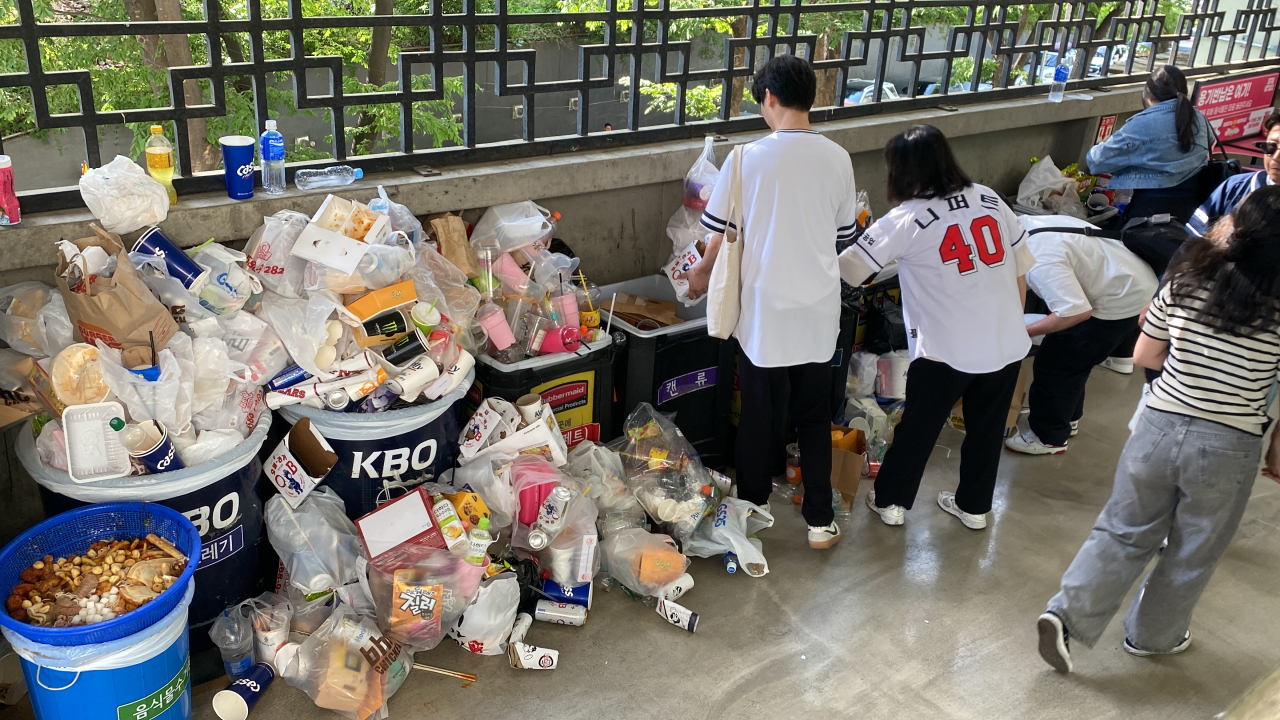
The waste-sorting infrastructure is also inadequate, Seoul Environment Federation said, with recyclables and general and food waste repeatedly ending up mixed together. The problem is especially acute after games end, when trash surges all at once — unclear labeling on bins means many fans do not know where to dispose of what, leading to indiscriminate dumping.
As a result, paper, plastic film, clear PET bottles and food waste — everything except general trash — are largely either mismanaged or not separated at all.
Data from the Ministry of Environment's (now the Ministry of Climate, Environment and Energy) sixth national waste statistics survey show that baseball stadiums nationwide generated a total of 3,444 tons of waste in 2021. Of that, 3,278 tons — including single-use items — were disposed of in standard garbage bags, while only 156 tons were properly separated and sent for recycling.
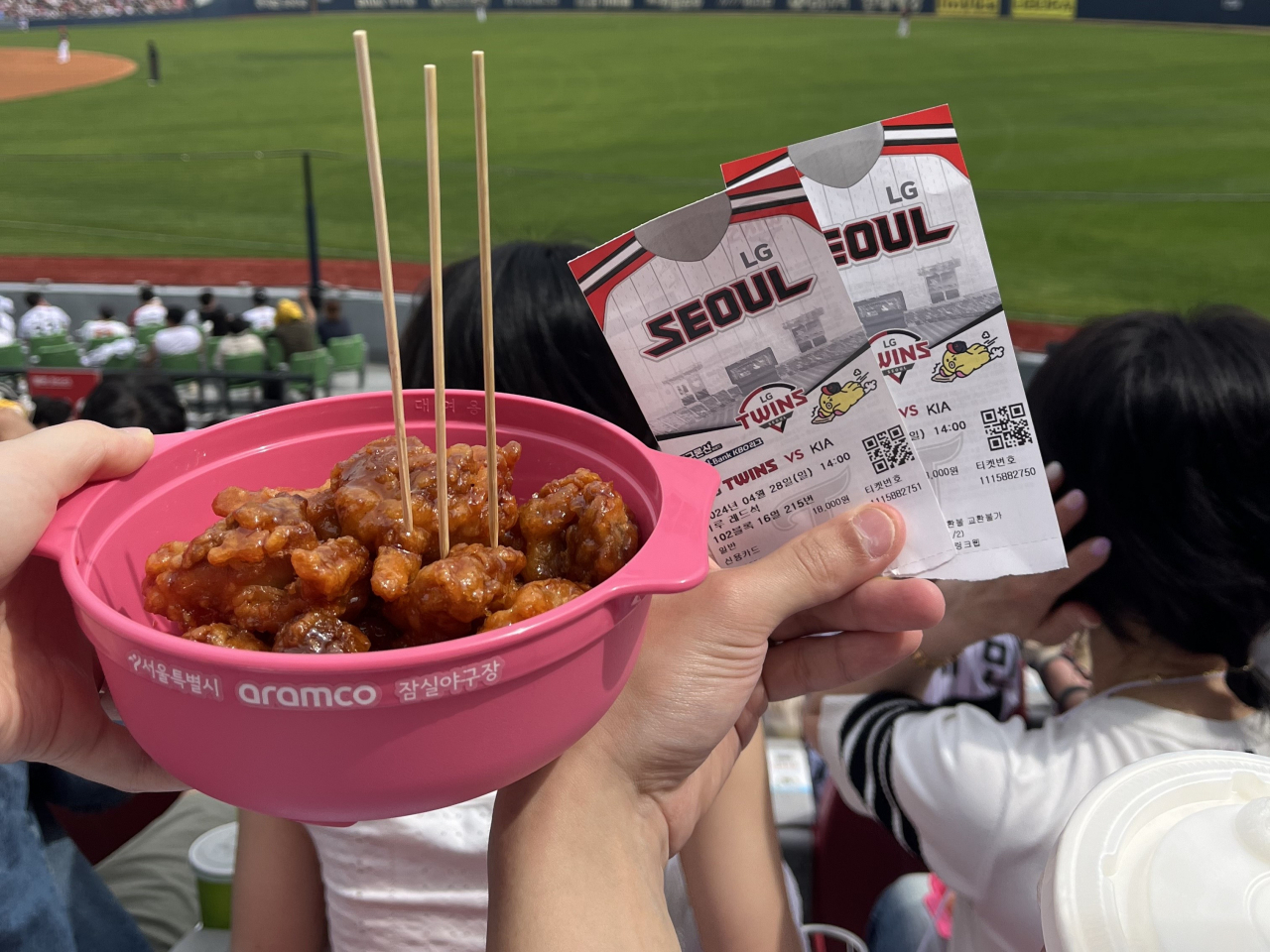
Efforts to address the problem are not entirely absent. In 2023, all 10 KBO clubs signed a voluntary agreement to reduce single-use products — for example, eliminating the disposable cups previously handed out with canned drinks. Each club also committed to introducing reusable containers at food and beverage outlets inside their stadiums. The agreement's key limitation, however, is that it is voluntary and carries no binding obligations.
The Seoul Metropolitan Government has introduced reusable cups and bowls at select food and beverage outlets at Jamsil Baseball Stadium and Gocheok Sky Dome, operating a system that collects, washes and recycles the containers. The initiative has shown measurable results — plastic waste has declined even as attendance has grown.
But these efforts fall well short of transforming single-use practices across entire stadiums. Even at venues that have adopted reusables, the system often applies only to certain outlets or is offered alongside disposable options. Without clubs committing their own budgets to the transition, expansion is difficult — particularly when local government subsidies are not available.
Seoul Environment Federation is now calling on KBO and its clubs to take concrete action, demanding that they ▷ set waste reduction targets and publish related data ▷ phase out single-use products and actively introduce reusable container systems ▷ install and maintain water refill stations throughout all stadiums ▷ improve the overall waste-sorting infrastructure, including collection bins, signage and pedestrian flow.
The group also said clubs should allocate their own budgets — rather than relying on local government subsidies — and incorporate reusable container requirements directly into vendor contracts and operating standards. It also said KBO should establish uniform guidelines to make reusable containers the default at every stadium nationwide.
Based on its monitoring findings, Seoul Environment Federation has launched a petition campaign calling on KBO and the pro baseball clubs to reduce stadium waste. The group plans to continue its efforts through ▷ further monitoring ▷ club-by-club inquiries ▷ policy proposals to the National Assembly ▷ public forums.
South Korean professional baseball has firmly established itself as the country's most popular sport. The 2025 KBO regular season drew 12,312,519 admissions — the first time a single season in Korean professional sports had surpassed 12 million fans. Average attendance across 720 games was approximately 17,101 per game.
The momentum has carried into this year. The 2026 season reached 8 million cumulative admissions faster than last year's pace, and there is growing speculation that the all-time single-season attendance record set last year could be broken again. Without significant changes, the volume of waste generated by games is likely to grow as well.

woo@heraldcorp.com