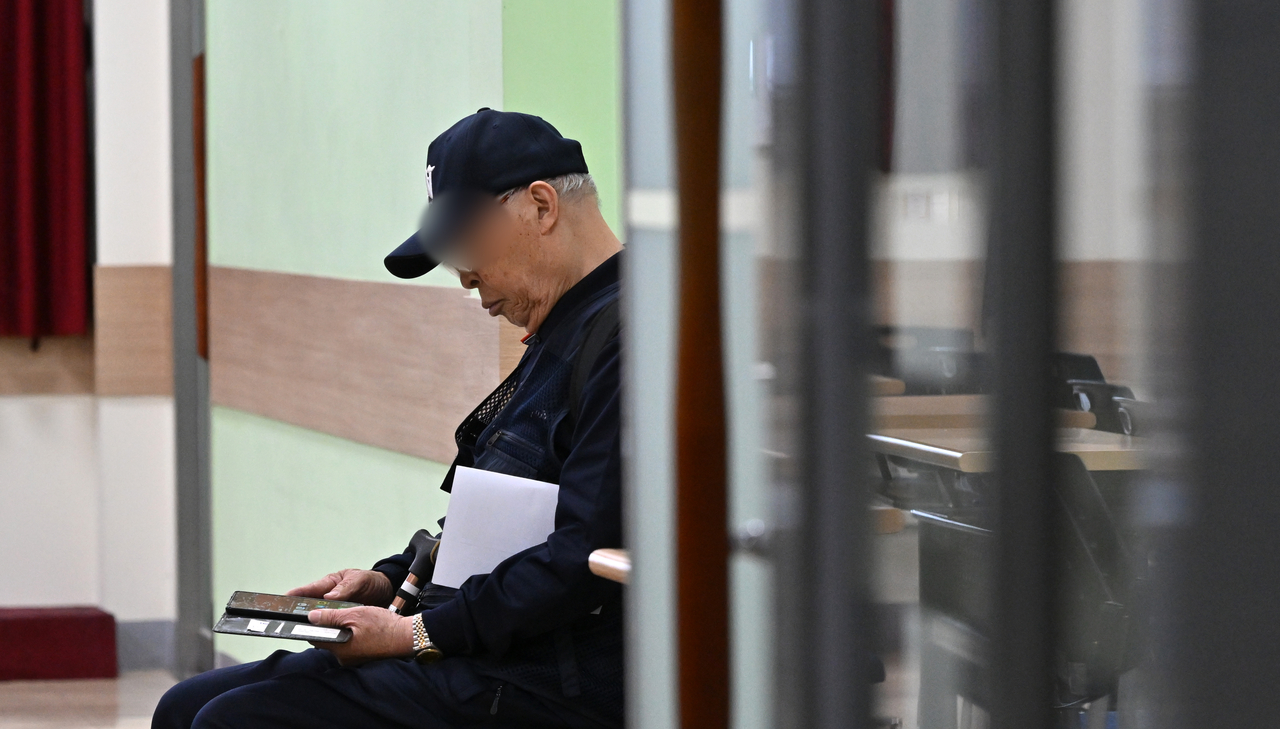
The share of South Korea's population aged 65 or older has exceeded 20% for the first time, new census data show. The working-age population (ages 15 to 64) continued a decline that began after peaking in 2018, marking a seventh consecutive year of contraction, while the proportion of single-person households set yet another record high. Analysts say demographic shifts driven by the low birth rate, aging and shrinking household sizes are becoming increasingly pronounced.
According to the 2025 Population and Housing Census released by the Ministry of Statistics on Tuesday, South Korea's total population stood at about 51.82 million as of Nov. 1 last year, a marginal increase of 12,000 people, or 0.02%, from the previous year. The number of Korean nationals fell by 54,000, or 0.1%, to about 49.71 million, but the foreign resident population grew by 66,000, or 3.2%, to about 2.109 million, offsetting the decline and producing a slight overall gain.
![[Provided by the Ministry of Statistics]](https://wimg.heraldcorp.com/news/cms/2026/07/28/news-p.v1.20260728.10c2f35eaa0f42e88ca5da5fa4ff8101_P1.jpg)
The most striking change was in aging. The elderly population aged 65 or older reached about 10.72 million, or 20.7% of the total — surpassing the 20% threshold for the first time. The working-age population aged 15 to 64 fell by 393,000, or 1.1%, to about 35.87 million, representing 69.2% of the total. The youth population aged 0 to 14 also shrank by 196,000, or 3.6%, to about 5.22 million, or 10.1% of the total. The aging index — the number of elderly people per 100 children — rose 18.5 points in a single year to 205.2.
By region, the Greater Seoul metropolitan area was home to about 26.38 million people, or 50.9% of the national total, up 0.3% from the previous year. Gyeonggi Province, Incheon and five other cities and provinces saw population growth, while Seoul, Busan and 10 other administrative regions recorded declines. At the city, county and district level, 82 areas gained population while 147 shrank.
Household composition is also shifting rapidly. The total number of households rose 1.1% to about 23.25 million, but the average household size fell by 0.03 people to 2.16. One- and two-person households numbered about 14.87 million, making up 66.1% of all general households. Single-person households reached about 8.24 million — 36.6% of all general households — the highest share on record.
The total housing stock grew by 310,000 units, or 1.6%, to about 20.18 million. Apartments accounted for about 13.29 million units, or 65.8% of all housing, up 2.4% from the previous year. Detached houses, by contrast, fell 0.3% to about 3.83 million units. Housing built 20 or more years ago made up 56.0% of the total stock, and units 30 or more years old accounted for 30.6%, reflecting a continued rise in aging housing.
Multicultural households numbered 450,000, continuing an unbroken annual increase since 2015. The population of Koreans with disabilities stood at about 2.6 million, and households with at least one disabled member totaled about 2.26 million, or 10.1% of all households.
fact0514@heraldcorp.com