Seodaemun-gu has moved swiftly to act on proposals put forward by young startup founders.
The district, led by Mayor Park Woon-ki, announced Tuesday it will pursue public pilot testing of technologies developed by youth-run companies and strengthen the preferential purchasing system for their products and services — a direct response to feedback gathered from startup founders in the field.
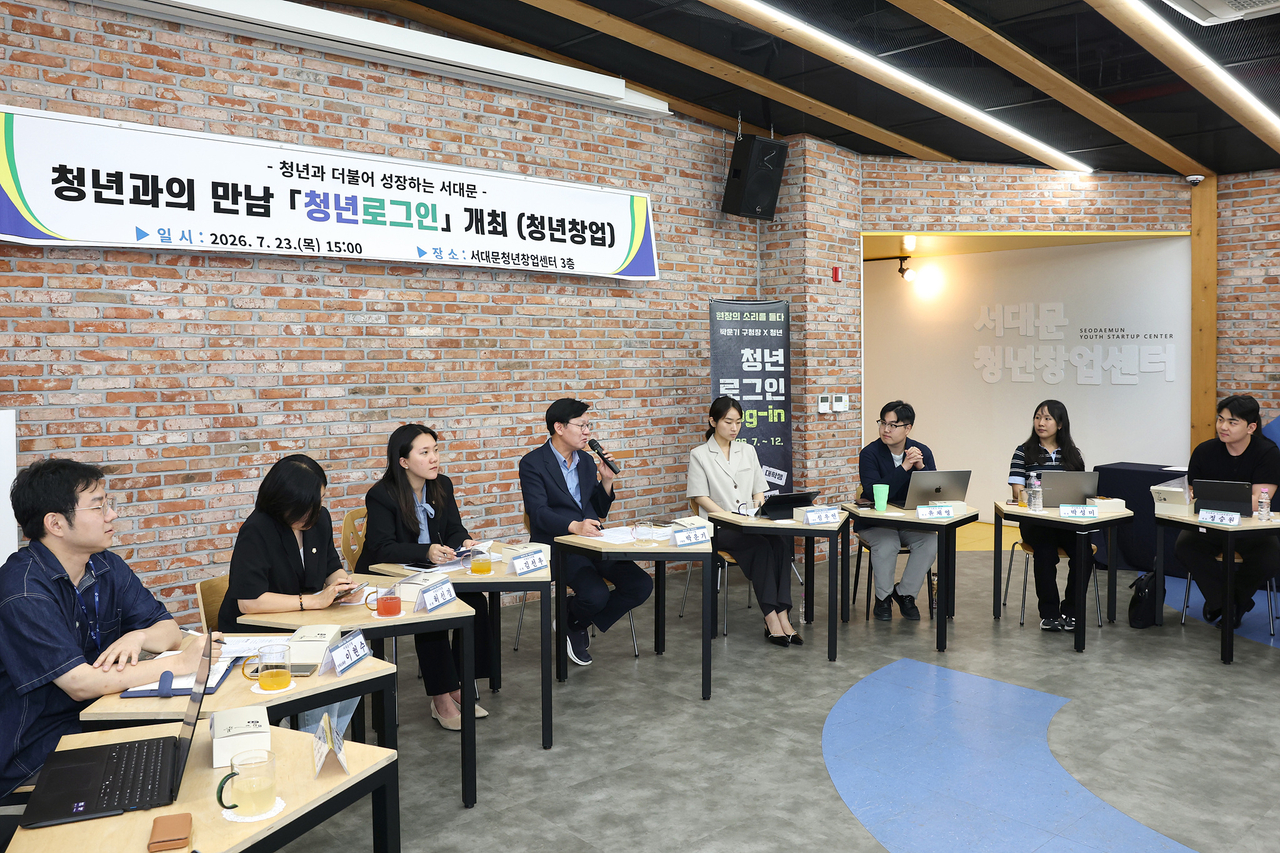
The measures follow a field listening session held Thursday at the Seodaemun Youth Startup Center as part of "Youth Log-in," a new outreach program designed to translate young people's on-the-ground voices into concrete policy.
Youth Log-in is a community engagement project launched under the district's ninth elected-term administration, in which the district mayor visits sites where young people are active, listens to their concerns firsthand and works to channel them into policy.
The inaugural session focused on youth entrepreneurship and brought together Park and 15 young startup founders. Participants included Poodle Co., which develops eco-friendly reusable containers; Onto Co., which makes AI-powered recycling bins; and Deo Dandan, a Campus Town participant — representing companies working across eco-friendly technology, AI, IoT and solitary-death prevention. Founders spoke candidly about the challenges they face and shared ideas for growth.
The entrepreneurs said that even after developing new technologies, they lack opportunities to verify performance in real-world settings, and that securing collaboration with public institutions or finding sales channels remains a significant hurdle. They also called for the preferential purchasing system for youth-company products and services to be applied more actively in practice.
In response, Park said he would work with relevant departments to actively support public pilot programs, giving youth companies a chance to test their technologies and products in actual administrative settings. The district plans to review how technologies such as AI recycling bins, eco-friendly reusable containers and solitary-death prevention sensors could be deployed in public operations.
The district also committed to working with relevant departments on improvements to ensure the preferential purchasing system for youth-company products and services operates effectively, and to expanding youth companies' opportunities to enter the public procurement market.
Participants also exchanged a range of ideas for building a sustainable youth startup ecosystem — including startup support linked to university research infrastructure, inter-company collaboration networks, and cooperative frameworks connecting the local community with youth businesses.
The district said proposals from the session will be reviewed by the Youth Policy Committee and relevant departments before being incorporated into district policy in stages.
Youth Log-in will continue through December, covering six themes in total: college students (August), culture and arts (September), youth policy (October), job seekers (November) and lonely or socially withdrawn youth (December). The program aims to turn field voices from each area into policy that delivers tangible change for young people.
"Young people's ideas are the greatest asset for changing the future of our community," Park said. "We will make the district administration a reliable connector — one that helps good technologies and ideas get tested in the field and find their way into the public market. We will build a city where young people's proposals translate into real policy and real results."
seouldream01@heraldcorp.com