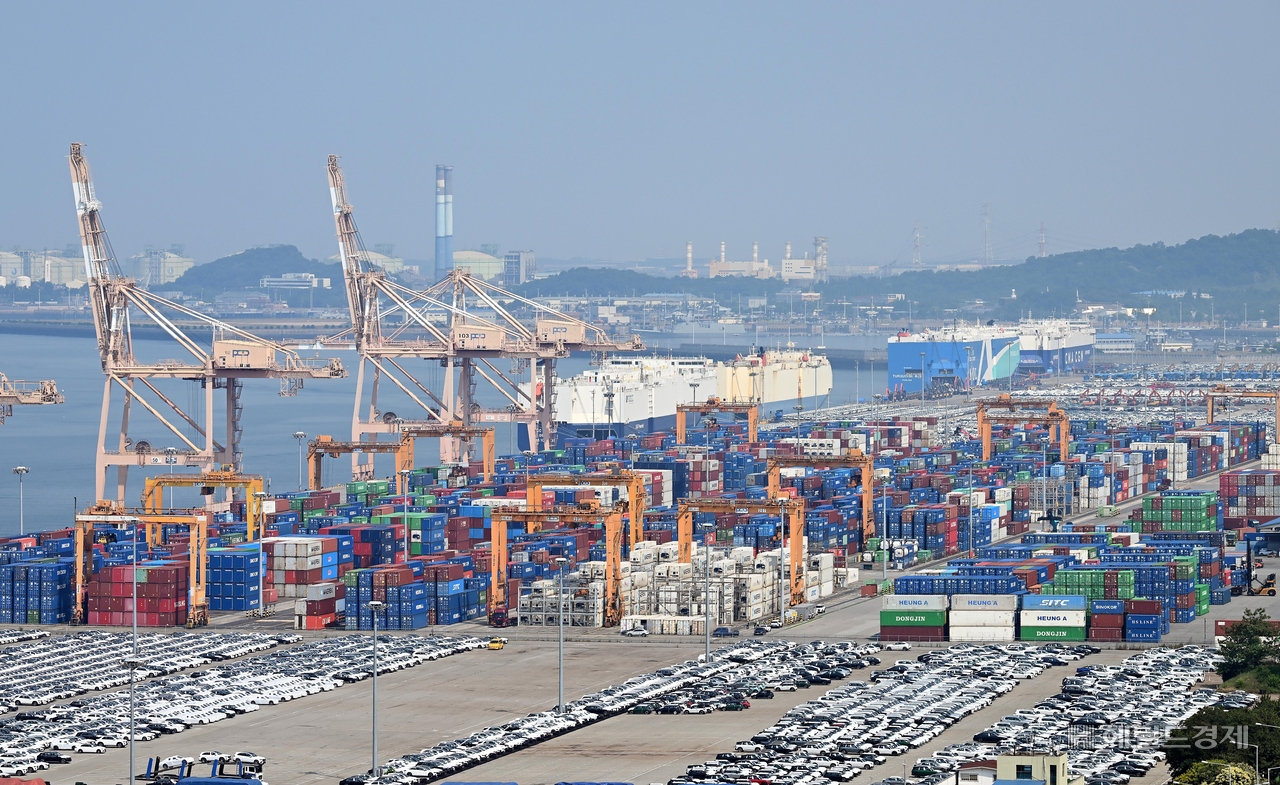
As the Middle East war drives up oil prices and maritime freight rates, South Korean exporters are facing mounting logistics costs — yet a large share cannot pass those increases on to buyers. One in three exporters is absorbing the full rise in logistics and production costs without reflecting any of it in product prices.
A survey released Monday by the Korea International Trade Association (KITA) found that 83.1 percent of 219 domestic exporters cited "freight rate increases" as their biggest logistics challenge in the first half of this year. Respondents included small and medium-sized enterprises (82.6 percent), mid-sized companies (12.8 percent) and large conglomerates (4.6 percent).
Logistics and raw material costs rose in tandem. Some 56.6 percent of respondents identified rising procurement costs for raw materials and components as a major burden, while 33.8 percent pointed to difficulty negotiating higher unit prices with buyers.
Maritime freight rates surged rapidly over the period. The Shanghai Containerized Freight Index climbed from 1,333 points on Feb. 27 — before the Middle East war escalated — to 3,062 points on Friday, a 2.3-fold increase. That level is also about 1.4 times higher than last year's peak of 2,240 points.
Companies felt the pressure acutely. Nearly all respondents — 99.5 percent — said they had experienced higher logistics costs compared with the previous year. The most common range of increase was 10 to 30 percent, cited by 54.8 percent of firms, followed by less than 10 percent (22.4 percent) and 30 to 50 percent (12.8 percent). Some 98.6 percent also reported rising procurement costs.
The core problem is that companies cannot adequately pass those higher costs on to customers. Some 78.1 percent of respondents said they had reflected less than 20 percent of their logistics and cost increases in final product prices. Of those, 32.9 percent said they had passed on none of the increase at all, meaning a substantial share of exporters are effectively absorbing the entire cost rise themselves.
At the other end of the spectrum, only 5.5 percent of respondents said they had passed on 80 percent or more of cost increases through higher prices. Even large conglomerates fared little better: only about 20 percent of large-company respondents said they had transferred 80 percent or more of the increases to buyers.
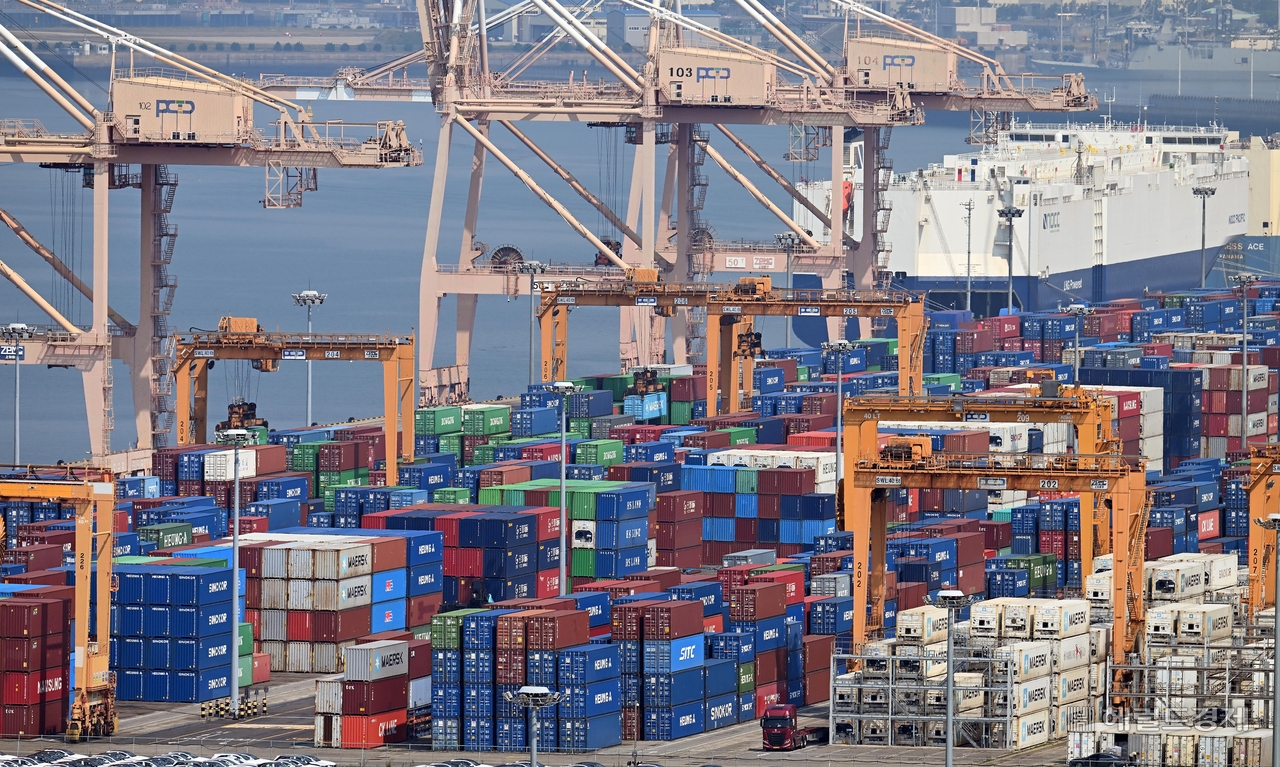
The biggest reason companies cannot raise prices is intensifying competition. Some 64.2 percent of respondents cited fear that buyers would shift to competitors in China or Southeast Asia as the primary obstacle to passing on costs. That was followed by consumer resistance to price hikes amid an economic slowdown (44.7 percent), difficulty in price negotiations with buyers (24.7 percent) and contractual structures such as FOB terms that prevent logistics cost pass-through (15.8 percent).
The hit to profitability was pronounced. Some 85.9 percent of respondents said their operating profit margins fell in the first half of this year. The most common decline was 1 to 3 percentage points, cited by 44.3 percent, while 39.3 percent reported a drop of 3 to 5 percentage points. Only 2.7 percent said their operating profit margins improved.
The scale of the damage becomes clearer in context: the average operating profit margin for small and medium-sized manufacturers last year was 4.6 percent, meaning a 3-to-5-percentage-point decline would wipe out most or all of their margins. Rising logistics costs are not merely adding to expenses — they are eroding exporters' profit base outright.
By sector, petrochemical and food and agricultural product companies faced the heaviest burdens. Petrochemical firms carry a high share of bulk cargo shipments, making them especially exposed to fuel surcharges, while food and agricultural product exporters rely heavily on refrigerated and frozen containers, making their cost structures particularly sensitive to oil price swings.
Machinery and parts, electronics and electrical equipment, and consumer goods sectors faced relatively greater exchange rate pressure. Many firms in these industries import dollar-denominated raw materials for processing and re-export, or sell products at low unit prices that make it difficult to absorb currency losses through pricing.
Hedging against exchange rate risk was also limited. Nearly half of respondents — 47.9 percent — said they had no particular strategy for managing currency fluctuations. Adjusting the timing of import and export payments was used by 29.2 percent, foreign currency deposits by 21.5 percent, and negotiating a change in contract currency with buyers by 12.8 percent. Use of currency hedging products and exchange rate fluctuation insurance was limited to 10.0 percent and 7.8 percent, respectively.
The most urgently requested form of government support was direct logistics cost relief. Some 64.8 percent of respondents called for direct logistics cost support and expanded export voucher programs, followed by financial support such as exchange rate fluctuation insurance (20.1 percent) and dedicated cargo space for small and medium-sized enterprises (10.5 percent).
Logistics cost pressures are unlikely to ease significantly in the second half of the year. Although oil prices spiked sharply after the war broke out and have stabilized somewhat recently, first-half increases are still feeding through with a lag into fuel surcharges and low-sulfur fuel surcharges. Surcharges on the Korea-China route for low-sulfur fuel and on the Korea-Japan route for fuel were raised in July, and domestic container inland transport costs are set to rise in August.
While peak-season shipping volumes may gradually ease, KITA said it expects global vessel capacity and freight rates to take at least several months to normalize even after the Middle East conflict ends. Once shipping schedules are disrupted, port congestion and vessel shortages tend to compound each other in a chain reaction.
Han Jae-wan, head of KITA's logistics services division, said international oil prices have recently fallen below their post-war peak, but companies on the ground are struggling because accumulated fuel cost burdens and freight rate increases have not been reflected in product prices, squeezing profitability. "The burden is likely to intensify particularly in sectors with high logistics cost ratios, such as petrochemicals and food and agricultural products," he said.
Han warned that a renewed escalation of the Middle East war could delay the resolution of logistics backlogs, and that fuel cost increases across all export transport modes — maritime, air and inland — are being passed on to exporters with a time lag, raising concerns about downward rigidity in logistics costs. "KITA will work with related ministries and relevant agencies to develop measures to ease the logistics cost burden on small and medium-sized exporters," he added.
kwater@heraldcorp.com