'The speed of China's growth is frightening,' executive says after Paris Motor Show
Researchers present 6 finalists from 130 ideas at Namyang R&D Center festival
Trunk innovation takes top prize
"Chinese automakers have significantly raised their design competitiveness, and their prices were about $10,000 cheaper."
Hyundai Motor and Kia held their 2026 Idea Festival on Monday at the Namyang Research and Development Center in Hwaseong, Gyeonggi Province. Lee Jae-gyu, executive vice president in charge of vehicle development at Hyundai Motor and Kia, took the stage and shared what he had witnessed at the recent Paris Motor Show — and what it meant for the group's future.
Watching Chinese automakers rapidly push into the European market on the strength of design and price, Lee said he had felt a growing sense of crisis about Hyundai Motor Group's future. But after seeing six inventions developed by the company's own researchers, his outlook shifted. "As I watched Chinese automakers advance into the European market with design and price competitiveness, I felt that Hyundai Motor Group could not afford to be complacent," he said. "But today, after being introduced to so many innovative technology ideas, I found new hope — I thought to myself, 'We still have a chance.'"
The source of that hope was an in-house competition where researchers present prototypes they built themselves to solve small frustrations from everyday life.
Now in its 17th year, the Hyundai Motor and Kia Idea Festival received 130 submissions this year. Six teams passed document and presentation reviews to reach the final stage. Participants spent about four months handling everything from design and fabrication to verification, turning concepts into working technology.
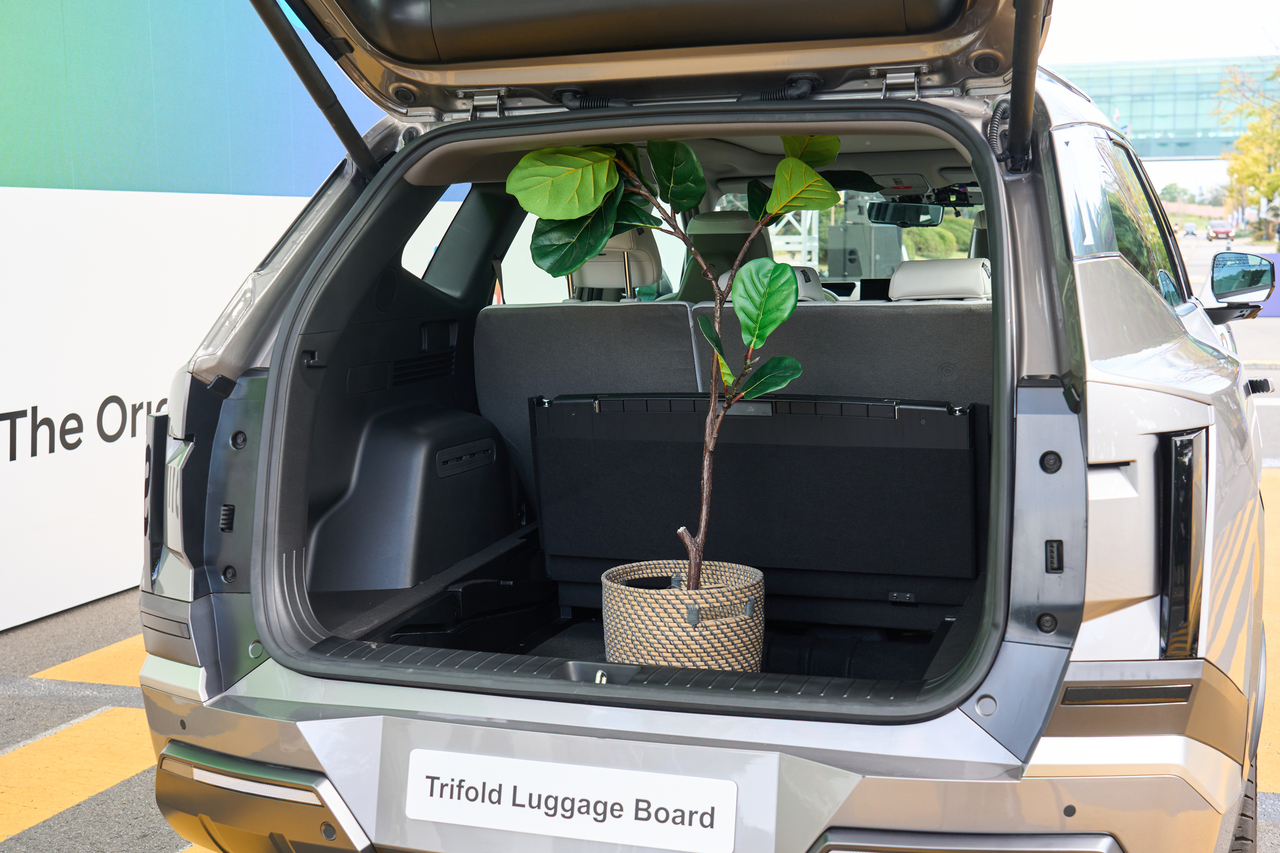
The highest-rated entry was not, as might be expected, a sophisticated AI or robotics system. The grand prize went to the Trifold Luggage Board — a device that lets a driver fold down the trunk floor panel with one hand to expand cargo space.
Developed by Team M.S.V.2, the device works by pushing the existing SUV trunk floor forward, causing it to fold into three layers and lock against the rear seatback. The hidden space beneath the trunk floor becomes accessible without removing the panel entirely.
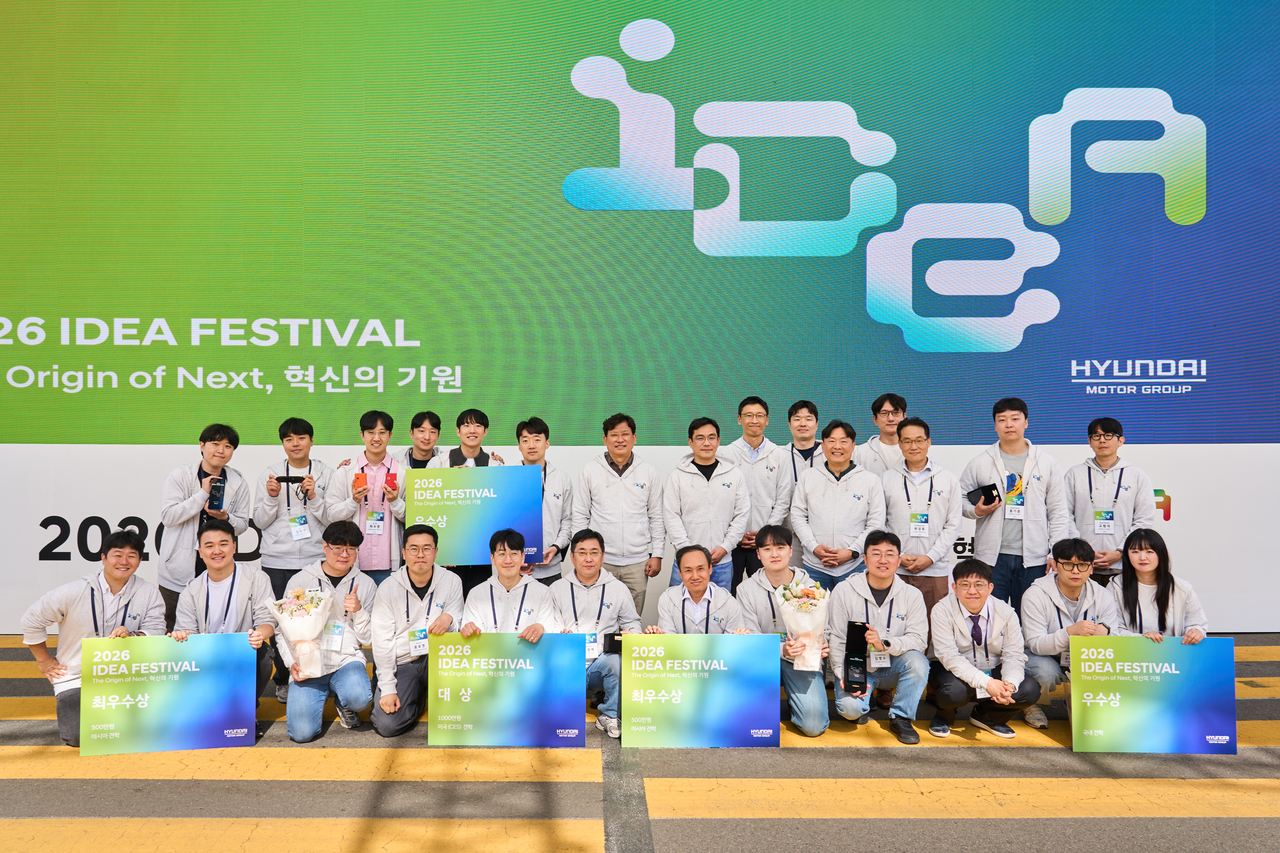
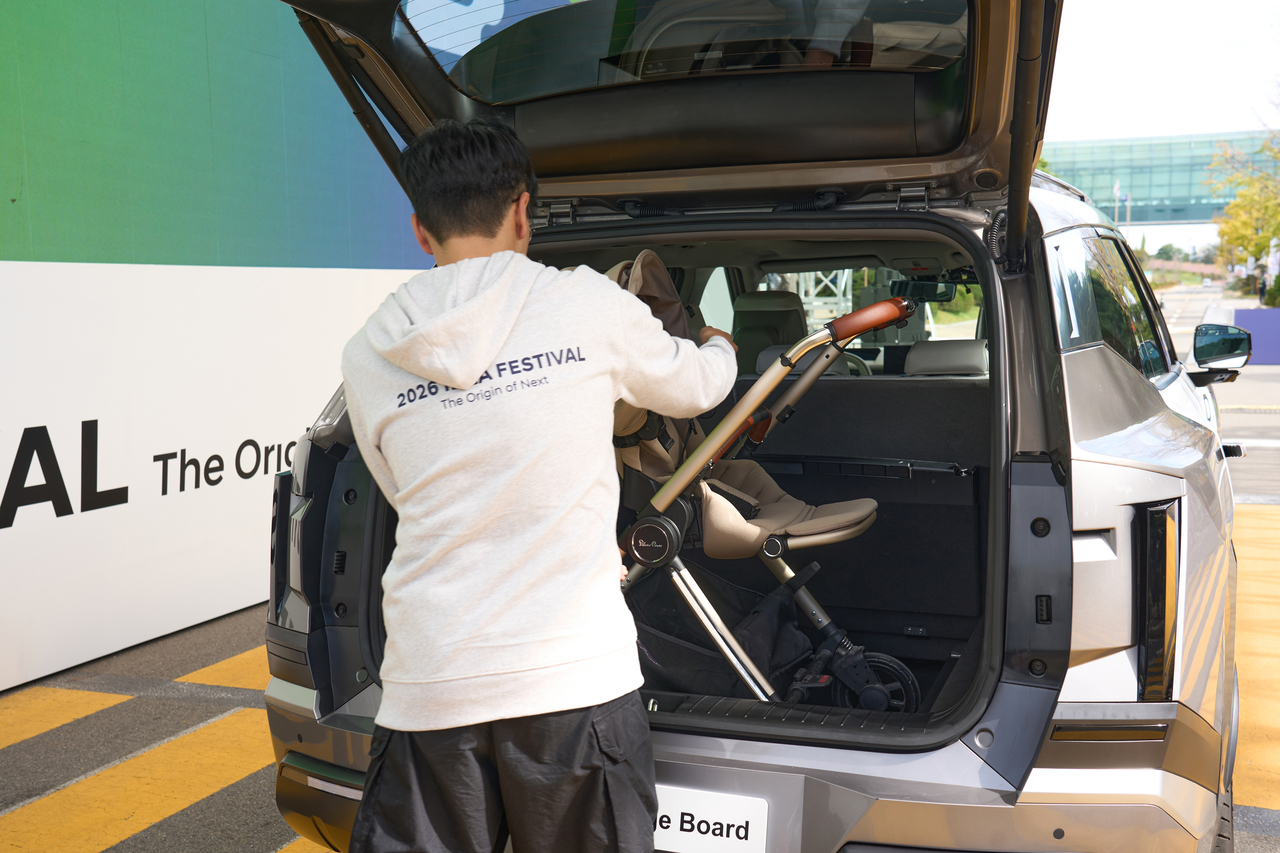
A live demonstration showed a stroller — previously too bulky to fit — sliding into the trunk after the floor panel was folded down. Pulling the panel outward toward the rear of the vehicle converts it into an auxiliary shelf for loading heavy items. It can also function as a simple table.
Jo Gwang-rae, a team leader on Hyundai Motor and Kia's MSV Interior Design Team 2, said the idea came from watching his own family struggle with the trunk. "I have spent years designing trunk space, but even my own family couldn't find or retrieve an umbrella stored under the trunk floor," he said. "People simply don't use a feature that requires three separate actions. I wanted to make something that could be done with one hand in one motion."
Entries that brought advanced technology into everyday driving also drew attention. "Motion Sickness Zero," developed by Team Comfort Drive and awarded a best prize, uses a vehicle's ambient lighting and rear-seat display to reduce motion sickness for passengers.
When the vehicle turns, accelerates or decelerates, the interior lighting shifts to visually convey the car's movement to passengers. The principle is to narrow the gap between what the eyes see and what the body feels, thereby easing motion sickness.
The technology went beyond a concept. The research team conducted more than 10,000 kilometers of real-vehicle driving tests, and 40 of the 48 participants reported a reduction in motion sickness. The system requires no additional hardware, relying instead on the vehicle's existing lighting and sensors.
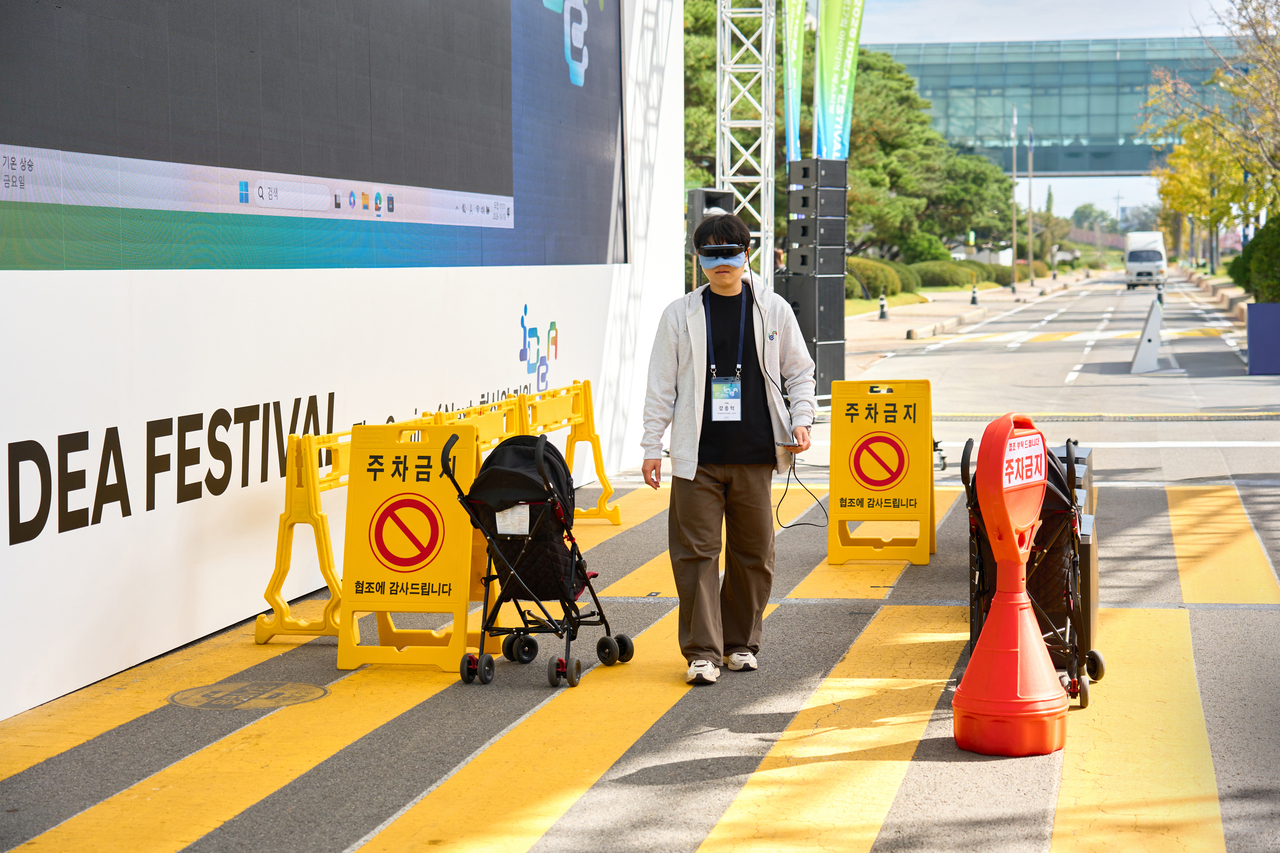
A second best prize went to Eye-Bridge, a pair of smart glasses designed to help visually impaired pedestrians navigate. The device applies autonomous driving perception technology — the kind used by robots to read terrain and detect obstacles — to a wearable form. When it detects a curb, slope or obstacle ahead, it delivers audio guidance on direction and hazards through bone-conduction earphones.
One of the researchers behind the project said the idea came from volunteering as a guide runner alongside a visually impaired person. The goal was to apply the same perception technology used in robots so that people could move safely from a parked vehicle to their destination on foot.
Another entry grew out of the concerns of parents with young children. "Neulbom" is an infant monitoring device that draws on autonomous driving perception and decision-making technology. Mounted inside a vehicle, it detects whether a child in the back seat is closing their eyes or tilting their head. Attached to a stroller, it alerts parents to approaching bicycles, kick scooters or the risk of rolling into traffic.
Choi Su-young, a senior researcher on the development team, is the father of two. He said the idea was sparked by a recurring moment: while driving, he would turn around to check on his 15-month-old sleeping in the back seat, only to hear his wife say, "Eyes on the road."
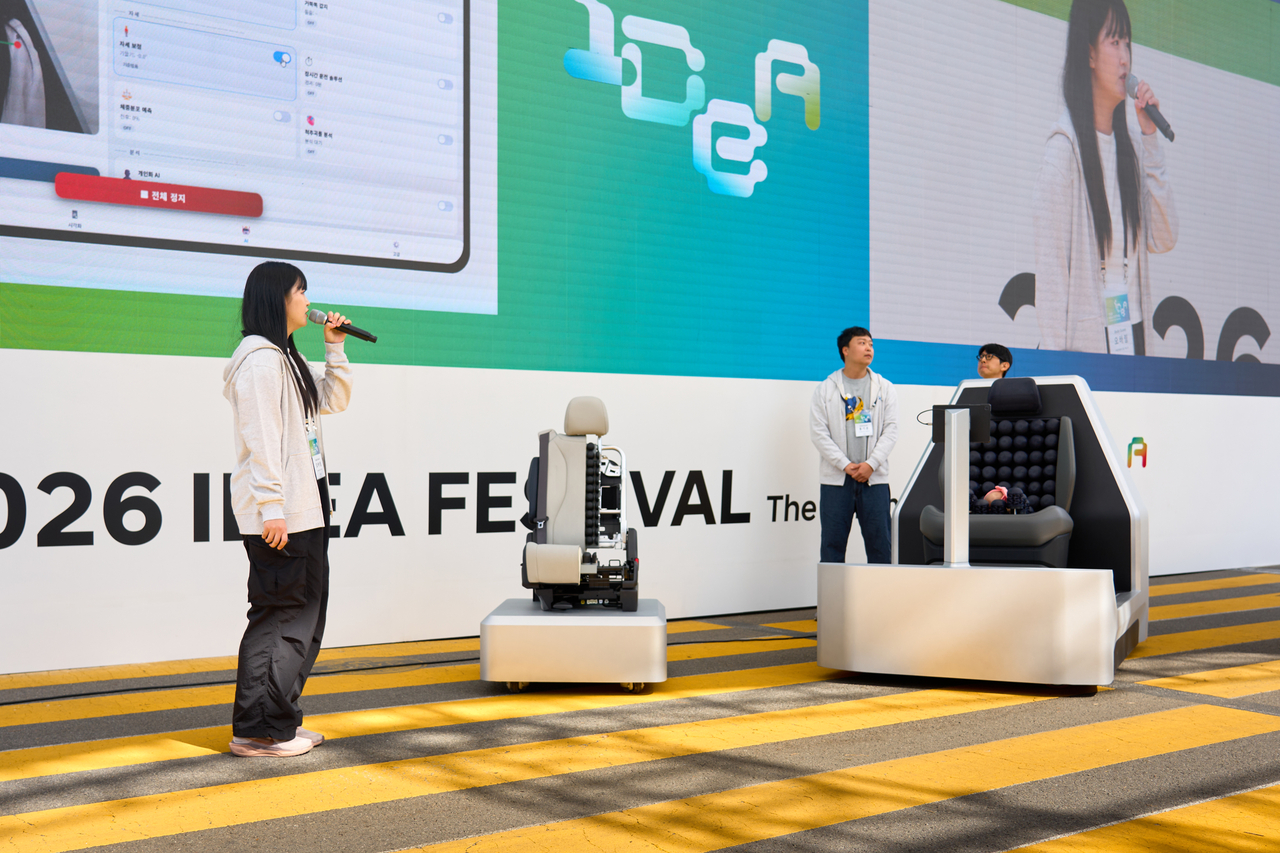
A car seat that adapts as a child grows also made its debut. Pin Print Seat uses 78 individually moving actuators installed in the seat cushion and backrest to mold the seat to each occupant's body. It is designed to adjust for different growth stages — ages one, three and six — and can also convert into an adult seat.
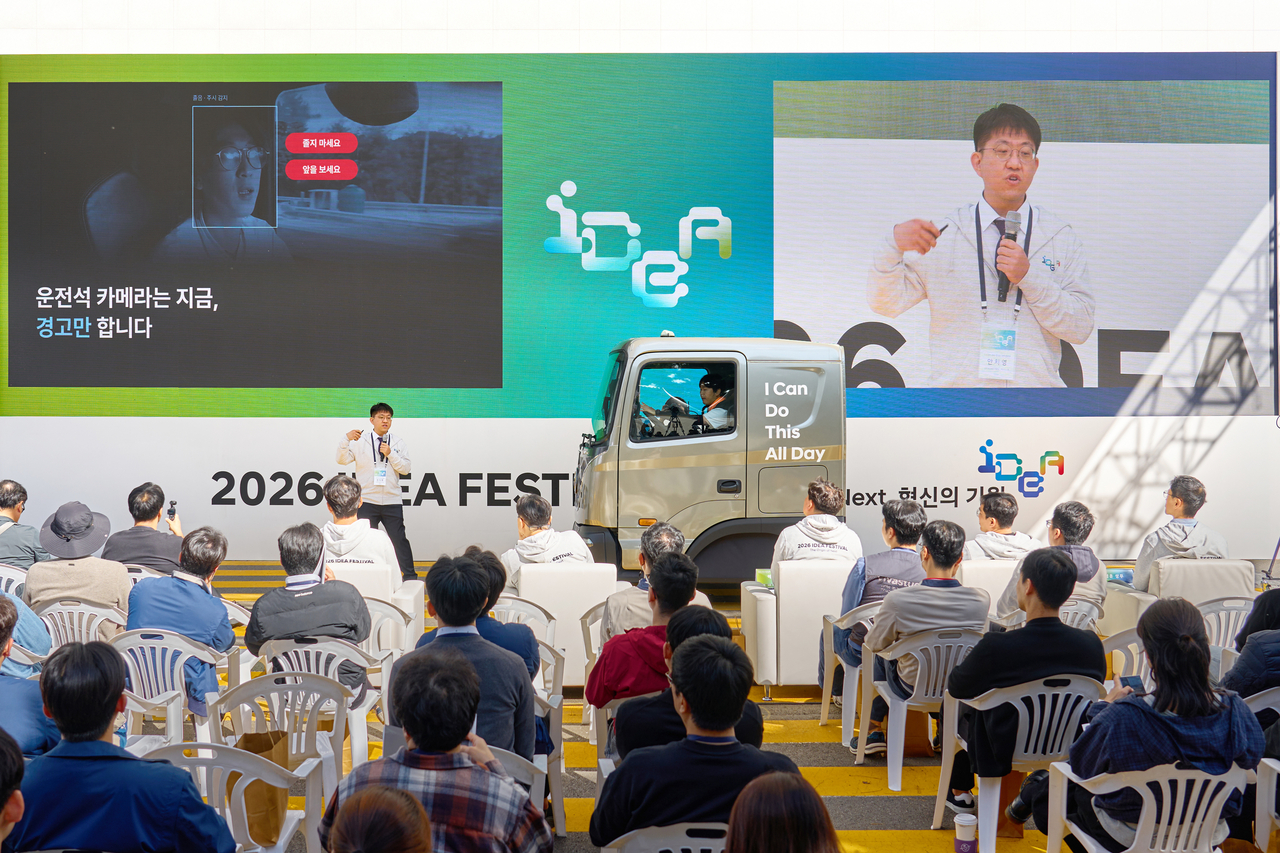
Hero Recorder, which turns a long-haul truck driver's workday into a short film for their family, also drew interest. The technology uses AI to analyze footage of the driver and edit the day into a one-minute video.
The research team produced a video documenting the day of Kim Won-seon, a truck driver from Haman in South Gyeongsang Province who has been on the road for 14 years — compressing a long shift that began at 5:33 a.m. and ended at 8:16 p.m. into a brief clip. The team said the idea started with a simple question: what if the in-cab camera that monitors driver drowsiness could instead become a device that remembers the driver's day?
None of the technologies presented Monday will go directly into mass-produced vehicles. Hurdles remain in safety verification, cost and durability. Still, past festival winners have made it to showrooms: a multifunction console that won a best prize in 2021 evolved into the bidirectional multi-console in the Santa Fe, and trailer-towing performance software that won last year was applied to the fifth-generation Tucson.
"I have spent years urging challenge, failure and innovation," Lee said. "But today I found myself reflecting on my own record. Even after 34 years at this company, I don't think I have ever taken on a challenge like this — turning a new idea into reality."
He added that he was struck by the researchers' willingness to present their work without hesitation, even when it was not yet perfect. "Seeing their spirit of challenge filled me with pride," he said. "It made me feel that the future of Hyundai Motor Group is bright."
kwater@heraldcorp.com