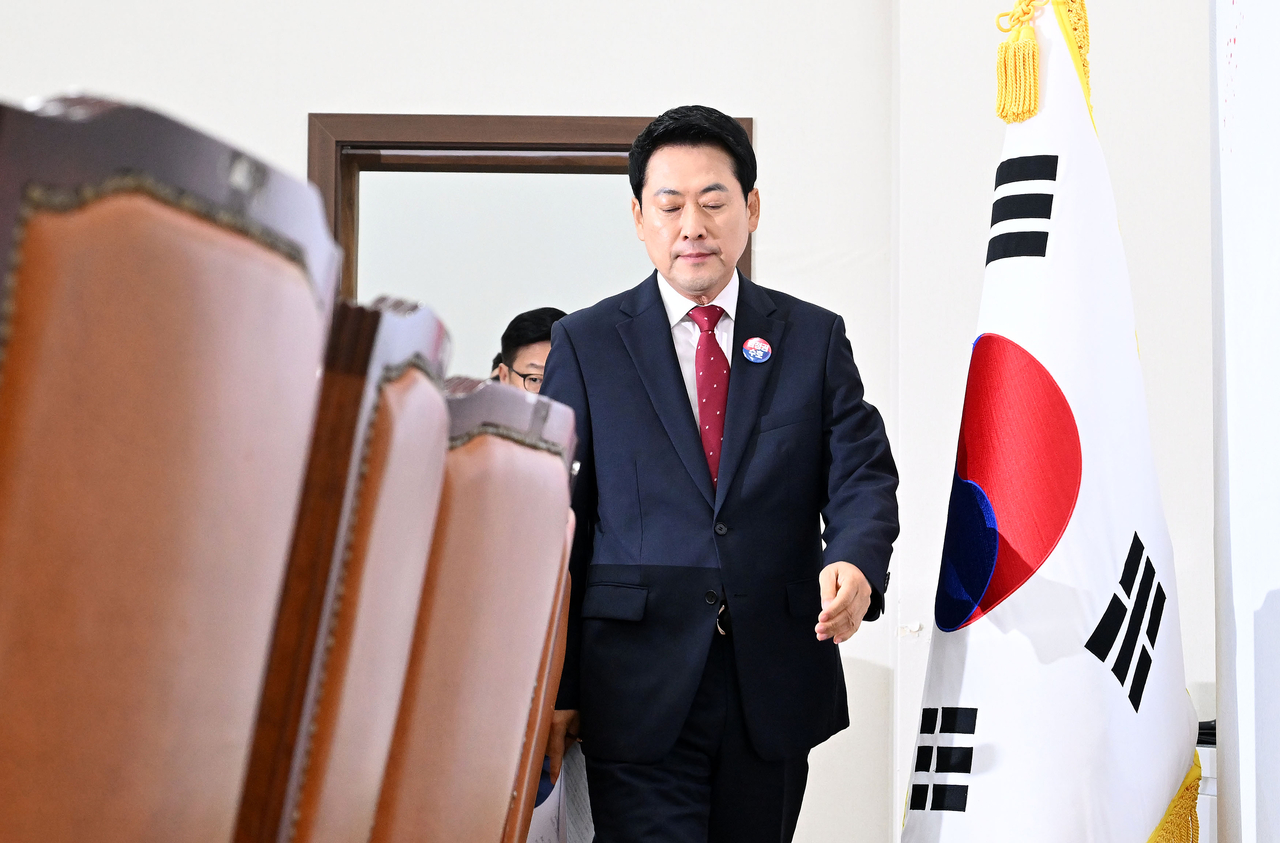
With efforts to force out People Power Party leader Jang Dong-hyeok running into a wall, debate within the party over abolishing the party leader system itself is gaining momentum. The push centers on restructuring a system that concentrates excessive power — including candidate nomination authority — in the party leader's hands, and shifting toward a floor-leader-centered model. Skeptics within the party, however, say the idea is far from realistic.
The PPP's reformist lawmakers' group Daean gwa Mirae formally raised the issue Wednesday, citing the "harmful effects of the party leader system" at its meeting. Seoul Mayor Oh Se-hoon had earlier publicly proposed abolishing the party leader post in a lecture at the National Assembly.
At the group's breakfast meeting, Rep. Choi Hyeong-du argued that nomination authority should be separated from the party leader's powers to dismantle what he called an "imperial party leader" structure. Political circles have long noted that the party leader's de facto control over candidate nominations creates a monopoly of power that fuels factional conflict.
Rep. Lee Seong-gwon, a two-term lawmaker who serves as the group's secretary, told reporters that "it is true that the excessive concentration of power in the party leader has caused many side effects." He said the group had agreed to keep looking for ways to reduce those side effects, adding that the question of the party leader's authority would be a key item on its agenda.
Daean gwa Mirae is set to hold a forum next week on the theme of "party reform," where it plans to discuss options for restructuring the party leader system. Lee said the party cannot win elections by remaining a member-centered party alone, and announced plans for an open public debate on how to build "an open national party that guarantees member participation while reflecting the will of the broader public."
On Tuesday, Rep. Yun Sang-hyeon, a five-term lawmaker from the greater Seoul area, said he had held a breakfast meeting with Mayor Oh and that the two had reached a shared understanding on abolishing the party leader system and institutionalizing public candidate nominations.
Oh said at his National Assembly lecture last month, "Do we really need a party leader?" and argued that moving toward a floor-centered party would reduce the tendency of politicians to wade into unnecessary social conflicts. Twenty-eight PPP lawmakers attended the event.
Within the party, however, a significant number of voices are questioning whether such a structural overhaul is actually achievable.
One member of the floor leadership said by phone that it was not realistic for the PPP to scrap the party leader post while the Democratic Party keeps its own. "The floor leader alone cannot handle all party affairs — the workload is simply too great," the lawmaker said. The lawmaker added that separating nomination authority would eliminate any reason to have a party leader at all, and that without authority, there would be no one to take responsibility.
Another leadership member said the idea "can come up as a concept, but it is not something to attach great significance to," adding that even if lawmakers pushed it forward, winning the consent of party members in the end would not be easy.
Supreme council member Kim Jae-won earlier said on YTN Radio that abolishing the party leader post had been raised during Park Geun-hye's emergency committee in 2012 but was rejected for various reasons. "It would make for far better politics if we could model ourselves on the American party system," Kim said, "but is that really feasible given the realities of our country?" — expressing clear skepticism.
thanks@heraldcorp.com